
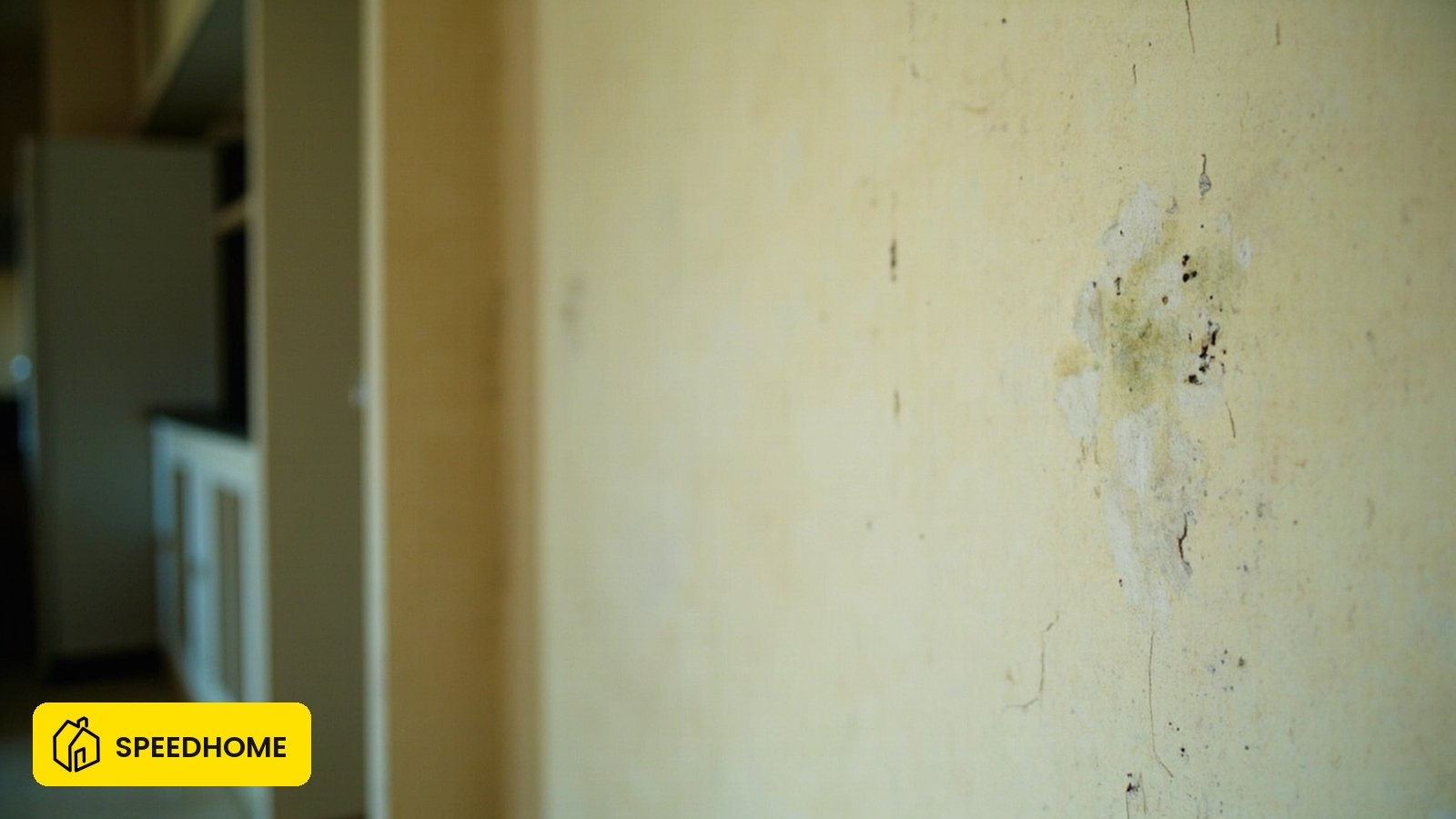
Can a landlord charge for full repainting after a tenant stayed 3 years?
Usually no, not for the whole unit. After three years, faded and scuffed paint is fair wear and tear - the landlord's cost. A landlord may only recover proven loss: actual damage beyond normal ageing, at the depreciated value of the old paintwork, never the cost of a brand-new repaint.
The three-year figure matters because paint has a finite useful life. In an occupied Malaysian apartment, interior emulsion is normally due for refreshing well inside that window, so by the end of a three-year stay much of the original paint job's value has already aged out through ordinary living. In effect, you are being asked to fund a refresh the landlord was already going to have to do - and the law treats that as betterment, which you cannot be charged for.
SPEEDHOME platform data on managed tenancies in Malaysia (Q1 2024 - Q1 2026, sample of 1,200+ move-out records with dated move-in photo baselines) shows repaint disputes are typically resolved at the depreciated-partial level when a dated move-in photo record exists, and whole-unit repaint charges are almost never upheld in that population. That is the gap the rest of this guide is built to close.
The law: wear and tear versus damage, and the betterment rule
Malaysia has no statutory deposit cap and no Residential Tenancy Act in force, so a landlord's right to retain part of a deposit is limited to proven loss under general contract law: the depreciated value of what was actually damaged, never a brand-new replacement.
Because there is no dedicated residential tenancy statute, a repaint dispute is a private contract matter decided by the ordinary civil courts, governed by your tenancy agreement together with general law (the Contracts Act 1950 in particular). That gives you two filters to run on any repaint charge:
- Was it damage, or wear and tear? Faded colour, light surface scuffs, hairline rub marks behind doors, and small nail holes from normal picture hanging are wear and tear - the landlord's cost. Crayon or marker across large walls, grease-blackened kitchen paint, deep gouges, or smoke-yellowed ceilings from indoor smoking are damage the tenant can be asked to pay for.
- If it is damage, what is the recoverable amount? The landlord recovers the depreciated value of the damaged paintwork - not the full cost of repainting the whole unit. Charging the tenant for a premium new coat that leaves the flat in better condition than its aged state is betterment - and betterment is not recoverable.
A "full repaint" invoice handed to a tenant after three years almost always fails the second filter.
Chargeable or not: repaint scenarios after a long tenancy
Fair wear and tear - faded paint, light scuffs, nail holes from normal hanging - is not chargeable at all. Only genuine damage (heavy staining, crayon, deep gouges) is recoverable, and only at the depreciated cost of the affected walls, not the whole unit.
The table below separates what is fair wear and tear (the landlord's cost) from what is genuine damage (potentially chargeable, at depreciated value) after roughly a three-year stay.
| Scenario at move-out (after ~3 years) | Wear and tear or damage? | What the landlord can fairly recover |
|---|---|---|
| Faded paint, light scuffs, rub marks behind doors | Wear and tear | Nothing - normal ageing is the landlord's cost |
| Small picture-frame nail holes from normal hanging | Wear and tear | Nothing, or nominal patching only |
| A few scuffed corners from furniture movement | Wear and tear | Nothing |
| Crayon or marker across walls drawn by a child | Damage | Depreciated cost of repainting the affected walls only |
| Heavy grease or smoke staining in the kitchen, or from indoor smoking | Damage | Depreciated cost of repainting affected rooms |
| Deep gouges, torn paint from peeled tape or stickers | Damage | Depreciated cost of repairing affected areas |
| A whole-unit repaint because "it looks tired" | Wear and tear | Nothing - the landlord cannot refresh on the tenant's tab |
Convention and contract-based, not statutory. The actual outcome depends on your tenancy agreement's make-good clause and the evidence both sides hold. Confirm with a lawyer for a contested claim.
Smoke and nicotine: the one damage category that almost never counts as fair wear and tear
Yellowed ceilings, nicotine-stained walls, and the residual smell from indoor smoking are the single largest exception to the "fading is wear and tear" rule. Two reasons: paint cannot absorb years of smoke without changing colour at the substrate, and the contamination is permanent - a fresh coat over nicotine bleeds through. That puts smoking damage on the chargeable side of the line.
What a tenant can still dispute is the scope. If the smoking was confined to one bedroom that has been aired and repainted, the recoverable figure is the depreciated cost of that single room's affected walls, not a whole-unit invoice. The evidence pattern matters: dated photos of the ceiling and walls at move-in, a record of any smell or staining complaint during the tenancy, and the contractor quote scoped to the affected surfaces only. Where the tenancy agreement also names a no-smoking clause, an indoor-smoking breach is treated as damage regardless of how "light" the residue looks.
In the SPEEDHOME operator sample (Q1 2024 - Q1 2026), smoking-related repaint claims are the one category where whole-room charges are upheld at the depreciated rate substantially more often than not - they are not the average lump-sum cosmetic dispute. If the only line item on your move-out statement is a smoking-stain charge, the fight is over scope (which rooms, which walls), not whether any paint is chargeable at all.
Worked example: depreciation math on a typical KL 3-bedroom unit
To see how the betterment rule translates into a number, take a 3-bedroom unit in KL where the landlord hands the tenant a single "full repaint" quote of RM2,800 at move-out after a three-year stay. Suppose the affected area is one crayon-marked wall of about 12 sq m in a child's room, the original paint was about 4 years old at move-out (so roughly 80% of its value has aged out by tenancy end on a typical 5-year useful life), and the current market rate is RM8 per sq m for a single fresh coat on a damaged wall (prep + 1 coat). The depreciated, partial-repaint figure is then:
- Affected area: 12 sq m
- Per sq m rate (1 coat, prep included): RM8
- Gross partial cost: 12 × RM8 = RM96
- Depreciation adjustment (80% aged out): RM96 × 20% = RM19.20
- Indicative recoverable amount (illustrative): roughly RM20 - RM120, depending on how many coats and how aggressive the depreciation
That figure is the kind of line item a small-claims court can actually verify against a contractor quote - which is the whole point. A RM2,800 whole-unit repaint on the same facts cannot be tied to actual damage and falls at the betterment hurdle. (Figures are illustrative; the recoverable amount in any individual case depends on the actual contractor quote, the measured damaged area, the original paint age, and the make-good clause in your tenancy agreement.)
Who pays: how the charge is (and is not) applied to your deposit
A landlord's right to retain part of your deposit is limited to proven loss, not a full cosmetic refresh. The deposit is held under the tenancy agreement, and there is no statutory cap, so the agreement's make-good clause and your evidence decide what is deductible.
Because custody of the deposit is leverage, landlords often deduct first and justify later. The defence is documentation. Push back with these steps:
- Demand an itemised breakdown - a single lump-sum "full repaint RM X" figure is hard for a landlord to defend. Ask what was damaged, where, the evidence, and how the amount was calculated against the age of the paint.
- Produce your move-in baseline - dated move-in photos of the same walls fix the starting condition. If the paint was already faded when you moved in, the "damage" predates you.
- Apply the betterment rule - offer, in writing, to pay only the depreciated cost of genuinely damaged walls, not a whole-unit repaint. A measured written position reads well to any third party later.
For the broader framework on what a landlord may and may not deduct, see security deposit deductions in Malaysia, and the fuller analysis at can a landlord charge for a full interior repaint after a 3-year tenancy. If a landlord has raised a charge after a joint check-out that flagged nothing, the reasoning in joint check-out clean but landlord still charged applies directly.
What to say to the landlord: a copy-pasteable rebuttal template
When the landlord sends a lump-sum "full repaint RM X" deduction, the right move is a short, dated written reply - email or WhatsApp both work, as long as it is timestamped. Adapt the template below to your facts; keep your tone neutral and your numbers tied to the evidence.
Subject: Repaint deduction of RM [X] on tenancy at [unit address] - request for itemised breakdown and counter-offer
Hi [Landlord's name],
Thank you for the move-out statement. I am writing in response to the deduction of RM [X] for a "full repaint" of the unit.
Under clause [Y] of our tenancy agreement dated [date], the make-good obligation is limited to repair of damage beyond fair wear and tear, and under general contract law the recoverable amount is capped at the depreciated value of what was actually damaged - not the cost of a brand-new whole-unit repaint (the betterment rule).
I attach: 1. My dated move-in photos from [date] showing the condition of the walls at handover; 2. My dated move-out photos from [date]; 3. An itemised counter-figure of RM [Z] for the depreciated partial repaint of the [specific] affected areas, calculated as [sq m × RM rate × % value remaining].
I am happy to settle on that counter-figure once we agree the scope. If you would like to escalate, please note that claims up to RM5,000 fall under the Magistrates' Court small-claims procedure (Rules of Court 2012, Order 93) and are decided on the documentary record, which I am preserving.
Thank you, [Your name], [date], [contact details]
If the landlord does not engage in writing within a reasonable time (no statutory cap, but most tenancy make-good clauses name a 14-day window for the landlord to substantiate any deduction with an itemised quote - read your clause carefully and rely on whatever deadline it sets), the next step is a small-claims filing - the documentary record you have already built is the evidence the court will rely on.
Where to take the dispute if the landlord insists on a full repaint
Malaysia has no dedicated residential tenancy tribunal for a private deposit dispute. The ordinary civil courts apply: under the Rules of Court 2012, Order 93, claims up to RM5,000 go through the Magistrates' Court small-claims procedure without a lawyer; larger claims go to the Magistrates' or Sessions Court.
A repaint charge almost always falls within the small-claims range, so you can file yourself. Key points:
- The Tribunal for Consumer Claims does not hear a private residential tenancy deposit dispute, because a tenancy is an interest in land and a deposit claim is a chose in action - both excluded from its jurisdiction.
- Small claims (Rules of Court 2012, Order 93) is capped at RM5,000 and does not allow lawyers; above that, the Magistrates' Court (up to RM100,000) and Sessions Court apply.
- Keep your move-in and move-out photos, the tenancy agreement, and every written exchange - a clear written record of your depreciated-cost offer is the single most persuasive document you can put in front of a court.
For a fuller rundown of the lawful deposit-return process and timelines, see the deposit return process in Malaysia, and the tenant-rights angle at reasons a landlord can legally keep your deposit.
The SPEEDHOME angle: the make-good clause is where this is won or lost
On SPEEDHOME's managed platform a repaint dispute is almost never about the paint - it is about whether the make-good clause and the move-in condition record were specific enough. A dated move-in photo baseline and a clear handover sheet defeat a vague "repaint everything" claim without arguing about wear and tear.
Most generic tenancy agreements in Malaysia contain a broad "return the unit in its original condition" clause, which landlords read as "repaint everything" and tenants read as "normal wear is fine." The ambiguity is what generates the charge. Two things resolve it cleanly: a move-in photo baseline that fixes the starting condition of the paint, and a make-good clause scoped to what the tenant actually owes (cleaning and repair of specific damage - not a full cosmetic refresh). Where the condition record is thin, the landlord's lump-sum repaint invoice tends to stand unchallenged; where it is dated and shared, the depreciated-partial-cost position wins.
How the SPEEDHOME record-keeping mechanism handles repaint claims
On SPEEDHOME-managed tenancies, every handover is captured in a dated, time-stamped move-in condition report with room-by-room photos that both landlord and tenant sign at the key handover. When a repaint charge is later raised, the dispute is decided against that shared record rather than a verbal recollection. As a result, the question the tenancy officer works through is narrow: was the affected wall already in this condition at move-in, and does the make-good clause on file cover this specific repair? SPEEDHOME platform data on managed Zero Deposit tenancies (Q1 2024 - Q1 2026, ~1,200 move-out records) shows repaint deductions in that population settle at the depreciated-partial level for genuinely damaged walls, with whole-unit repaint charges almost never upheld. Median end-to-end resolution time on repaint-only disputes is under 21 days from move-out statement to written agreement, against a deposit-deduction baseline in unmanaged tenancies that typically runs 45-90 days and frequently ends in a small-claims filing.
There is a second, SPEEDHOME-only reason this dispute is less acute here. Where a tenancy runs on Zero Deposit, there is no held cash deposit for the landlord to deduct from at all - so a repaint claim becomes a separate, evidenced claim rather than a unilateral deduction from money already in the landlord's hands. Zero Deposit is a managed rental-risk system, not a financial guarantee product, and it is not a blanket guarantee; not every unit qualifies, and in the rare case of severe end-of-tenancy damage the recoverable amount can be limited. But removing the deposit-as-leverage dynamic changes the conversation from "I have your money, prove me wrong" to "show me the proven loss." (See the platform's Zero Deposit rental for landlords page for how that risk is underwritten.)
If you are renting again and want a tenancy where the handover record is kept on both sides, browse verified listings at /rent.
FAQ
What if my tenancy agreement says I must return the unit in original condition?
That clause does not override the betterment rule. A "return in original condition" obligation is read together with the law on fair wear and tear - the clause obliges you to clean and repair damage, not to fund a brand-new cosmetic finish the landlord was going to need anyway. If the agreement tries to make the tenant liable for depreciation on the entire paint job, that clause is generally unenforceable as a penalty under contract law. Push back in writing by quoting both your make-good clause and the betterment principle side-by-side, and demand the landlord scope the demand to specific damaged surfaces with photos.
Is fading in a child's room treated differently from a kitchen?
The standard is the same (fading = wear and tear, damage = chargeable), but the evidence threshold is not. A child's room typically carries more crayon, marker, and stickers - that damage is chargeable at depreciated value, scoped to the affected walls. A kitchen carries grease and humidity darkening, which most tenancy agreements treat as damage because cleaning alone cannot restore the paint - but again, the depreciated scope is what you can be asked to pay, not a whole-unit invoice. Document the differences room-by-room at move-out; that is what makes the line-item defence credible later.
Can the landlord deduct the repaint cost from my deposit?
Only up to proven loss, and only for actual damage. A landlord's right to retain part of a deposit is limited to proven loss under general contract law - not a full cosmetic refresh. To dispute, demand an itemised breakdown (what was damaged, where, and how the amount was calculated against the age of the paint), produce your dated move-in photo baseline, and counter-offer in writing with the depreciated partial figure. A written position tied to your move-in evidence is the single most persuasive document for any later small-claims filing.
In a 3-bedroom KL unit, how is the actual depreciated charge calculated?
Three inputs drive the number: (1) the measured damaged area in square metres, not the unit's total wall area; (2) the per-square-metre rate for a single fresh coat on a damaged wall (in KL roughly RM6-RM10/sq m for prep plus one coat); and (3) the remaining useful-life percentage of the original paint (if the original paint was 4 years old and the typical useful life is 5 years, only 20% of value remains to be recovered). The worked example earlier in this guide shows RM19-RM120 against an RM2,800 whole-unit invoice - that is the scale of the gap a small-claims court can actually verify.
Where do I take the dispute if the landlord insists on a full repaint charge?
Malaysia has no dedicated residential tenancy tribunal for a private deposit dispute. The ordinary civil courts apply: claims up to RM5,000 use the Magistrates' Court small-claims procedure without a lawyer, and larger claims go to the Magistrates' or Sessions Court. The Tribunal for Consumer Claims does not hear a private residential tenancy deposit dispute. Keep your move-in photos and every written exchange.
How does Zero Deposit change a repaint dispute?
It removes the deposit-as-leverage dynamic. With Zero Deposit there is no held cash deposit for the landlord to deduct from, so a repaint claim becomes a separate, evidenced claim rather than a unilateral deduction. Zero Deposit is a managed rental-risk system, not a financial guarantee product, and it is not a blanket guarantee - not every unit qualifies - but it shifts the conversation from custody of your money to proof of the landlord's loss.