
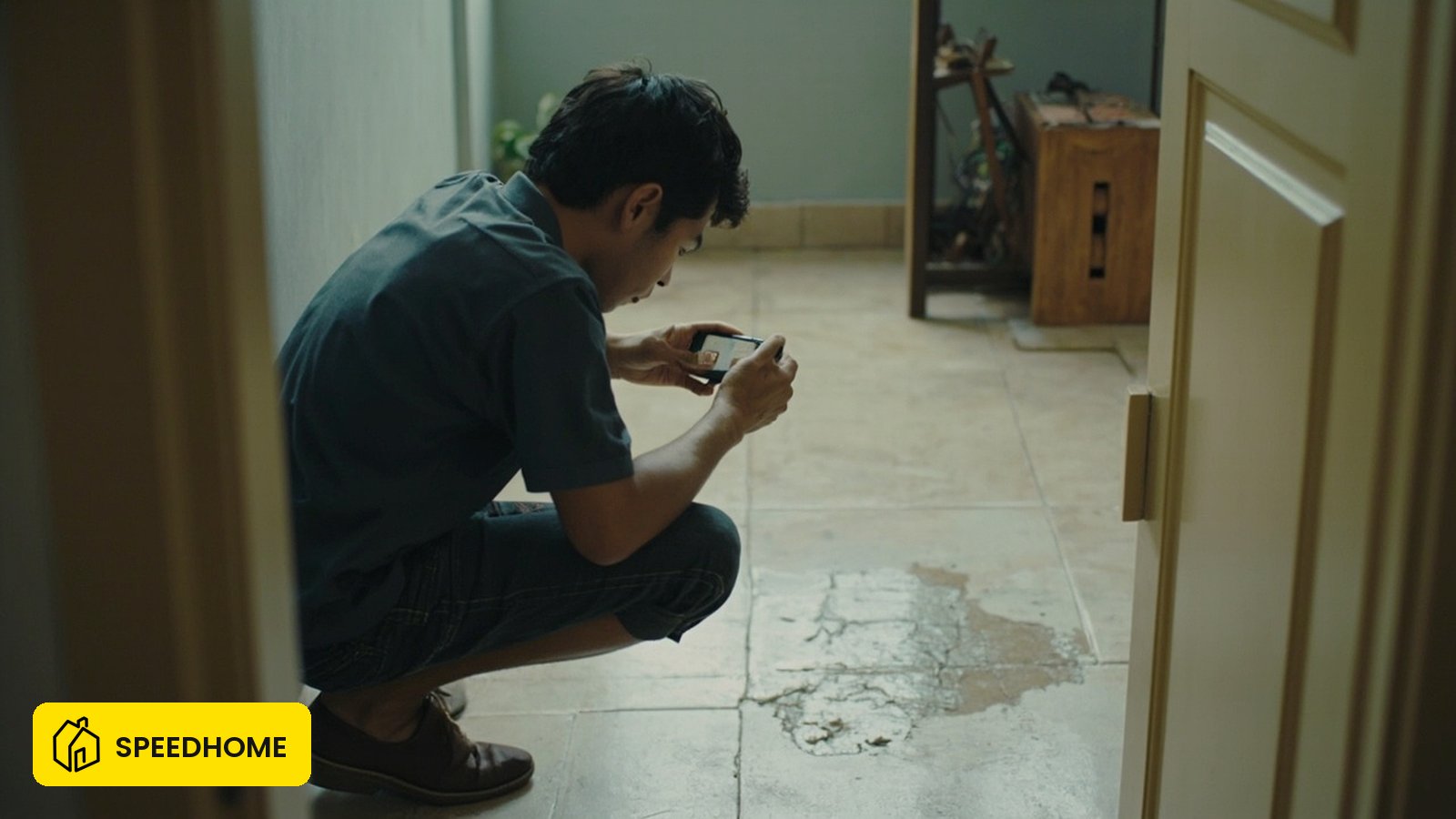
What happens if a rental property is damaged in Malaysia?
The answer depends on cause, not convenience. Tenant-caused damage is the tenant's cost; landlord-owned wear and age is the landlord's cost. The tenancy agreement and move-in condition evidence decide almost every case. Malaysia has no statute that assigns repair duties by rule — all obligations come from the contract you signed.
SPEEDHOME manages over 50,000 Malaysian tenancies and sees repair and damage disputes as one of the most common move-out flashpoints. The pattern is almost always the same: a landlord and tenant disagree about cause, not cost. Getting the cause right requires evidence gathered at move-in, not arguments after move-out.
How liability for damage is decided
Liability follows cause. If the damage came from the tenant's use, misuse, neglect, or unauthorised alteration, the tenant bears the cost. If it came from natural wear, age, structural failure, or an event outside the tenant's control, the landlord bears it. The tenancy agreement may shift some items — read yours carefully.
There is no Malaysian residential tenancy statute that assigns repair duties between landlord and tenant as a matter of law. The Residential Tenancy Act has been proposed but as of June 2026 is still not tabled in Parliament. All obligations derive from the tenancy agreement together with general contract principles under the Contracts Act 1950.
What that means in practice:
- Tenant-caused damage (burns, broken fittings, unauthorised drilling, missing items, pet damage where pets were not agreed) is the tenant's liability and can be recovered from the security deposit if the tenancy agreement permits — but only to the extent of proven loss, not a new-for-old replacement of an old item.
- Fair wear and tear (faded paint, thinning carpet, loose handles from ordinary use, appliances reaching end of life) is the landlord's maintenance cost. A landlord who deducts for genuine wear is on weak ground.
- The betterment rule: a landlord can only recover the depreciated value of a damaged old item, not the cost of a brand-new replacement, unless the item was new at move-in and the agreement says otherwise.
- Damage from events outside either party's control (storms, floods, infrastructure failure) usually falls on the landlord unless the agreement says otherwise and the tenant's neglect made it worse.
The move-in condition record decides almost every case. If neither party documented the unit's state at move-in, both sides argue from memory. A landlord without photos cannot prove the damage was not pre-existing. A tenant without photos cannot prove a defect was there on arrival. See who pays for repairs in a Malaysian rental for the full liability framework across all repair categories, and who pays the strata maintenance fee if your dispute involves strata charges.
| Damage type | Usual liable party | Key condition | Evidence that settles it |
|---|---|---|---|
| Burn marks, stains, holes from misuse | Tenant | Caused by tenant action, not age | Before/after photos, contractor quote |
| Missing or taken items (furniture, fixtures) | Tenant | Item was present at move-in | Move-in inventory, signed handover checklist |
| Pet damage (scratches, odour) | Tenant | Pets were not agreed in writing | TA clause, photos, cleaning/repair quotes |
| Unauthorised alteration (drilling, painting) | Tenant | Not permitted under the agreement | TA clause, photos, reinstatement cost |
| Broken fittings from force (doors, locks) | Tenant | Caused by misuse, not age | Before photo, move-out photo, technician note |
| Faded paint, worn carpet from normal use | Landlord | Ordinary ageing, reasonable use period | Move-in/out condition record, item age |
| Aircon compressor failure through age | Landlord | Wear through normal use, not neglect | Technician report confirming wear cause |
| Aircon filter damage from no servicing | Tenant | Tenant failed routine maintenance obligation | TA clause, service records or absence of them |
| Roof or wall leak (structural) | Landlord | Infrastructure failure, not tenant cause | Inspection report, plumber or contractor note |
| Blocked drain from tenant debris | Tenant | Blockage traceable to tenant conduct | Plumber report identifying debris source |
| Flood damage from external weather | Landlord (usually) | Outside tenant's control | Incident report, photos, local weather record |
| Strata maintenance fee (if applicable) | Landlord/owner | Owner owes the JMB or MC under the Strata Management Act 2013, not the occupant | JMB/MC notice, TA clause on who bears it |
All allocations are convention-based and TA-dependent. No Malaysian statute fixes these as mandatory rules. Contested cases need a lawyer.
What the landlord can and cannot do
A landlord can deduct proven damage costs from the security deposit, issue a written claim, or pursue recovery through the civil courts. A landlord cannot simply keep the deposit without evidence, demand new-for-old on old items, or self-help evict by locking you out or cutting utilities.
The security deposit exists to cover proven loss — unpaid rent, actual tenant-caused damage, cleaning if the agreement requires it. Malaysia has no statutory cap on how large a deposit may be; the amount is whatever the parties agreed. But a landlord's right to retain is limited by the Contracts Act 1950 section 74 — actual or provable loss, not a windfall.
What a landlord may do: - Deduct from the deposit for proven, itemised damage supported by evidence and the tenancy agreement. - Issue a written letter of demand for costs that exceed the deposit. - File a civil claim — Magistrates' Court small-claims procedure for amounts up to RM5,000 (no lawyers needed), or Magistrates' and Sessions Court for larger claims.
What a landlord may not do: - Simply keep the deposit and refuse to return it without a written breakdown and evidence. - Deduct for fair wear and tear, pre-existing defects, or age-related deterioration. - Enter the unit without reasonable notice except in a genuine emergency. - Change locks, remove belongings, or disconnect water or electricity to pressure the tenant. Self-help eviction is unlawful under section 7(2) of the Specific Relief Act 1950.
What to do if the property is damaged and you are the tenant
Report damage in writing as soon as it occurs. Do not wait until move-out. Written reports protect you even for damage you did not cause. If you caused damage, acknowledge it early, get a quote, and negotiate with the landlord before it becomes a dispute at deposit-return time.
Steps in order:
- Photograph and timestamp the damage on the day you notice it — from the same angle as any move-in photos if possible.
- Report to the landlord in writing (WhatsApp, email, or the SPEEDHOME platform) with photos attached. Keep the record.
- Get a technician or contractor assessment if the cause is not obvious — a plumber's note saying "blocked from external debris" vs "pipe corrosion" changes who pays. Use SPEEDFIX for managed repair jobs that need a vetted contractor without the hassle of sourcing one yourself.
- Check the tenancy agreement for any clause on routine servicing (especially aircon) and make sure you have complied.
- Do not attempt repairs yourself unless the agreement allows it, or you risk being held liable for the cost of fixing your fix.
- Keep all communication on the record. At move-out, your written reports and photos are your strongest protection if the landlord claims damage that was already there or was caused by age.
If the landlord is slow to fix a habitability issue (no water, failed electrical supply, serious structural risk), document your reports and the response timeline. The remedy is through formal demand and, if needed, a civil court claim — not withholding rent unilaterally, which can create its own liability. For isolated repair jobs, SPEEDFIX is the managed on-platform route that removes the back-and-forth with contractors. If you are looking for a new rental where the landlord's repair obligations and the tenancy agreement terms are set from the start, browse rentals on SPEEDHOME.
FAQ
Can the landlord keep my full deposit if the property is damaged?
Only to the extent of proven loss. The tenancy agreement governs the amount; general contract law (Contracts Act 1950 s.74) limits recovery to actual or provable damage, not a penalty or a new-for-old replacement of an old item. The landlord must provide an itemised breakdown with evidence. If you disagree, the dispute goes to the civil courts — claims up to RM5,000 use the Magistrates' Court small-claims procedure with no lawyers required, and larger claims go to the Magistrates' or Sessions Court. There is no dedicated residential tenancy tribunal in Malaysia as of June 2026.
Who pays if the damage happened from normal use over time?
The landlord does. Normal ageing, fair wear and tear, and end-of-life failure of appliances from ordinary use are the landlord's maintenance cost. A tenant is not required to return a five-year-old unit in the same condition as a brand-new one. The boundary is evidence: if the item failed through age, the move-in condition record and the item's age are the proof.
What if there is no move-in condition record?
Both parties carry risk. A landlord cannot prove damage was not pre-existing. A tenant cannot prove a defect was already there. Where the evidence is absent, courts and mediators tend to ask what was reasonable given the tenancy length and type of unit. This is the strongest argument for documenting condition at every handover — not to distrust the other party, but to protect both sides.
Does SPEEDHOME's Zero Deposit change who pays for damage?
Zero Deposit replaces the upfront cash deposit; it is a managed rental-risk system, not a financial guarantee product. In the rare case of severe end-of-tenancy damage the recoverable amount can be limited, so it is not a blanket guarantee. The liability rules for who caused what damage do not change — evidence still decides the outcome. Not every SPEEDHOME unit qualifies for Zero Deposit; check the individual listing.
Where do I go if I cannot resolve a damage dispute with my landlord?
The civil courts. For amounts up to RM5,000, use the Magistrates' Court small-claims procedure (Order 93, Rules of Court 2012) — no lawyers, low cost, designed for straightforward debt or deposit claims. Larger amounts go to the Magistrates' Court (up to RM100,000) or Sessions Court (up to RM1,000,000). The Tribunal for Consumer Claims does not hear private residential tenancy deposit disputes — a tenancy is an interest in land, outside its jurisdiction. There is no dedicated residential tenancy tribunal in Malaysia as of June 2026.