
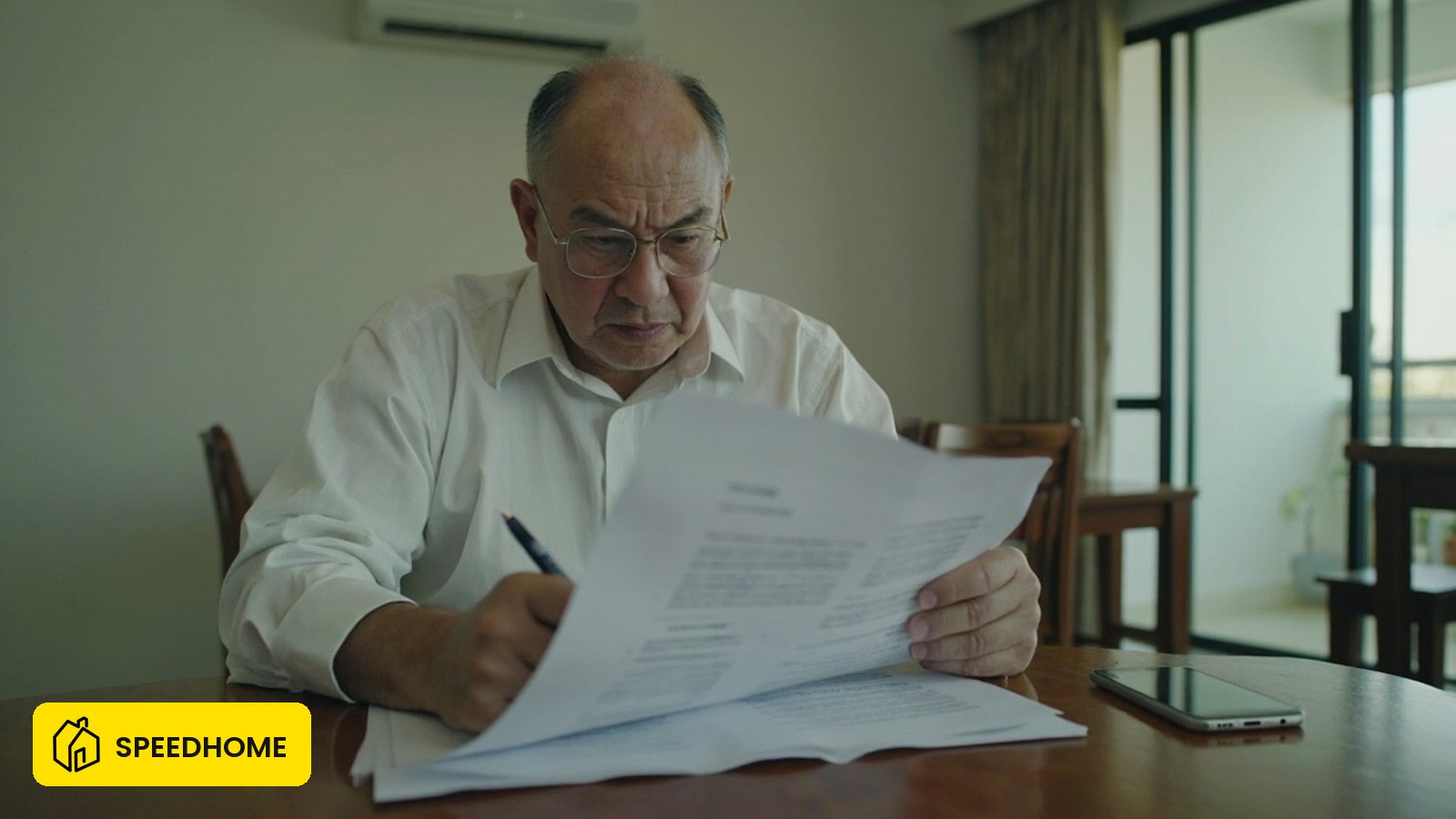
In Malaysia, landlords cannot forcibly evict overstaying holdover tenants through lockouts or utility cuts, which violates Section 7(2) of the Specific Relief Act 1950. The lawful eviction process requires serving a formal notice to vacate, electing double rent under Civil Law Act Section 28(4)(a), and obtaining a court-ordered Writ of Possession executed by a bailiff.
What happens when a tenant overstays in Malaysia?
When a tenant stays past the lease end date without a new agreement, they become a holdover tenant. You cannot forcibly remove them. The lawful path is a written demand, a notice to vacate, and — if they still refuse — a court application for a Writ of Possession enforced by the court bailiff. On the managed platform, the average time from a tenant's first rental default to recovery action is about 31 days — when the paperwork is in order before the problem starts.
Malaysia has no Residential Tenancy Act in force as of 2026. The proposed RTA remains a draft Bill not yet gazetted. Residential tenancy is governed by the tenancy agreement itself, supported by general statutes: the Contracts Act 1950, the Civil Law Act 1956, and the Specific Relief Act 1950.
The critical rule is in section 7(2) of the Specific Relief Act 1950: a landlord cannot recover possession by self-help. Locking a holdover tenant out, disconnecting water or electricity, or removing their belongings is unlawful — regardless of what the tenant has done, or what the tenancy agreement says.
What is a holdover tenant?
A holdover tenant is someone who remains in the property after the tenancy end date without a new or renewed agreement. In Malaysia, an unacknowledged holdover creates a periodic tenancy by statute, and the tenant may be liable for double rent under section 28(4)(a) of the Civil Law Act 1956 — but only when the landlord expressly elects that remedy in writing.
The double-rent claim does not happen automatically. The landlord must make a clear written election. If the landlord simply accepts any new payment after the expiry date without reserving the right to claim double rent, that action may instead imply a new periodic tenancy on the original terms.
Two practical points follow from this:
- Do not accept rent after the expiry date unless you know whether you are extending or electing double rent.
- If you want to pursue double rent, record the election in writing at the point the tenant overstays — not weeks later.
How long can a tenant stay after the lease expires?
There is no fixed legal grace period. Once the tenancy end date passes, the tenant has no right to remain without your written agreement. How quickly you can recover the unit depends on how fast you serve a valid written demand and notice, and whether the tenant cooperates or requires a court order.
In practice, uncontested cases where the tenant eventually cooperates resolve in weeks. Contested cases that go to court take months. The timeline depends mainly on:
| Factor | Impact on timeline |
|---|---|
| Written demand served promptly | Shortens the process — starts the cure clock |
| Tenancy agreement is stamped and clear | Reduces court delays and challenges |
| Tenant cooperates after notice | Can resolve without court |
| Tenant contests or disappears | Court process required: 4–12+ months |
| Arrears also outstanding | Additional step (Writ of Distress) may run in parallel |
| Documents complete before filing | Fewer adjournments |
The landlord's biggest lever is acting quickly and on paper. A demand sent by WhatsApp only, or a verbal request to leave, is not the same as a formal written demand.
Can a tenant stay after giving notice?
If the tenant gave notice to vacate and then did not leave on the stated date, you are back to the holdover position. The tenant's own notice does not give you the right to physically remove them. You still need to follow the lawful process: serve a new written demand, give a final date, and apply to court if they remain.
A common landlord mistake here is assuming that once the tenant has given notice, the landlord can take direct action if the tenant changes their mind. Section 7(2) of the Specific Relief Act 1950 applies regardless of who gave notice first. The only route to recovery is through the court-issued Writ of Possession, enforced by the court bailiff.
What is the lawful step-by-step process?
The sequence is: written demand, notice of termination, court application for a Writ of Possession, and bailiff enforcement. At no stage does the landlord physically remove the tenant or touch the locks.
| Step | What to do | What not to do |
|---|---|---|
| 1. Confirm the overstay in writing | Check the tenancy end date against the agreement; note whether any payment was received after expiry | Do not assume verbal discussions are enough |
| 2. Send a written demand | State the end date, confirm the tenancy has expired, and require the tenant to vacate by a specific date (14 days is SPEEDHOME's standard) | Do not combine this with unrelated complaints or threats |
| 3. Serve notice of termination | If the tenant does not leave by the demand date, serve a formal notice of termination citing the tenancy clause | Do not issue notice before the demand period has expired |
| 4. Apply for a Writ of Possession | File at the appropriate court tier (Magistrates' Court for most residential cases; Sessions Court for higher-value matters) with the stamped agreement, demand letter, and notice | Do not file without complete documents — incomplete files cause delays |
| 5. Bailiff enforcement | The court bailiff executes the order on the court-scheduled date; the landlord does not participate in removal | Do not attend personally to assist, instruct, or pressure the bailiff |
Keep copies of every document at every step. The stamped tenancy agreement, the written demand with proof of service, and the termination notice are the three most important documents for any court application.
What can a landlord NOT do when a tenant overstays?
Locking the tenant out, disconnecting water or electricity, removing their belongings, and posting their personal details online are all unlawful under Malaysian law. Any of these moves can reverse the advantage — even when the tenant is clearly in the wrong.
Section 7(2) of the Specific Relief Act 1950 applies to holdover cases exactly as it does to mid-tenancy defaults. The landlord cannot lawfully do any of the following:
- Swap the door lock or disable the access card to block entry
- Disconnect electricity, water, or any other utility to pressure the tenant to leave
- Remove or warehouse the tenant's furniture, appliances, or personal items without a court order
- Post the tenant's identity card number, photograph, phone number, or address on social media or group chats — this triggers Personal Data Protection Act 2010 exposure and potential defamation liability on the landlord
- Tell the building management to deny the tenant access without a court order
The practical cost of taking a shortcut: if the tenant's lawyer writes to you citing section 7(2), you face counterclaims that can complicate your recovery case. Stay on the lawful path from day one. If that letter has already arrived, what a tenant's lawyer letter means when it says you cannot kick them out explains what it does and does not change about your position.
What documents does a landlord need?
A complete file before you apply to court: the stamped tenancy agreement, proof of the tenancy end date, the written demand letter with delivery evidence, the termination notice, payment records showing the holdover period, and any written communications with the tenant.
| Document | Why it matters |
|---|---|
| Stamped tenancy agreement | Proves the tenancy terms and the expiry date; unstamped agreements create complications |
| Written demand (with delivery proof) | Starts the formal clock; WhatsApp screenshot is weak evidence — courier or registered post is stronger |
| Termination notice | Required before court application if the agreement includes a notice period |
| Payment records | Clarifies whether any holdover rent was received and whether double-rent election was made |
| Move-in condition photos | Matters for any deposit or damage claim at the same time as recovery |
| All written communications | Shows the tenancy timeline and any acknowledgements by the tenant |
If arrears are also outstanding, you may need to file a Writ of Distress separately. The Writ of Distress recovers rent arrears only (up to 12 months) — it does not evict the tenant. Both writs may need to run in parallel for a full recovery.
Why does starting early matter?
The landlord's window for an orderly recovery closes quickly. Each week without a written demand is a week the tenant can argue an implied new tenancy. Starting with written paperwork on day one of the overstay — not day 30 — is the single biggest practical difference between a manageable situation and an expensive one.
SPEEDHOME's managed platform is built so the recovery file is ready before the first default: stamped agreement, move-in condition report, and a workflow that triggers the written demand at day one of a missed obligation — not after weeks of waiting. On SPEEDHOME, the average time from first rental default to recovery action is about 31 days. That figure reflects early process discipline, not a guarantee of what any court will deliver.
For landlords managing independently, the same discipline applies: decide the expiry date rule before the tenancy starts, document the handover, and act on paper the day the overstay begins.
Which lawful overstay protocol runs through SPEEDHOME recovery?
If your tenant has overstayed and you need a clear process, the eviction process guide covers the full step-by-step from written demand to Writ of Possession, including costs and court tiers. If the overstay is combined with unpaid rent, the tenant not paying rent guide covers arrears recovery and the consent-based credit reporting path.
SPEEDHOME's landlord platform pre-builds the documentation that makes recovery faster: a stamped tenancy agreement, a move-in condition report, and a structured process for demands and notices. For landlords who want that managed workflow from the start, SPEEDHOME for landlords provides the full operating stack.
Zero Deposit is available on qualifying SPEEDHOME units. It is a managed rental-risk system — it replaces the upfront cash deposit. It is not a financial guarantee product and does not provide blanket protection. Not every unit qualifies.
Frequently asked questions
Can I lock my tenant out if they overstay?
No. Locking a holdover tenant out is unlawful under section 7(2) of the Specific Relief Act 1950, regardless of whether they owe rent or have ignored your requests to leave. The only lawful way to recover possession is a court-issued Writ of Possession enforced by the court bailiff. Taking matters into your own hands gives the tenant grounds for a counterclaim against you.
How long does it take to evict an overstaying tenant in Malaysia?
There is no fixed timeline. An uncontested case where the tenant cooperates after a formal written demand may resolve in weeks. A contested case that goes to court typically takes four to twelve months or more, depending on the court's schedule and how the tenant responds. The landlord's biggest lever is acting on paper from day one of the overstay.
Can I claim double rent from an overstaying tenant in Malaysia?
Yes, but only if you expressly elect to do so in writing under section 28(4)(a) of the Civil Law Act 1956. The double-rent remedy does not apply automatically just because the tenant has stayed past the expiry date. If you accept a rent payment after the expiry without reserving the right to claim double rent, you may inadvertently create a new periodic tenancy instead.
What if the tenant says they gave notice but didn't leave?
A tenant's own notice to vacate does not give you the right to physically remove them. If they failed to leave on the stated date, you are in a holdover situation and must follow the same lawful process: written demand, termination notice, and court application if they still refuse. Keep written copies of the tenant's original notice as evidence.
Does Malaysia have a special tribunal for tenant overstay cases?
No. There is no dedicated residential tenancy tribunal in Malaysia. Overstay and possession disputes go through the civil courts. The Tribunal for Consumer Claims does not hear private residential tenancy disputes — tenancy is an interest in land, which falls outside the Consumer Protection Act 1999. Use the Magistrates' Court for smaller claims and the Sessions Court for larger matters.
What is the most important document for an overstay case?
The stamped tenancy agreement is the foundation — it proves the expiry date, the notice requirements, and the tenancy terms. Without it, the court process becomes more complicated. Alongside it, your written demand with delivery proof and the termination notice are the documents that start the formal recovery clock and establish that you followed the lawful process.
FAQ
What is the first thing I should do before acting on this rental issue?
Start with the tenancy agreement, dated photos, payment records, and written messages. In Malaysia, rental disputes are easier to resolve when the facts are documented before anyone escalates, threatens, or relies on memory.
Can WhatsApp messages count as useful evidence?
Yes, they are useful supporting evidence, but they should not be your only record. Keep the signed tenancy agreement, receipts, inspection photos, notices, and any acknowledgement from the other party together in one folder.
Should I use a template or ask a lawyer?
Use a template for routine notices and checklists; get legal advice when possession, unpaid rent, deposit deductions, or court action is involved. A template helps you organise facts, but it cannot decide strategy for a disputed case.
Where should this lead after I understand the issue?
Tenants should compare verified listings before committing; landlords should tighten screening, documentation, and the tenancy agreement before the next handover. The practical next step is prevention, not just fixing one dispute.
Accuracy note. Grounded in Specific Relief Act 1950, Contracts Act 1950, Civil Law Act 1956 and Personal Data Protection Act 2010. Every figure is bound to a dated fact registry and re-verified on each update. Spotted an error? Email [email protected] with this page's link.