
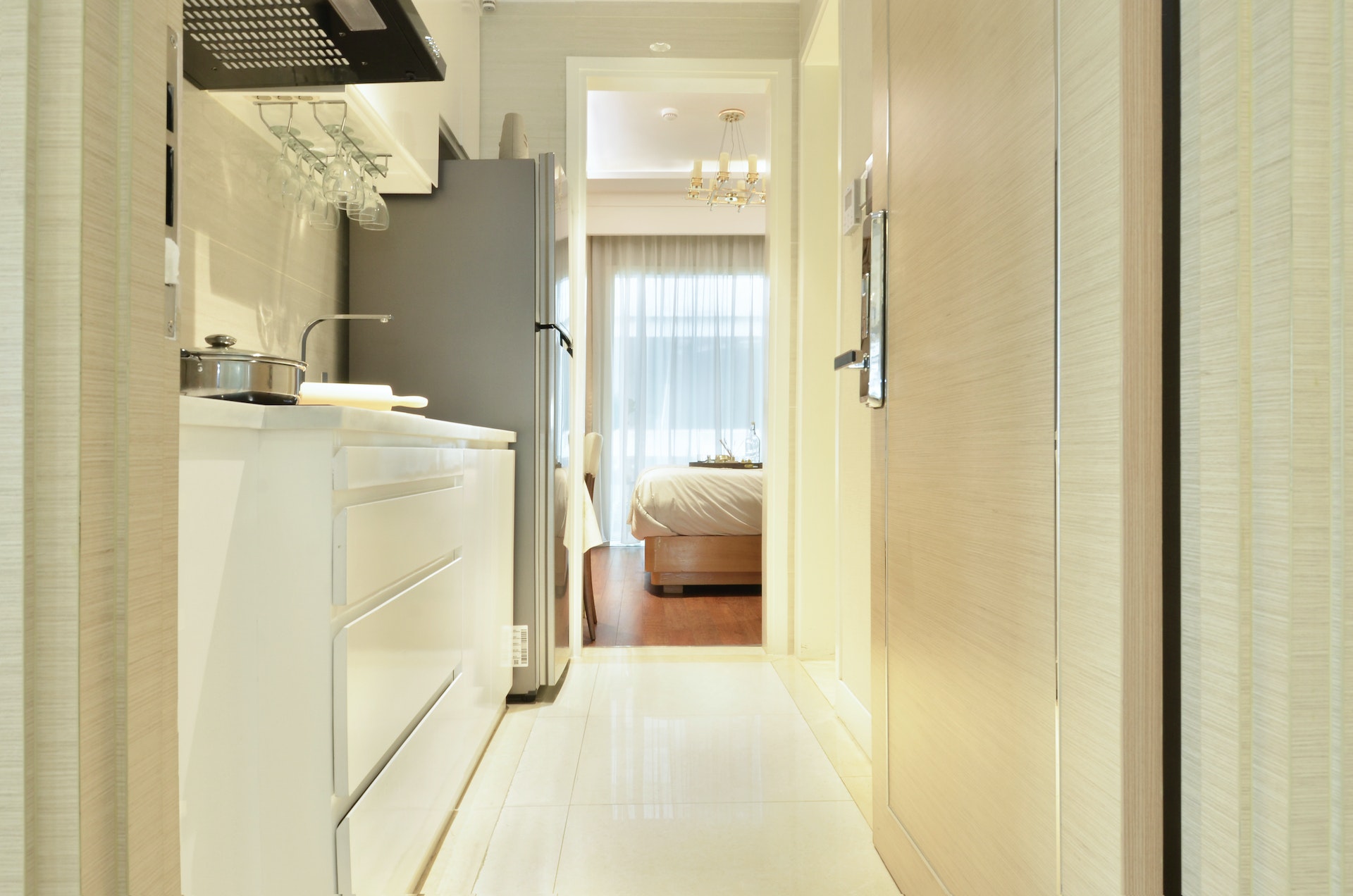
Women-only rooms in Malaysia are ordinary rooms and co-living spaces advertised with a gender condition — usually written as "PENYEWA PEREMPUAN SAHAJA", "muslimah" or "只限女生". Market listings typically run RM270-RM350 for a shared room, RM300-RM500 for a single room and RM550-RM900 for a master room, and female-only rooms commonly cost more than equivalent rooms in mixed houses. The condition is a listing term, not a regulated product category — what makes it real is what goes into your tenancy agreement. This guide covers what the label means, the rules to expect, costs, and how to verify before you sign.
What "women-only" means in the Malaysian rental market
A women-only room is a room whose listing restricts occupancy to female tenants; the condition lives in the listing and the house rules, and only becomes binding on the owner when it is written into your tenancy agreement.
In the Malaysian market you will meet three common labels. "PENYEWA PEREMPUAN SAHAJA" (female tenants only) is the Malay-market term used across listing sites and Facebook groups. "Bilik muslimah" signals a house run on Muslim female-only lines — the same female-only occupancy plus halal kitchen practice and modest-conduct house rules. In the Chinese-language market the same idea is "只限女生" — girls only. All three point to the same product: a room in a house or co-living unit occupied only by women.
Who offers them varies. Individual landlords rent rooms in their own houses with a gender condition. Co-living and room operators run whole units as female-only houses. There is no licensing category or statute that defines or polices "women-only" — the term binds the parties the same way any other tenancy term does, through the agreement both of you sign. That is why the practical questions are always: who controls who moves in, and is the condition written down?
The demand side is real and underserved. Malay-language searches for female-only rooms run into the hundreds of searches per month across dozens of phrasings, concentrated on Kuala Lumpur, Cyberjaya and student corridors. Most of that demand is still served by informal channels rather than verified listings, which is exactly where verification problems start.
How much does a women-only room cost?
Expect RM270-RM350 for a shared room, RM300-RM500 for a single room and RM550-RM900 for a master room in a female-only house; the female-only premium over a comparable mixed-gender room is commonly around RM200 a month.
Market listings typically show these bands:
| Room type | Typical monthly rent | What you usually get |
|---|---|---|
| Shared room (2 pax) | RM270-RM350 | Bed in a twin-sharing room, shared bathroom |
| Single room | RM300-RM500 | Own room in a shared female-only unit |
| Master room | RM550-RM900 | Own room with attached bathroom, most privacy |
The premium is the interesting part. Malaysian market reporting in June 2026 found tenants paying around RM600 for a female-only room against roughly RM400 for a comparable room in a mixed-gender house — women paying on the order of RM200 a month, or about 50% more, to avoid mixed-gender occupancy (Utusan Malaysia, June 2026). The premium reflects real scarcity: fewer female-only rooms than women who want them, in the locations and price bands that matter.
Treat all figures as market bands, not quotes. Rent moves with location, furnishing and condition — confirm the current range against live listings for your area before budgeting, and read what the monthly figure includes (utilities, WiFi, cleaning) rather than the headline number alone.
What rules are normal in a female-only house?
Expect four house rules as market practice: female-only occupancy, no non-mahram male visitors, halal kitchen practice, and shared cleanliness standards. Curfews and prayer schedules are not a market norm — treat any listing that adds them as that house's own rules, and check you can live with them.
Scanning how female-only and muslimah listings are actually framed in the Malaysian market, a consistent rule set appears:
| Rule | What it means in practice | How common |
|---|---|---|
| Female-only occupancy | All tenants are women; the condition covers who moves in, not just who signed first | Standard |
| No non-mahram male visitors | Male friends and partners cannot stay over or visit privately; public areas only if at all | Standard in muslimah houses, common elsewhere |
| Halal kitchen | No pork or alcohol brought into the house; kitchen shared on that basis | Standard in muslimah houses |
| Cleanliness | Shared cleaning roster or an included cleaning service; keep common areas clear | Common |
Two honest notes. First, the visitor rule is the one that actually shapes daily life — if a partner visits regularly or stays over, a muslimah house will not work regardless of how nice the room is. Ask about it at the viewing, not after moving in. Second, some listings add extra conditions — curfews, guest registration, prayer routines. Those are not market-standard; they are that owner's own preferences. They are legitimate house rules, but they bind you, so read them before signing rather than discovering them in week two.
Get the full rule set in writing as an annex to your tenancy agreement. A verbal "girls only, no problems" is worth exactly what paper it is not written on.
How do you verify a women-only room before signing?
Verify four things before any money moves: the gender condition written into the tenancy agreement, the current housemates at a physical viewing, who controls placement in the house, and the house rules in writing.
| Check | How to do it | Why it matters |
|---|---|---|
| Gender condition in the agreement | Ask for the clause to state female-only occupancy explicitly | A listing label binds nobody; the agreement binds the owner |
| Current housemates | View in person; meet or at least see who lives there now | Confirms the house is actually female-only today, not just advertised so |
| Who manages placement | Ask who fills empty rooms — live-in owner, operator, or head tenant | The person who fills rooms can change the house's composition |
| House rules in writing | Request the rules as a signed annex | Prevents "the rules changed" after you move in |
| Viewing safety | Bring a friend, view in daylight, share your location | You are meeting a stranger at their property; keep it routine, not risky |
The viewing itself is doing double duty: you are inspecting the room and verifying the claim. Tenant accounts online describe rooms advertised as girls-only where the owner later moved men in — the pattern is real, and the pages after this one deal with it directly. The verifying version is what to do when a female-only room turns mixed; the avoiding version is how rental scams target women searching alone.
On deposits: there is no statutory cap on how many months a landlord may ask for — the usual room convention is one to two months plus utility deposit, and it is all negotiable before signing. Zero Deposit options on some SPEEDHOME listings replace the upfront cash deposit with a managed rental-risk system; eligibility is per listing, so confirm it on the listing itself rather than assuming.
Where women actually find these rooms
Most female-only supply still moves through public Facebook groups and word of mouth; verified listing platforms carry a smaller share, which is precisely why the verification checklist above matters more in this niche.
The conversation lives in public Facebook groups — city-level rooms-to-let groups, muslimah housing groups, university accommodation groups. They are where supply and demand actually meet: more rooms, faster responses, more negotiation. They are also unverified. Nobody checks that the poster owns the room, that the photos are current, or that the "girls only" label matches the house. The same goes for listing-marketplace posts forwarded in chat.
That is not a reason to avoid groups; it is a reason to keep the checks. Whatever the channel, the same rules apply: view in person before paying anything, put the gender condition and house rules into the agreement, and never send a deposit to "secure" a room you have not seen. If a group deal feels pressured — pay today or lose the room — that pressure is the scam pattern, not the market.
Ready to look at women-friendly rooms?
If you are starting your search, browse rooms and co-living rentals and compare live listings, total monthly cost and move-in terms in your target area. For the broader shared-living decision — managed co-living versus a plain room rental — the co-living in Malaysia guide and the co-living versus room rental comparison walk through the trade-offs, including what a bundled monthly charge should cover.
SPEEDHOME is one option worth comparing alongside the routes above.
FAQ
What does "PENYEWA PEREMPUAN SAHAJA" mean?
It is Malay for "female tenants only" — the standard market label on rooms and houses restricted to women. The Chinese-language equivalent is "只限女生", and "bilik muslimah" signals a Muslim female-only house with halal kitchen practice and modest-conduct house rules. All three are listing conditions, made binding by the tenancy agreement.
How much more does a female-only room cost?
Market reporting from June 2026 found female-only rooms around RM600 against roughly RM400 for comparable rooms in mixed houses — about RM200 a month more. Bands by room type: RM270-RM350 shared, RM300-RM500 single, RM550-RM900 master. Confirm current figures against live listings in your area.
Are curfews or prayer schedules normal in female-only houses?
No. The standard market rules are female-only occupancy, no non-mahram male visitors, halal kitchen and cleanliness. Curfews and prayer routines appear only in individual listings as the owner's own conditions. They are legitimate house rules, but read them before signing because they bind you.
Can the owner move male tenants into a girls-only house after I sign?
It happens — tenant accounts online describe exactly this bait-and-switch. Your protection is the tenancy agreement: if the female-only condition is written in, changing the house's composition is a breach you can act on. If it was only in the ad, you are negotiating from weakness. See female-only room turned mixed for the before-and-after playbook.
Do women-only rooms include utilities?
Sometimes — read the listing. Some include utilities and WiFi in the monthly figure, others split bills or cap them. There is no market-wide rule, so confirm in writing what the monthly charge covers and whether there is a utility cap, before you compare rents.
Is Zero Deposit available for female-only rooms?
Some SPEEDHOME room and co-living listings are Zero Deposit eligible; it is confirmed per listing, not per category. Zero Deposit is a managed rental-risk system that replaces the upfront cash deposit — check the live listing for eligibility before assuming it applies.
Accuracy note. This page is built on verified primary sources and a dated fact registry; figures are re-verified on each update. Spotted an error? Email [email protected] with this page's link.