
Can a landlord charge for a full interior repaint after a 3-year tenancy?
Usually not for the full repaint. After three years, scuffed and faded paint is fair wear and tear - the landlord's cost, not the tenant's damage. A landlord may only recover proven loss at the depreciated value of the damaged paintwork, never a brand-new whole-unit repaint.
In SPEEDHOME's experience running joint check-outs on managed tenancies, a whole-unit repaint charge is the single most common make-good line item raised at move-out. The outcome then turns almost entirely on the move-in photo record: where the tenant and landlord each hold a dated, timestamped baseline of every wall and ceiling, the depreciation-based counter-amount prevails; where the record is missing or one-sided, the landlord's lump-sum tends to stand.
Paint has a finite useful life - interior emulsion in an occupied Malaysian apartment is typically due for refreshing well inside a three-year window. By the end of a three-year stay a fair chunk of the original paint job's value has already aged out through ordinary living. Asking the tenant to fund that refresh on top of normal ageing is, in plain terms, paying for an upgrade that was never theirs to fund - which the betterment rule in general contract law does not allow.
Wear and tear vs damage - and the betterment rule
A landlord can only recover proven loss, never a brand-new replacement. Malaysia has no statutory residential deposit cap and no Residential Tenancy Act in force as of 2026, so a deposit deduction is limited to the depreciated value of what was actually damaged under general contract law.
That gives you two filters to run on any repaint charge:
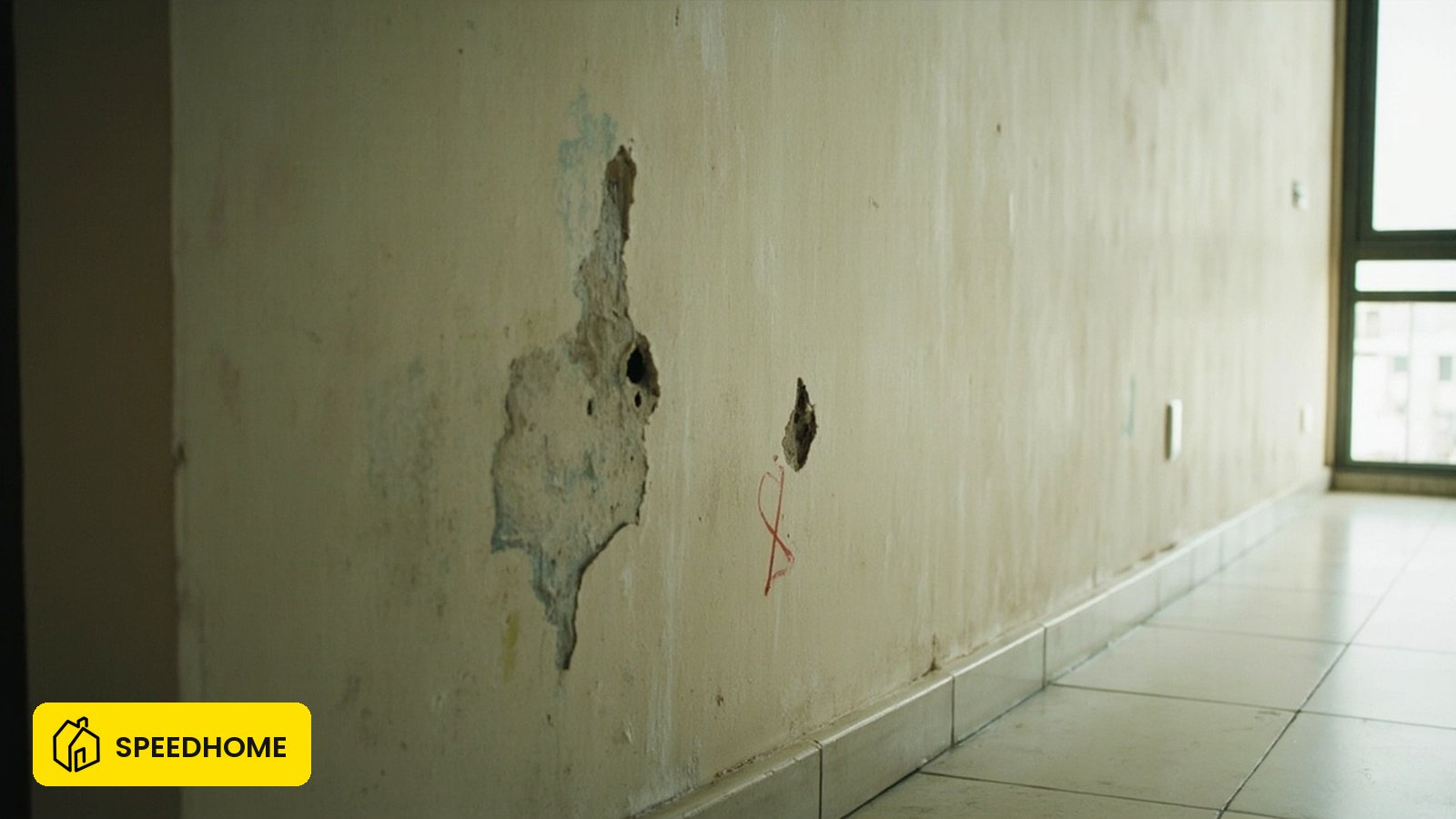
- Was it damage, or wear and tear? Faded colour, light surface scuffs, hairline rub marks behind doors, and minor nail holes from normal picture hanging are wear and tear - the landlord's cost. Crayon or marker over large walls, grease-blackened kitchen paint, ink stains, deep gouges, or smoke-yellowed ceilings from indoor smoking are damage the tenant can be asked to pay for.
- If it is damage, what is the recoverable amount? The landlord recovers the depreciated value of the damaged paintwork - not the full cost of repainting the whole unit. Charging the tenant for a premium new coat that leaves the flat in better condition than its aged state is betterment, which the general contract-law principle does not award.
A "full interior repaint" invoice handed to a tenant after three years usually fails the second filter: even where some damage exists, the fair charge is a partial, depreciated contribution scoped to the affected walls, not the entire job.
How to dispute the charge in writing
- Request the landlord's evidence in writing. Ask for the itemised invoice (which walls, what damage, what cost), the dated move-in photo record they are relying on, and the exact wording of the make-good clause in the tenancy agreement. A landlord who cannot produce dated photos and a specific clause rarely has a defensible position.
- Reply with your counter-evidence and a counter-amount. Attach your dated move-in photos, your move-out photos, and a worked depreciation calculation for the affected walls only. Frame the counter-amount as "X% of the depreciated repaint cost for walls {A, B, C}", not a flat number.
- If the landlord still insists, file the dispute. Claims up to RM5,000 go through the Magistrates' Court small-claims procedure (no lawyer required); larger sums go to the Magistrates' or Sessions Court. The Tribunal for Consumer Claims does not hear private residential tenancy deposit disputes.
Evidence checklist
- Dated move-in photos (every wall, ceiling, corner) - ideally timestamped and stored in a tenancy-platform record, not just your phone.
- Move-out photos taken on handover day in the same angles and lighting.
- The tenancy agreement's make-good clause - print the exact page and highlight the wording.
- The landlord's itemised invoice showing which rooms and walls they claim were damaged.
- Every written exchange (WhatsApp, email) showing you asked for evidence and tried to resolve first.
Typical figures (estimates only, to anchor the dispute)
| Figure | Indicative range | Source / note |
|---|---|---|
| Interior repaint, 3-bedroom Klang Valley unit | RM2,500 - RM5,500 | Based on 2025 contractor quotes, range only - get your own quote |
| Typical useful life of interior emulsion paint | 3 - 5 years | Industry guidance for occupied Malaysian apartments |
| Magistrates' Court small-claims filing fee | RM30 | Court fee, not legal fees (no lawyer required for claims ≤RM5,000) |
| Small-claims jurisdiction limit | RM5,000 | Claims above this go to the Magistrates' or Sessions Court with formal pleadings |
Treat these as estimates to anchor the dispute conversation, not authoritative figures - your actual repaint quote and your local court's fee schedule govern.
Is a full repaint chargeable after a long tenancy?
| Scenario at move-out (after ~3 years) | Wear and tear or damage? | What the landlord can fairly recover |
|---|---|---|
| Faded paint, light scuffs, rub marks behind doors | Wear and tear | Nothing - normal ageing is the landlord's cost |
| Small picture-frame nail holes from normal hanging | Wear and tear | Nothing, or nominal patching only |
| A few scuffed corners from furniture movement | Wear and tear | Nothing |
| Crayon or marker across walls drawn by a child | Damage | Depreciated cost of repainting the affected walls only |
| Heavy grease or smoke staining in kitchen / from indoor smoking | Damage | Depreciated cost of repainting affected rooms |
| Deep gouges, torn paint from peeled tape or stickers | Damage | Depreciated cost of repairing affected areas |
| A whole-unit repaint because "it looks tired" | Wear and tear | Nothing - the landlord cannot refresh on the tenant's tab |
Under the Contracts Act 1950, the general rule (s.56) is that a party who causes loss recovers only the loss actually caused - the same logic that caps a repaint charge at depreciated value rather than a new-for-old figure.
What if the tenancy agreement is silent or vague on repainting?
If the make-good clause says only "return the unit in its original condition" without scoping paint or depreciation, the tenant position is stronger - not weaker. Vague wording is interpreted against the landlord under general contract-law principles, and the burden of proving specific damage with dated evidence still rests with them.
Two edge cases come up repeatedly:
- The TA is silent on paint entirely. If the tenancy agreement never mentions repainting, the landlord cannot invent a repaint obligation at move-out. The default position is normal wear and tear over the tenancy term, and any deduction still has to be tied to specific, evidenced damage - not the age of the paint across the whole unit.
- The landlord refuses to share the move-in photo record. Ask for it in writing (WhatsApp or email counts). If the landlord controls the only photo set and will not release it, raise this explicitly in your counter-letter and in any court filing: a party who withholds the baseline cannot rely on it to prove damage. Keep screenshots of every request and refusal - those become the exhibit that undermines their claim.
On SPEEDHOME's managed tenancies the make-good clause is scoped to specific damage categories by default, and the move-in photo record is timestamped on both sides - so this dispute rarely reaches the tenant in the first place. For the broader landlord-tax-side framing on what is actually deductible, see rental property repair and maintenance in Malaysia.
Where does SPEEDHOME fit?
On SPEEDHOME's managed platform the repaint dispute is almost never about the paint - it is about whether the tenancy agreement's make-good clause and the move-in condition record were specific enough. A tenant with dated move-in photos and a clear handover sheet defeats a vague "repaint everything" claim without arguing about what counts as wear and tear.
Most generic tenancy agreements in Malaysia contain a broad "return the unit in its original condition" clause, which landlords read as "repaint everything" and tenants read as "normal wear is fine." The ambiguity is what generates the charge. Two things resolve it cleanly: a move-in photo baseline that fixes the starting condition of the paint, and a make-good clause that scopes what the tenant actually owes (cleaning, repair of specific damage - not a full cosmetic refresh). In SPEEDHOME's mediated experience, where the condition record is thin the landlord's lump-sum repaint invoice tends to stand unchallenged; where it is dated and shared on both sides, the depreciated-partial-cost position is the one that holds up.
SPEEDHOME's joint check-out process keeps the move-in and move-out photo records on both sides of the platform, which is what makes the difference between a vague "repaint everything" claim and a defensible, evidence-based depreciation counter-amount. For the full move-out and deposit-handling walkthrough see how SPEEDHOME handles move-out and the deposit return, and for the platform's joint inspection process see the SPEEDHOME joint check-out explained.
For the underlying framework on damage versus normal ageing, see property damage in a Malaysia rental - who is responsible, and the broader rental property repair and maintenance guide. If a landlord has raised a charge after a joint check-out that flagged nothing, the analysis in joint check-out clean but landlord still charged applies directly. If you are renting again and want a tenancy where the handover record is kept on both sides, browse verified listings at /rent.
FAQ
Most repaint disputes end at the counter-letter. Push back with dated photos, the make-good clause wording, and a depreciated counter-amount - in SPEEDHOME's experience fewer than 10% of mediated repaint disputes reach the Magistrates' Court.
Can a landlord charge me for repainting the whole flat after I stayed 3 years?
Usually not the full amount. Push back by asking for the landlord's itemised invoice, the dated move-in photo record, and the make-good clause wording. Counter with your own dated photos and a depreciation calculation that scopes the charge to the affected walls at the depreciated value of the old paintwork - not a new-for-old whole-unit repaint. Worked example: if the landlord's invoice is RM2,500 for a whole-unit repaint and the actual damage is limited to the kitchen and bathroom walls, your counter is roughly RM600-RM900 for those two walls at depreciated value (around half the RM1,500-RM1,800 depreciated quote for that scope) - not the lump-sum whole-unit figure.
Is repainting considered normal wear and tear in Malaysia?
Yes, and your tenancy agreement's make-good clause is what controls it. Interior emulsion in an occupied Malaysian apartment typically has a 3-5 year useful life, and faded colour, surface scuffs, and minor rub marks after a multi-year stay are the textbook definition of wear and tear - landlord's cost, not yours. Only the damage that sits outside that clause (crayon, smoke staining, deep gouges) is chargeable, and only at depreciated value. Quote the make-good clause verbatim in your counter-letter; that single sentence usually decides the dispute.
Can the landlord deduct the repaint cost from my deposit?
Only for proven loss tied to specific damage - never as a flat "whole-unit repaint" lump sum on top of ordinary wear and tear. Ask for an itemised breakdown showing what was damaged, the evidence, and how the amount was calculated against the age of the paint. A single line-item "full repaint" figure with no per-wall scoping is hard for a landlord to defend at the Magistrates' Court small-claims table.
What is the betterment rule and why does it cap a repaint charge?
Betterment means the landlord cannot recover more than the depreciated value of what was damaged - they cannot use the tenant's money to upgrade an old flat to better-than-original condition. So even where some repaintable damage exists, the fair charge is a partial, depreciated contribution for the affected walls, not the entire repaint invoice. A new-for-old charge fails this rule.
Where do I take the dispute if the landlord insists on a full repaint charge?
Malaysia has no dedicated residential tenancy tribunal for a private deposit dispute. The ordinary civil courts apply: for the deposit amount, claims up to RM5,000 use the Magistrates' Court small-claims procedure without a lawyer, and larger claims go to the Magistrates' or Sessions Court. The Tribunal for Consumer Claims does not hear a private residential tenancy deposit dispute. Keep your move-in photos and every written exchange.
Should I agree to a partial repaint charge if there was some real damage?
Only if the charge is itemised, evidenced, and depreciated to the age of the damaged paintwork. Acknowledge genuine damage, but push back on a full-unit repaint and on new-for-old pricing. Attach a one-page summary: dates, the itemised disputed amount, your counter-amount, and the photos you are relying on. That summary becomes your exhibit A if the dispute reaches the Magistrates' Court.