
Can you deduct deep cleaning from the deposit when a tenant leaves the unit dirty?
You may deduct cleaning costs from the security deposit only when the unit is genuinely dirtier than a fair-wear-and-tear handover would leave it, and you can prove the cost. Malaysia sets no statutory cap on deposits or deductions, so the question is never "is cleaning deductible" — it is "can I evidence this cleaning as loss beyond fair use."
In SPEEDHOME's operator experience, cleaning and damage deductions are among the most common categories of move-out disputes our landlord team handles — and the landlords who lose them are almost always the ones without a signed move-in condition report. That single document is the difference between a defensible RM250 degrease bill and a courtroom argument.
Reviewed by Aaron Pereira, Advocate & Solicitor (Malaya). Last reviewed: 23 June 2026. This page covers Malaysian residential tenancies and is informational, not a substitute for advice on your specific agreement.
What the law actually allows you to deduct
A landlord may deduct only for proven loss beyond fair wear and tear — unpaid rent, unpaid utilities, and tenant-caused damage or neglect — because Malaysia has no statutory deposit cap and retention is limited by general contract law. There is no Residential Tenancy Act in force; deposits and deductions are governed by the tenancy agreement together with general contract law. A landlord's right to retain deposit is limited to proven loss under the Contracts Act 1950 (s.74, damages), not to whatever the landlord simply spends.
The practical test is the line between fair wear and tear and tenant-caused damage or neglect. That line decides whether a cleaning bill is a lawful deduction or an overcharge the tenant can challenge.
| Condition left behind | Lawfully deductible from deposit? | Why |
|---|---|---|
| Light dust, faded paint, minor scuffs on walls | No | Fair wear and tear; expected over a normal tenancy |
| Worn flooring in walkways, lightly stained grout | No | Normal use, not damage |
| Dirt and grime beyond what handover cleaning would fix (grease build-up, mould from ignored leaks, pet waste) | Yes | Neglect, beyond fair use |
| Rubbish left behind requiring removal | Yes | Cost of restoring the unit to move-in condition |
| Stains, burns or damage requiring repair (not just cleaning) | Yes, as damage | Repair cost, with quotes |
| Smell of smoking or cooking that needs professional treatment | Yes, if provable | Restoration to move-in state |
The honest rule: a tenant is not required to return the unit cleaner than they received it. Your baseline is the move-in condition record, not a showroom.
How to build a deduction the tenant cannot dispute
A cleaning deduction survives a challenge only when it is documented end to end: a signed move-in record, dated move-out photos, third-party quotes, and an itemised list returned with the balance. Evidence is the step that fails most landlords; the routine below is the order that works in Malaysian small-claims hearings.
| Step | What to do | Why it matters |
|---|---|---|
| 1. Pull the move-in record | Compare against the signed move-in condition report and dated photos taken at handover | Establishes the baseline the unit must be returned to |
| 2. Document move-out condition | Take dated, room-by-room photos and video the same day the tenant returns keys | Proves the state at handover, not later |
| 3. Separate wear from neglect | Mark each issue as "fair wear" or "beyond fair use" before costing anything | Stops you invoicing non-deductible items |
| 4. Get a real quote | Obtain a written cleaning quote or invoice from a third-party cleaner | A round-number estimate is easy to challenge |
| 5. Itemise the deduction | Give the tenant a line-by-line list: deposit held, each deduction, the reason, the cost, the receipt | Transparency prevents escalation to a claim |
| 6. Return the balance on time | Refund the undisputed balance within the timeframe written in the tenancy agreement | Holding the whole deposit without an itemised list weakens your position |
The single most powerful document is the move-in condition report signed by both parties. Without it, you are asserting the unit was pristine at move-in, which a tenant can deny.
Who is responsible: landlord duties vs tenant duties
The tenant must return the unit to its move-in condition through ordinary cleaning and rubbish removal; the landlord repairs fair wear and tear and must itemise any deduction. Confusion about these split duties is where most deposit fights start.
| Responsibility | Landlord | Tenant |
|---|---|---|
| Restore unit to move-in state | — | Yes (ordinary cleaning, remove belongings and rubbish) |
| Deep clean to a professional standard | Only if the tenancy agreement specifically requires it on handover | Only if the tenant's use left the unit below its move-in condition |
| Repair fair wear and tear | Yes | No |
| Repair tenant-caused damage | — | Yes (deductible) |
| Provide move-in condition record | Yes (good practice; protects both sides) | Sign and keep a copy |
| Itemise deductions | Yes | Ask for the itemised list |
If your tenancy agreement contains a specific cleaning clause — for example "the unit must be professionally cleaned at move-out" — then that clause governs, and a breach makes the cost deductible. Read the clause before deducting; a generic "return in good condition" clause does not by itself entitle you to a professional deep clean.
What happens if you overcharge or hold the deposit wrongly
An unjustified cleaning deduction lets the tenant recover the overheld amount through the civil courts — up to RM5,000 via the Magistrates' small-claims procedure — and there is no dedicated residential tenancy tribunal to short-circuit the route. The Tribunal for Consumer Claims does not hear private tenancy deposit disputes, so an overcharged tenant has only the civil courts.
- Small claims route: For claims up to RM5,000, the tenant can use the Magistrates' Court small-claims procedure (no lawyer needed) to recover an overheld deposit; claims above that move to the Sessions Court and usually need a lawyer.
- No tenancy tribunal: Malaysia has no dedicated residential tenancy tribunal, so deposit disputes follow the ordinary civil track — slower and more formal than a sector-specific tribunal would be.
- What the court looks at: Itemised deductions with photo evidence and third-party invoices; vague "the place was filthy" claims without supporting documents lose.
The penalty for getting it wrong is paying back what you held, plus the time and friction of a claim. The protection against it is the same documented, itemised routine from the H2 above — courts reward landlords who can point to a dated move-in record, dated move-out photos, and a real invoice.
Worked example: a defensible deep-cleaning deduction
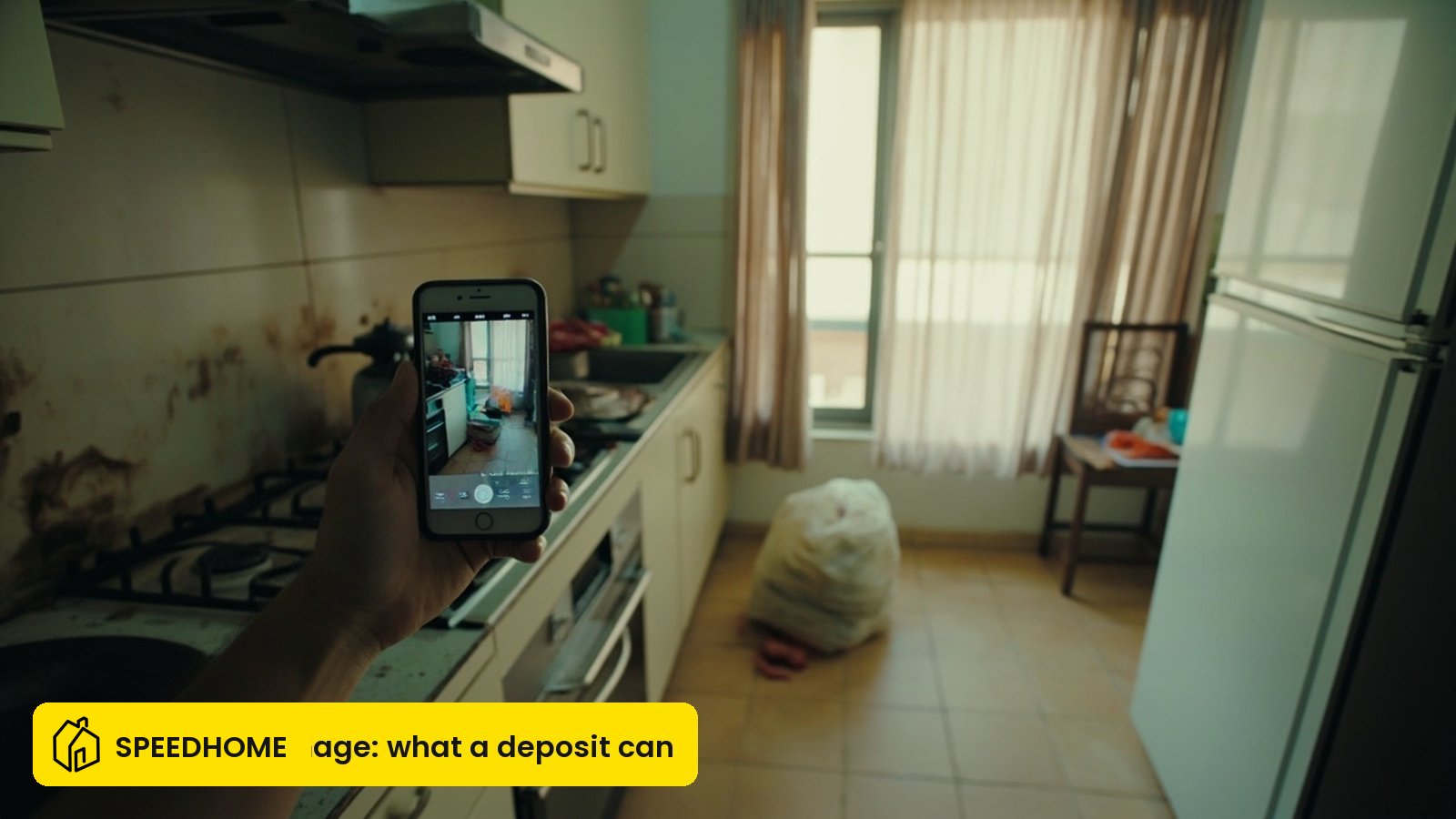
A defensible deduction itemises each cost against a photo, classifies it as neglect or fair wear, and attaches a receipt — so only provable loss like kitchen degrease, mould treatment and rubbish removal is held, while faded paint and worn carpet are left untouched. Picture a furnished condo at move-out: a thick layer of grease in the kitchen, mould in one bathroom from an unreported leak, and three bags of rubbish left behind. The move-in record showed a clean, mould-free unit.
| Item | Classification | Deduction | Evidence |
|---|---|---|---|
| Kitchen degrease | Neglect, beyond fair use | RM250 (cleaner invoice) | Move-out photo + invoice |
| Mould treatment | Damage / neglect | RM150 (cleaner invoice) | Move-out photo + invoice; note tenant did not report the leak |
| Rubbish removal | Cost of restoring condition | RM80 (invoice) | Move-out photo + invoice |
| Faded living-room paint | Fair wear and tear | RM0 | Marked as not deductible |
| Worn hallway carpet | Fair wear and tear | RM0 | Marked as not deductible |
| Total held | — | RM480 | Itemised list sent to tenant with receipts |
The balance of the deposit is returned with the itemised list. The tenant can see exactly what each ringgit was for. This deduction would survive a small-claims challenge because every line has a photo, a classification, and a receipt.
The lawful path and where SPEEDHOME fits
The lawful path is a signed move-in record, dated move-out photos, third-party quotes, and an itemised deduction list returned promptly — and Zero Deposit replaces the upfront cash deposit with a managed rental-risk system, shrinking the deposit-dispute friction point described on this page.
With Zero Deposit the cash deposit that landlords and tenants fight over at handover is replaced by a managed rental-risk system built on screening, documentation, and a protection plan. Zero Deposit is not a financial guarantee product and not a financial guarantee product: in severe damage scenarios the recoverable amount can be capped, so the same photo-and-receipt discipline still governs what you can recover. Two practical notes: not every unit qualifies — eligibility, rent range and current plan terms apply per listing — and whether you take a traditional deposit or Zero Deposit, the move-in and move-out evidence routine above is what actually protects you.
If you are renting out a unit and want the deposit dispute to stop being your problem, the landlord path is the Landlord Rental Protection Plan. If you are a tenant tired of fighting over cleaning deductions at move-out, browse verified Zero Deposit homes on /rent. For the broader deposit-rules picture, see our guides on security deposit deductions in Malaysia and getting your rental security deposit returned, or the Zero Deposit rental platforms explainer.
FAQ
Can I charge the tenant for a professional deep clean every time?
Only when the unit is left below its move-in condition through neglect, or when your tenancy agreement has a specific professional-cleaning clause the tenant breached. If the unit is at normal handover cleanliness, a professional deep clean is your cost, not the tenant's.
What counts as fair wear and tear I cannot deduct for?
Faded paint, light scuffs, worn flooring in traffic areas, and ordinary dust are fair wear and tear. These reflect normal living over the tenancy and are the landlord's responsibility, not a deposit deduction.
How do I prove the unit was dirty enough to deduct?
Dated, room-by-room photos and video taken at move-out, set against the signed move-in condition report, plus a written cleaning quote or invoice. Without the baseline move-in record, the tenant can dispute that the unit was ever clean.
Can I deduct for the full unit being professionally cleaned, or only specific rooms?
Only for rooms the tenant took below their move-in condition. A blanket "deep-clean the whole unit" invoice is hard to defend when half the rooms were already at handover cleanliness. Defensibility test: for each room you charge, you can point to a dated move-out photo showing a state worse than the move-in record.
What if the tenant disputes the cleaner invoice amount?
Compare it to at least one other written quote for the same scope, attach both to your itemised list, and note the basis you picked the lower or more detailed quote. A single round-number invoice from one cleaner is the easiest line item for a tenant to challenge; a side-by-side quote comparison is much harder to attack.
How long do I have to return the deposit after deducting cleaning costs?
Malaysia sets no statutory deadline — your tenancy agreement clause governs. A common contractual norm in Malaysian tenancy agreements is to return the deposit "within 30 days after move-out, less any agreed deductions supported by receipts." Return the undisputed balance within that period with the itemised list; holding the undisputed portion past 30 days weakens your position on the disputed portion.