
Who is responsible for property damage in a Malaysia rental?
In a Malaysian rental, the tenant pays for damage caused by misuse, negligence, or accident. The landlord pays for normal wear and tear, structural faults, and equipment failure from age. There is no single statute that decides every case — the tenancy agreement, move-in condition record, and cause of the damage are the three things that matter.
Malaysia still has no Residential Tenancy Act in force as of 2026. Repair and damage liability flows from the contract you sign and from general contract law principles. That means the same cracked tile or broken appliance can be the tenant's responsibility or the landlord's depending entirely on how it happened and what condition records exist.
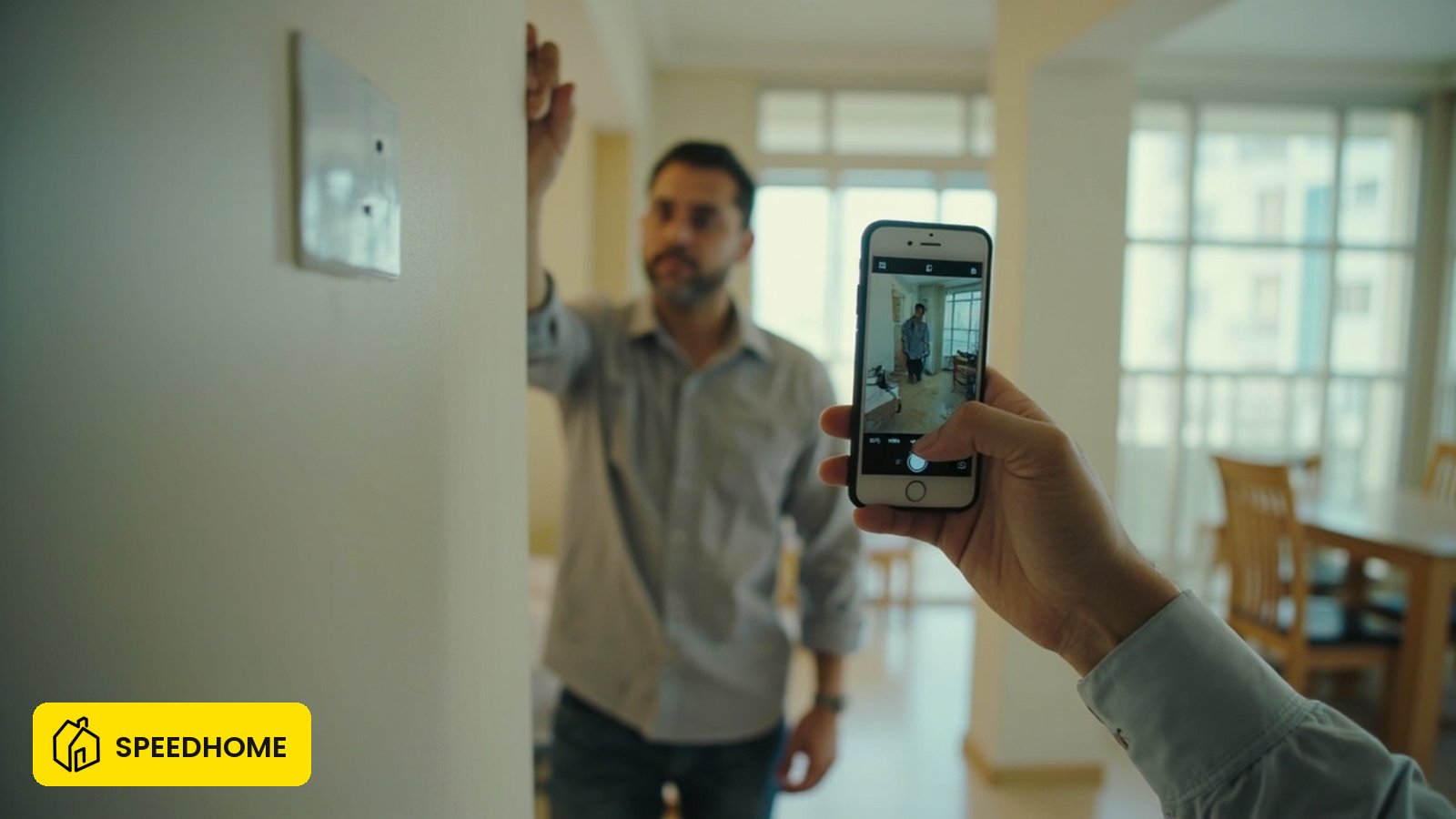
Based on SPEEDHOME's experience managing tens of thousands of Malaysian tenancies, the majority of move-out deposit disputes trace back to a single root cause: neither party documented the unit's condition at move-in. The damage question is almost always settled by the photos — not by who is angrier.
How do you tell wear and tear from actual damage?
Wear and tear is normal deterioration from ordinary use over time — faded paint, worn grout, a loose hinge from years of daily opening. Tenant damage is a change that would not have happened without misuse, accident, negligence, or an unauthorised act.
The test is causation, not cost. An expensive aircon compressor that fails after seven years of normal use is wear — the landlord absorbs it. A brand-new unit with a cracked casing and missing remote that is present in the move-out inspection but absent from the move-in report is damage — the tenant is liable for the proven cost.
The betterment rule applies to how much can be recovered: a landlord can only claim the depreciated value of a damaged item, not the cost of a new replacement. If a five-year-old curtain track is broken by the tenant, the claimable amount reflects the curtain's remaining useful life, not a new curtain at today's price.
Who pays for what: the liability table
The tenant pays for damage they caused; the landlord pays for wear, age, and structural faults. No Malaysian statute fixes this split for residential rentals — the tenancy agreement and condition evidence govern each case.
The allocations below reflect standard practice under Malaysian tenancy agreements. There is no statute that mandates this exact split for residential rentals — the tenancy agreement governs, and a contested case goes through the civil courts.
| Damage or repair type | Usual responsible party | Key condition | Evidence that decides it |
|---|---|---|---|
| Structural defects (roof, wall cracks, foundation) | Landlord | Always landlord absent a specific TA clause to the contrary | Inspection report; contractor quote |
| Aircon compressor or water heater failure | Landlord | Failure due to age or normal wear; not caused by tenant's failure to service | Technician report confirming cause and unit age |
| Routine aircon servicing (filter, coil clean) | Tenant | Tenant uses unit daily; servicing is normal maintenance | Service receipts; failure to service = tenant liable for resulting damage |
| Plumbing failure (burst pipe, pressure loss) | Landlord | Infrastructure failure, not caused by tenant misuse | Plumber report stating cause |
| Blocked drain from food waste, debris, or misuse | Tenant | Blockage traceable to tenant conduct | Plumber's finding of blockage source |
| Fair wear and tear (faded paint, worn carpet, thinning grout) | Landlord | Normal ageing from ordinary residential use | Move-in and move-out condition records showing no sudden change |
| Accidental damage (cracked tile, chipped fixture) | Tenant | Sudden damage not present at move-in; not consistent with normal use | Before and after photos; contractor quote for repair |
| Stains, burns, pet damage, unauthorised alterations | Tenant | Caused by tenant's act or omission | Move-in photos showing absence; move-out photos and quote |
| Strata maintenance fee | Landlord | Strata Management Act 2013 — owner owes the JMB or management corporation, not the occupant | N/A |
| Minor repairs under RM50–100 (lightbulbs, tap washers) | Tenant (convention) | Most Malaysian tenancy agreements assign minor wear maintenance to the tenant | TA clause; written report confirming the item is a consumable |
Convention-based. Actual allocation depends on the tenancy agreement and the evidence. Seek legal advice for contested cases.
Why the condition record decides almost every case
If neither side has a move-in condition report, any damage dispute defaults to a test of credibility — and credibility is harder to win than a photograph.
The practical standard on SPEEDHOME-managed tenancies is two photo sets: a full-unit walkthrough at move-in, signed off or acknowledged by both parties, and a matching set at move-out. Each photo is date-stamped. The difference between the two sets is the landlord's legitimate claim. Anything that looks the same in both sets is wear.
Without that record:
- A landlord who deducts for damage they cannot evidence before vs after has a weak claim if the tenant disputes it.
- A tenant who breaks something and denies it has a stronger position if there is no move-in record proving the item was intact.
The deposit exists to cover genuine damage above wear — but in Malaysia, a landlord's right to retain the deposit is limited to proven loss under the Contracts Act 1950 (s.74). Blanket retention of the whole deposit is not automatically enforceable.
What to do when there is a dispute
Start with a written breakdown sent to the other party. If that fails, the civil courts handle tenancy disputes in Malaysia — there is no dedicated residential tenancy tribunal.
The practical ladder for a tenant or landlord who cannot agree:
- Send a written itemised breakdown (WhatsApp, email, or formal letter) explaining each deduction or objection, with the supporting photos and quotes attached.
- Request a written response within a reasonable time (14 days is common in practice).
- If unresolved: for amounts up to RM5,000, use the Magistrates' Court small-claims procedure under Order 93 of the Rules of Court 2012 — no lawyer required and the filing fee is low.
- Larger amounts go to the Magistrates' Court (up to RM100,000) or Sessions Court (up to RM1,000,000). The Sessions Court also has unlimited jurisdiction for landlord-and-tenant and distress actions.
The full repair liability guide, with the evidence workflow and the checklist for move-out, is at the rental property repair and maintenance guide.
For the specific aircon responsibility split — the most-disputed single item in Malaysian rentals — see aircon servicing: who pays in a Malaysia rental?
The security deposit return process, timelines, and what the landlord can and cannot deduct are covered in the deposit return process Malaysia guide.
Frequently asked questions
Is a landlord in Malaysia required by law to fix property damage?
There is no residential tenancy statute in Malaysia that mandates specific landlord repair duties. The obligation comes from the tenancy agreement and general contract law. If the agreement is silent, the common-law principle is that a landlord must keep the property in a condition fit for the agreed use — but what that means in practice depends on the unit, the agreement, and the evidence.
Can a landlord deduct the cost of damage from the security deposit without the tenant's consent?
A landlord may deduct the cost of proven, evidenced damage from the security deposit. The Contracts Act 1950 limits recoverable damages to actual proven loss — blanket or unsupported deductions are challengeable. The landlord should provide an itemised breakdown with supporting quotes and photos; the tenant has the right to dispute any deduction in the civil courts if the amount cannot be agreed.
What happens if the landlord caused the damage, or it was pre-existing when the tenant moved in?
Pre-existing damage is the landlord's responsibility. If the tenant has photos or a signed move-in condition report showing the damage was already present, the landlord cannot charge for it at move-out. This is why both sides benefit from a detailed move-in walkthrough — it protects the landlord from invented claims and protects the tenant from being billed for old problems.
Does Zero Deposit change who is responsible for damage?
Zero Deposit does not change which party is responsible for damage — the liability split follows the same tenancy agreement and evidence principles. Zero Deposit is a managed rental-risk system, not a financial guarantee product; it replaces the upfront cash deposit. In the rare case of severe end-of-tenancy damage the recoverable amount can be limited, so it is not a blanket guarantee. Not every unit qualifies. What changes is the financial mechanic at move-in and move-out — the damage responsibility question is still decided by the condition record and the tenancy agreement. Browse SPEEDHOME's /rent listings to see which units are available with Zero Deposit.
Who is responsible if a third party (like a burst pipe from an upstairs unit) damages the rented unit?
Damage from a third party — such as a water leak from an upstairs neighbour in a strata building — is generally a matter between the two property owners, handled through the Joint Management Body or management corporation under the Strata Management Act 2013. The tenant's first step is to document the damage immediately and report it in writing to both the landlord and the management office. The tenant is not liable for damage they did not cause, but they must report it promptly to avoid being held responsible for not mitigating a worsening situation.