
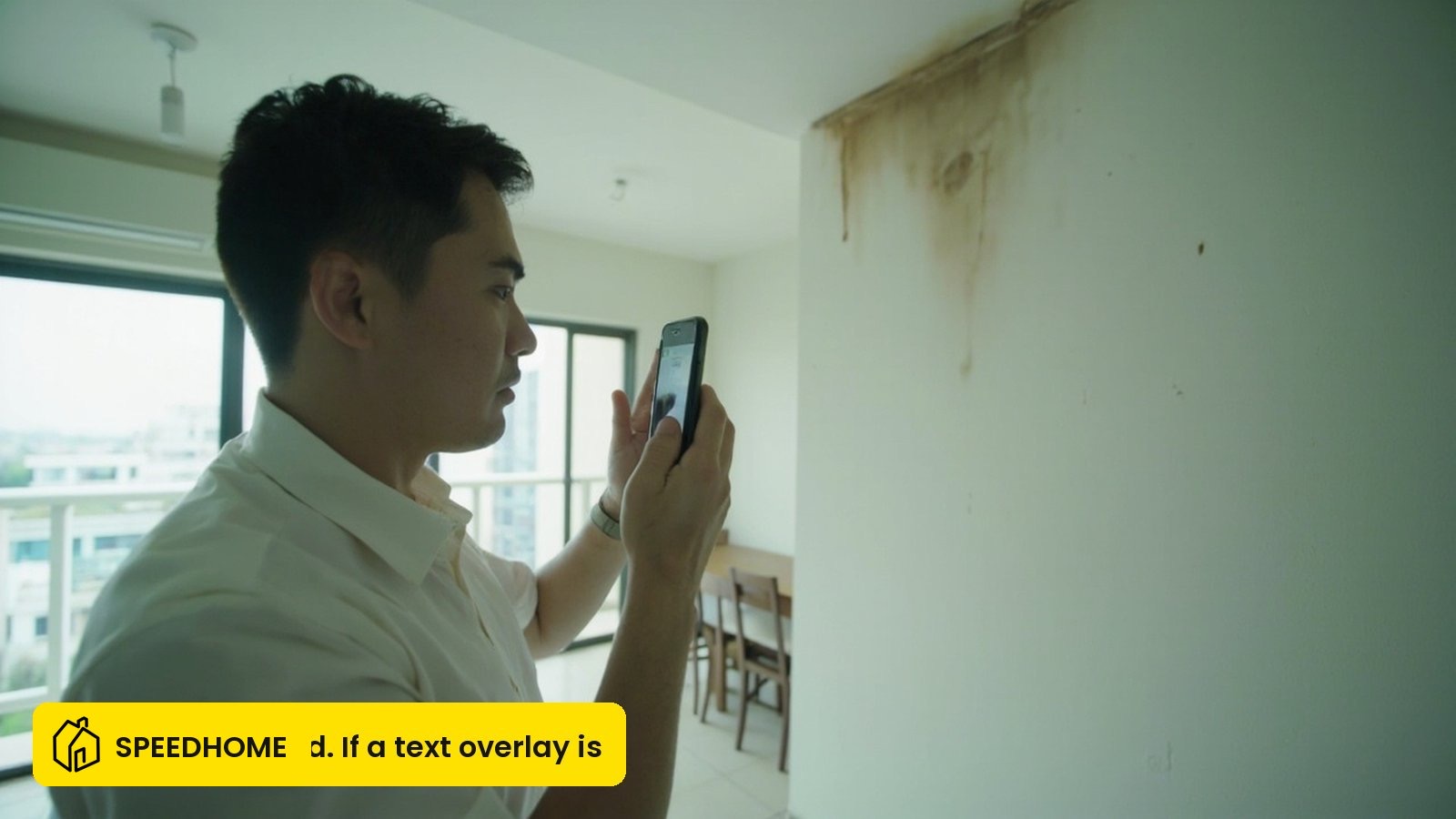
What issues should tenants report immediately?
Report safety, water, electrical, and structural issues first — before cosmetic ones. A leaking ceiling, burning smell, exposed wire, broken lock, or burst pipe cannot wait. Send a clear message with photos, date, time, and location in the unit.
For anything urgent, call first, then follow up in writing before the day ends. The first written record is the one that anchors every later conversation. Cosmetic issues still matter, but they wait for a scheduled visit — never for a forgotten report.
In practice, most contested deposit deductions trace back to the same pattern: an issue the tenant noticed but did not report until the damage worsened — a timing gap that turns a small repair into a deduction fight at move-out.
Why early reporting protects your deposit
Early reporting proves the issue was not ignored until it became worse. If a tenant notices a leak and waits three months, the landlord may argue that extra damage came from the delay.
The reverse is also true: a tenant who reports immediately and the landlord delays action gives the tenant the cleaner side of the timeline. Malaysia has no statutory deposit cap or mandated refund deadline (as of 2026), so disputes are resolved by agreement, negotiation, or the courts — and the side with the dated record usually has more room to negotiate. See the guide on how to protect your security deposit as a tenant for the full deposit protection checklist.
Which issues are urgent versus which can wait?
Treat any issue that affects safety, habitability, or security as urgent. Appliance faults, cosmetic marks, and minor wear can wait for a scheduled visit — but only if you have reported them in writing first.
| Issue type | Examples | Urgency level | First step |
|---|---|---|---|
| Safety / electrical | Burning smell, exposed wire, tripped circuit | Urgent — same day | Call, then text with photo |
| Structural / water | Ceiling leak, burst pipe, flooding | Urgent — same day | Stop further damage, report with video |
| Security / access | Broken lock, lost access card, faulty gate | Urgent — same day | Report and confirm backup access |
| Pests | Cockroaches, rats, termites inside unit | Urgent — within 48 hrs | Report in writing, photograph evidence |
| Appliance fault | Broken water heater, faulty aircon | Within 3 days | Report and note usage history |
| Cosmetic / wear | Paint scuff, scratch, minor stain | Before moving out | Document with photo and date now |
| Neighbour / noise | Recurring noise, shared-area dispute | As it recurs | Log each incident with date and time |
For appliance faults, always note the move-in condition and usage history before placing blame on either side — see the guide to the 5-day repair SLA landlords should know for a practical response timeline.
How should tenants report repairs?
Send a short written report — WhatsApp or email — with photos or video, the date it started, location in the unit, whether it is getting worse, and when you can give access for inspection or repair.
A useful report answers five questions in under a paragraph:
- What happened?
- When did it start?
- Where exactly in the unit?
- Is it getting worse or staying the same?
- When can the landlord or technician access the unit?
Keep the conversation in one thread where possible — scattered calls and messages make it harder to reconstruct the timeline later. A short written summary after a call stops the common problem where both sides remember the conversation differently.
What if the landlord does not respond?
Follow up politely with a second written message, mark it clearly as a second attempt, and note the date. Keep every attempt. Avoid withholding rent or arranging repairs yourself without checking the tenancy agreement first — doing so can create a separate breach.
If the issue is a safety risk, say so explicitly in the follow-up: "This is a safety issue that requires attention within [X] days." If there is a management office, log the issue there too and keep that record.
| Action | When it helps | When it backfires |
|---|---|---|
| Written follow-up (2nd attempt) | Always — creates a clear escalation trail | — |
| Arranging repairs yourself | Only if TA allows it, with prior written notice | May void landlord's liability for the repair |
| Withholding rent | Almost never advisable without legal advice | Creates a separate rent-default problem |
| Involving management office | Water, structural, pests affecting shared areas | For unit-only issues, go directly to landlord first |
| Logging with a platform (e.g. SPEEDHOME) | When your rental is managed through the platform | — |
The tenancy agreement usually sets out the response timeline and escalation path. Read the repair and maintenance clause before taking unilateral action.
What should landlords do when tenants report issues?
Acknowledge the report promptly — ideally within 24 hours — and state whether you will inspect, send a technician, or guide the tenant to handle it. A fast acknowledgement reduces anxiety and prevents repeated messages.
Landlords do not need to promise an instant fix for every issue, but they should confirm the report is received and being assessed. Good landlords keep repair records because they protect the asset, help resolve move-out questions later, and reduce the risk of a dispute escalating.
For urgent issues — safety, water, structural — aim to give a clear timeline within the same day. For non-urgent appliance faults, a response within two to three business days is reasonable. Delays beyond that create legal exposure and damage the tenancy relationship.
What evidence should you prepare before a dispute starts?
Prepare the evidence while the tenancy is still calm — dated photos, receipts, repair messages, and inspection notes kept in one folder. Late evidence is usually weaker evidence.
The best rental record is boring and complete. Keep in one folder:
- Signed tenancy agreement
- Move-in and move-out inspection photos/video with dates
- Utility bills and payment receipts
- Repair reports and responses (screenshots or saved chats)
- Notices, quotations, and acknowledgements
- Any written permission for changes, subletting, or early exit
See the full move-in and move-out checklist for Malaysia tenants to build this habit from day one.
Most rental disagreements in Malaysia turn on what each side can show. If the issue is damage, show the before-and-after condition. If it is a repair, show when the issue was reported and what each side did next.
Do not wait until the other party is upset before asking for documents. Ask for receipts, acknowledgements, and inspection notes as part of the normal process. Good documentation should feel routine, not hostile.
What should go into the next tenancy agreement?
The next agreement should remove the ambiguity that caused the current problem. Predictable disputes — cleaning, aircon servicing, housemates, pets, early exit — should be answered in writing before money is at stake.
| Common dispute area | What to write into the TA |
|---|---|
| Move-out cleaning | Cleaning standard, who verifies, and who pays if standard is not met |
| Aircon servicing | Service schedule, who keeps receipts, and who pays for routine vs breakdown |
| Housemates | Payment split and replacement rules if one housemate leaves |
| Pets | Pet permission, cleaning duty, and damage assessment process |
| Early exit | Notice period, penalty, and replacement-tenant process |
| Repairs | Response timeline for landlord, and what tenant may do if unresponded |
Landlords should avoid clauses they do not intend to enforce. Tenants should avoid signing clauses they have not read. The agreement is easiest to fix before handover — not after a conflict has started.
For more on deposit protection clauses, see the deposit return process in Malaysia.
When should you stop negotiating and get outside help?
Escalate when the amount is material, safety is involved, or the other side refuses to engage with evidence. Not every disagreement deserves a formal fight — small disputes with imperfect records on both sides often settle faster with a fair compromise.
Escalation makes more sense when there are serious arrears, threats to restrict your access to the unit, property damage, harassment, refusal to return keys, unsafe defects, or a large deposit dispute. Possession claims in Malaysia are typically brought under Section 7(2) of the Specific Relief Act 1950 — a useful anchor when the tenancy has clearly broken down.
Before escalating, prepare a clean chronology: dates, amounts, messages, photos, receipts, and the exact clause relied on. A messy folder can make even a strong case look weak. Most deposit disputes in Malaysia turn on repair or notice clauses that were never checked at signing — which is why the tenancy agreement matters more than any escalation route.
Avoid unlawful pressure tactics. Public shaming, forcing new locks on doors, removing belongings, threats, and sharing someone's private information can create new liability for the person who does it. Stay with lawful notices, records, negotiation, and the proper recovery route.
Rentals managed through SPEEDHOME include structured maintenance reporting and a dated repair log, so issues are recorded on the platform from the first report onwards — see verified SPEEDHOME listings for the full process.
Frequently Asked Questions
Do I need a lawyer for every rental issue in Malaysia?
No. Most issues can be handled through the tenancy agreement, written notice, payment records, and a documented inspection. Get legal advice when the issue involves eviction, threats to restrict your access, large arrears, serious damage, threats, or a claim you cannot afford to lose.
Can WhatsApp messages count as evidence in a rental dispute?
WhatsApp messages can help if they show dates, agreement, reminders, photos, bank slips, or repair updates. Do not rely only on chat fragments — keep receipts, videos, inspection forms, and the signed tenancy agreement together, so the record is complete.
What is the biggest mistake tenants and landlords make?
Letting the tenancy agreement stay unread until something goes wrong. Most disputes in Malaysia turn on the repair clause, the notice clause, or the deposit return clause — three sections that are easy to skim past at signing and painful to discover during a dispute. Read them while the relationship is still calm, in the same sitting you sign the agreement.
Should a tenant use the deposit as the last month's rent?
Usually no, unless the tenancy agreement clearly allows it and both sides agree in writing. Using the deposit as rent often creates a second dispute about damage, cleaning, keys, utilities, and final inspection — leaving the landlord with no security and the tenant with a disputed record.
What counts as fair wear and tear in a Malaysia rental?
There is no statutory definition. Fair wear and tear generally refers to minor deterioration from normal everyday use over time — faded paint, small nail holes, minor carpet wear — as distinct from damage caused by misuse, neglect, or accidents. The difference matters most at move-out, and pre-move-in photos are the clearest way to establish the starting condition.
How does SPEEDHOME help with repair reporting?
Rentals managed through SPEEDHOME include a structured maintenance reporting channel, so repair requests and responses are logged with dates and not scattered across personal WhatsApp threads. This makes it easier to track what was reported, when, and what action was taken — before the issue becomes a dispute.
Accuracy note. Grounded in Specific Relief Act 1950. Every figure is bound to a dated fact registry and re-verified on each update. Spotted an error? Email [email protected] with this page's link.