
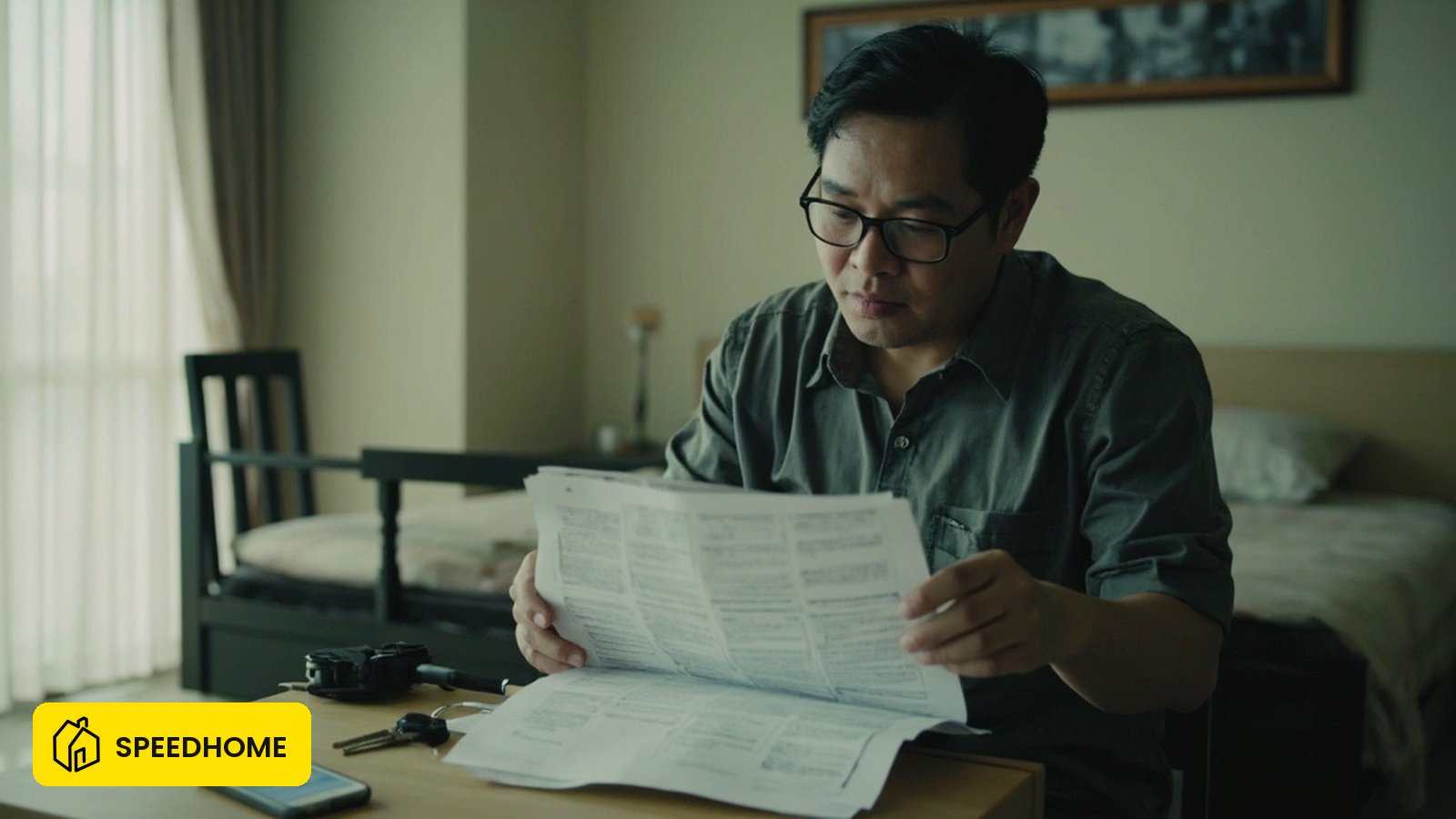
A sublet agreement is a written contract between a main tenant and a subtenant. However, this arrangement is only legally safe when the primary landlord has explicitly permitted subletting in writing. Without this formal consent, the main tenant breaches their head tenancy even if subtenants pay rent punctually.
According to SPEEDHOME operator data for the latest quarter in 2026, with over 30,000 residential tenancy agreements managed on the platform, a clear pattern emerges: sublets that end in early termination almost always occur when the landlord's written consent was never requested and the occupancy was never documented.
Most residential tenancies in Malaysia run for one to three years and are governed by the tenancy agreement alongside general contract law. As of 2026, the proposed Residential Tenancy Act is not in force, so the clauses in your agreement heavily dictate the rules. The original tenancy between you and the landlord remains alive; the sublet agreement sits beneath it and binds only you and the subtenant.
How do authorised and unauthorised subletting differ legally?
The table below compares the two paths tenants commonly consider — subletting with the landlord's written consent and a proper sublet agreement, versus a silent unauthorized sublet — across the factors that determine whether the arrangement is legally sound.
| Factor | Sublet with written consent + written agreement | Unauthorized sublet (informal / silent) |
|---|---|---|
| Allowed? | Yes — if your tenancy agreement allows sublets or the landlord gives written consent. | No — a breach of your tenancy agreement even if the agreement is silent. |
| Your legal standing | A valid sub-tenancy; you can claim the subtenant's rent through a civil court if needed. | The landlord can terminate the tenancy and claim damages from you. |
| Who remains liable to the landlord? | You — the main tenant remains the landlord's contractual partner, not the subtenant. | You — completely, and now exposed to termination for the breach. |
| Stamp duty | Applies to the sublet instrument on the Finance Act 2024 scale (RM1/RM3/RM5/RM7 per RM250 of annual rent depending on duration), stamped via e-Duti Setem on MyTax. | None paid — and an unstamped sublet is harder to enforce in court. |
| Deposits collected | The sub-deposit is governed by your sublet agreement; no statutory cap applies. | Risky — money held without a written agreement is hard to defend if disputed. |
| Strata / building rules | Still must comply with the Joint Management Body (JMB) or Management Corporation by-laws. | The same by-laws apply, plus the risk of the breach being reported to your landlord. |
| Short-term / daily lets | Only if the tenancy agreement, building by-laws, and local requirements all allow it. | Almost always a further breach — short-term lets in strata units can breach by-laws that the Management Corporation is entitled to enforce. |
| If something goes wrong | A documented contract that can be taken to the Magistrates' small claims procedure (claims up to RM5,000, without lawyers). | Your word against the subtenant's word, with your own tenancy already compromised. |
What is a sublet agreement in Malaysia?
A sublet agreement is a written arrangement between a main tenant and a subtenant, but it only works safely when the main landlord has allowed subletting in writing. Without consent, the main tenant may breach the head tenancy even if the subtenant pays on time.
The core question is not whether two tenants can write a private agreement. They can write one. The risk is whether that agreement sits under a valid head tenancy and whether the landlord, building rules and payment records support it. If the head tenancy bans subletting, a neat-looking sublet agreement may still put the main tenant in breach.
For the subtenant, the risk is paying money to someone who may not have authority to rent out the room. For the main tenant, the risk is becoming responsible for another person's unpaid rent, damage, nuisance or rule breach. For the landlord, the risk is losing control of who is actually staying in the unit. A good sublet agreement reduces these risks by making authority, payment and house rules visible.
Written landlord consent should identify the unit, the main tenant, the room or space being sublet, the permitted occupant, and the period allowed. A vague message such as "okay can share" is weaker than a clear approval tied to the tenancy. If the property is in a strata building, management rules may also matter, especially for access cards, visitor parking, short stays and nuisance complaints.
The Management Corporation can pass binding by-laws prohibiting short-term lets in strata buildings — the Federal Court confirmed this power in Innab Salil & Ors v Verve Suites Mont' Kiara Management Corporation [2020]. Whether a short-term let is permitted still depends on each building's by-laws and local council regulations, so three separate layers (your tenancy agreement, the building by-laws, and local requirements) must all allow it.
When subletting is a bad idea
Do not sublet if the head tenancy prohibits it, the landlord has not consented, or the payment route depends on trust rather than records.
| Red flag | Why it matters | Safer response |
|---|---|---|
| No landlord consent | Main tenant may breach the head tenancy | Get written consent before paying |
| Cash-only rent | Hard to prove payment later | Use traceable transfer and receipts |
| No deposit terms | Refund disputes become likely | Write deduction and refund rules |
| Unknown occupants | Safety and house-rule risk | List who may stay |
| No move-in photos | Damage disputes become guesswork | Record room and shared areas |
| Head tenancy ending soon | Subtenant may lose the room quickly | Check expiry and renewal status |
If any of these issues cannot be fixed before money changes hands, the cleaner option is to rent directly from a landlord or through a platform process. A room may look cheaper at first, but one bad authority gap can cost more than the saving.
If you are looking for a room, the cleanest path is to rent directly from a verified landlord with Zero Deposit, which removes the cash deposit pressure that drives people into informal sublets in the first place. Zero Deposit is SPEEDHOME's rental risk management system — not a financial guarantee product — that replaces upfront cash deposits, so tenants move in without tying up cash while the landlord stays protected via tenancy protection rather than holding a deposit. For severe end-of-tenancy damages exceeding normal wear and tear, a standard protection claim process applies.
Who is liable if the subtenant does not pay?
The main tenant usually remains liable to the landlord under the head tenancy. The subtenant's failure to pay you does not automatically suspend your duty to the landlord.
This is the most common misunderstanding. The landlord's contract is usually with the main tenant. If the subtenant stops paying, the main tenant still has to deal with the landlord's rent demand unless the documents say otherwise. The main tenant may then pursue the subtenant under the sublet agreement, but that is a separate problem and takes time.
If you yourself are in arrears with the landlord, verified rental defaults can be reported to a licensed credit reporting agency only if you have given consent in the tenancy agreement; posting your details publicly or reporting through unlicensed channels is unlawful under the Credit Reporting Agencies Act 2010. The exact same consent rule applies if you need to report a defaulting subtenant — only through licensed agencies, and only with consent explicitly written into the sublet agreement.
Damage works the same way in practice. If the subtenant damages furniture, loses an access card or causes complaints, the landlord may still look to the main tenant under the head tenancy. The main tenant should therefore keep a deposit record, move-in photos, inventory and clear house rules. The subtenant should also keep evidence so they are not blamed for old defects.
What should be written into the agreement?
Write the practical issues, not only names and rent. Include room use, shared areas, access cards, repair reporting, notice period, deposit deductions and what happens if the head tenancy ends.
Use SPEEDHOME rentals if you prefer a direct rental path instead of informal subletting.
At minimum, the agreement should state the full names of the main tenant and subtenant, the property address, the room or space included, the start date, rent amount, payment date, deposit amount, utilities split and notice period. It should also state whether cooking, visitors, overnight guests, pets, smoking, parking and use of shared appliances are allowed.
Do not leave utilities vague. Shared electricity and water bills often cause more conflict than rent because one person may use air-conditioning heavily while another travels often. Agree whether bills are split equally, by room, by meter reading, or by a fixed monthly amount. If internet is shared, record who owns the account and what happens if one person moves out early.
Deposit and move-out evidence: what counts?
A sublet deposit should have clear deduction rules, refund timing and evidence requirements. Malaysia does not have a simple universal statutory cap that solves every private deposit dispute for you.
Write what the deposit covers: unpaid rent, utilities, lost keys, access cards, cleaning, damage beyond normal wear, or early termination. Also write when the balance should be returned after move-out, subject to final bills and inspection. If deductions are made, they should be itemised rather than stated as a vague penalty.
Malaysia does not have a statutory cap on residential tenancy deposits; deposits are governed by the agreement, and the right to retain them is limited to proven losses under general contract law (Contracts Act 1950, section 74). A sub-deposit collected without a written sublet agreement is the most common thing tenants fail to defend when a subtenant claims a refund.
Malaysia has no dedicated residential tenancy tribunal. Deposit or rent disputes with a subtenant are private contractual matters decided in civil court — the small claims procedure at the Magistrates' Court handles claims up to RM5,000 without lawyers. For larger claims, the matter proceeds to the Magistrates' Court (for claims up to RM100,000) or the Sessions Court (for claims of RM1,000,000 and above).
On move-in day, take photos or video of the room, mattress, walls, floor, wardrobe, windows, bathroom, kitchen, appliances and shared areas. Record the number of keys and cards. On move-out day, repeat the same exercise. This simple evidence file is often the difference between a manageable disagreement and a personal fight.
What if the head tenancy ends?
The sublet agreement should say what happens if the landlord terminates, refuses renewal or requires vacant possession under the head tenancy.
A subtenant should not assume they can stay longer than the main tenant's rights. If the head tenancy expires in two months, a six-month sublet promise is risky unless renewal is already documented. The agreement should explain whether rent is refunded, how much notice is given, and whether the main tenant must help with handover if the landlord requires the unit back.
If a dispute starts, avoid lockouts, threats or cutting utilities. Use written demands, documented handover, and lawful recovery steps. Self-help actions can make the dispute worse even when one side has genuinely breached the agreement. Just as your landlord cannot lawfully recover possession through self-help — locking out tenants, removing doors, or cutting water or electricity supplies — you cannot use those methods against a subtenant either. Recovering possession must go through lawful court processes.
SPEEDHOME is one option worth comparing alongside the routes above.
FAQ
Is verbal permission enough?
Written permission is safer. Verbal permission is hard to prove when a dispute starts.
Can I lock a subtenant out for non-payment?
No. Use written demand and lawful recovery steps; do not use self-help lockouts.
Should the landlord sign the sublet agreement?
Not always, but written landlord consent should exist. If the landlord signs or acknowledges the arrangement, authority is easier to prove.
Can the subtenant pay the landlord directly?
Only if all parties agree and the records are clear. Otherwise, direct payment can create confusion about who is responsible under which agreement.
What is safer than informal subletting?
Renting directly through a documented listing and agreement is usually cleaner because authority, payment and handover are less ambiguous.
Do I need to stamp my sublet agreement?
Yes, if you want it to be enforceable in court. The tenancy agreement stamp duty follows the Finance Act 2024 scale of RM1, RM3, RM5, or RM7 per RM250 of annual rent depending on the tenancy duration, stamped via e-Duti Setem on MyTax since January 2026.
Can I run a short-term rental in my sublet room?
Only if three separate layers all allow it: your tenancy agreement, the strata building by-laws, and local council requirements. The Management Corporation can prohibit short-term rentals through binding by-laws — a power confirmed by the Federal Court in the Verve Suites case. Check all three before listing.
For the complete guide, see Female-Only and Muslimah Rooms in Bangi: Rent, KTM & House Rules.