
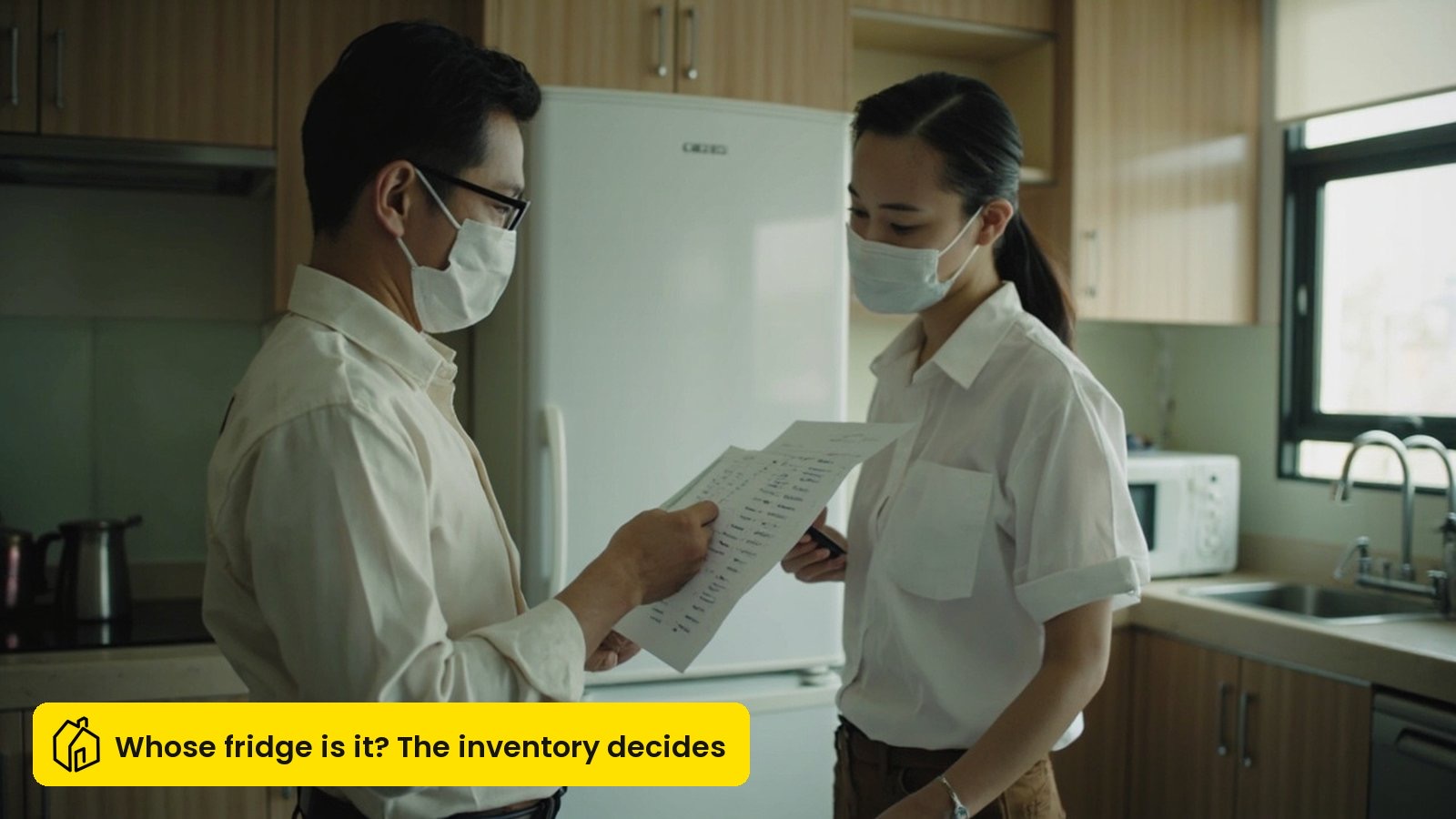
Can a tenant sell the landlord's fridge and swap in a bigger one?
No - not without the landlord's written consent. A fridge the landlord provided is the landlord's property (a chattel), not the tenant's to sell. Selling someone else's property is conversion under general law, and most tenancy agreements bar altering or removing the landlord's fittings. The lawful upgrade path is to ask first, agree in writing what happens to the old unit, and confirm who owns the replacement at move-out.
The question sounds trivial - a tenant offering to "improve" the kitchen - but it turns on one rule that matters in every Malaysian rental: you can only sell what you own. A furnished or partially furnished unit comes with a documented inventory at move-in, and every item on that list belongs to the landlord unless the tenancy agreement (TA) says otherwise. Malaysia has no Residential Tenancy Act in force as of 2026, so the inventory and the TA, not any default statute, decide ownership.
Who actually owns the fridge in a furnished rental
The fridge belongs to whoever the move-in inventory and tenancy agreement name as the owner. When the landlord supplied the appliance, it is the landlord's chattel and stays the landlord's property for the whole tenancy - the tenant's right is to use it, not to sell, give away, or permanently remove it.
The controlling documents are the signed inventory list and the TA's fittings clause. A "furnished" or "partially furnished" label on a listing is marketing copy; the inventory is the legal record. The cleanest cases look like this:
| Situation | Who owns the fridge | What the tenant may do with it |
|---|---|---|
| Fridge was on the move-in inventory, supplied by landlord | Landlord | Use it; do not sell, remove, or give it away |
| Fridge was bought by the tenant and brought in | Tenant | Tenant keeps it; take it at move-out, leave the landlord's slot empty as found |
| Inventory is silent, but landlord can show a purchase receipt | Landlord (by evidence) | Treat as landlord's property until proven otherwise |
| No inventory, no receipt, dispute at move-out | Decided on evidence/balance | A dated move-in record settles it - see the move-in and move-out checklist |
| Old fridge broken and landlord replaced it during tenancy | Landlord (the replacement) | Return the working replacement, not the broken one |
The practical lesson is the same for both sides: a dated, jointly-acknowledged move-in inventory is what settles "whose fridge is it?" before it ever becomes a fight. If you skipped one, see what to include in a tenancy agreement to lock ownership wording next time.
Why "sell it and upgrade" is not the landlord's problem to solve
Selling the landlord's fridge - even to fund a bigger replacement - is dealing with property the tenant does not own. Under general Malaysian law that is conversion (the civil wrong of interfering with another's goods), and almost every TA separately bans removing or altering the landlord's fixtures and fittings. The tenant's want for a bigger unit does not transfer ownership.
A landlord facing this request should read it as a consent question, not a done deal. Two threads run together:
- The ownership thread. The old fridge is not the tenant's asset to liquidate. Even a well-meant "I'll sell it cheap and add a bigger one" is the tenant spending the landlord's money. If the old unit is sold without consent, the landlord can claim its value as a debt, and recover it from the deposit or through the civil courts - the recoverable amount is the item's value, not a new-for-old upgrade.
- The agreement thread. A standard TA bars the tenant from altering, removing, or disposing of the landlord's property without written consent. Acting anyway is a breach, regardless of motive.
The honest answer for a landlord is short: "I'd consider an upgrade, but the current fridge is mine - I'll keep it, or you buy the bigger unit and leave mine in place." For the wider repair-and-appliance picture, see who pays when an appliance breaks in a Malaysian rental.
The lawful "upgrade" path for both sides
The upgrade is possible - but only by agreement, recorded in writing before anything is moved. The parties decide who keeps the old fridge, who pays for and owns the new one, and what happens at move-out; then they write it into a short signed addendum so there is no deposit fight later.
Work through these four points and the upgrade stops being a risk:
| Decision point | Options | Why it matters at move-out |
|---|---|---|
| The old fridge | Landlord collects it; stores it in the unit; or (only if landlord agrees in writing) it is sold and the landlord keeps the proceeds | Stops the tenant from being charged for a "missing" appliance they thought they were allowed to sell |
| The new fridge | Tenant buys it (tenant-owned, taken at move-out) OR landlord buys it (landlord-owned, added to inventory) | Decides whose property it is - and whether it must stay or go |
| The space and wiring | Confirm the bigger unit fits and the socket/point is rated; record any works | Avoids a later claim for unauthorised alteration |
| Move-out default | Spelled out: old fridge returned to its slot, tenant-owned bigger unit removed, landlord-owned bigger unit stays | Removes the ambiguity that turns into a deposit deduction |
If the tenant buys the bigger unit, it is theirs - but the landlord's original fridge must come back in working order (fair wear and tear aside) when the tenancy ends, exactly as the inventory recorded it. For the full handover-to-dispute path if a charge still arises, see the deposit return process for tenants.
If the tenant already sold it without asking
If the fridge has already been sold without consent, the tenant should not hide it. The clean route is to tell the landlord immediately, repay the old unit's value or replace it with an equivalent, and keep the receipt - a voluntary fix reads far better than a discovered shortcoming if the matter reaches a deposit dispute or the courts.
Malaysia has no dedicated residential tenancy tribunal for a private chattel/deposit dispute; the ordinary civil courts apply, with claims up to RM5,000 handled by the Magistrates' Court small-claims procedure (no lawyer needed) and larger claims by the Magistrates' or Sessions Court. A landlord cannot keep more than proven loss, and cannot recover the cost of a brand-new fridge to replace an old worn one - the figure is the old unit's actual value, applying the betterment principle.
The same restraint cuts the other way: a landlord who discovers the sale cannot simply help themselves to an inflated deduction or hold the whole deposit. Document the item, its age, and a fair value, and settle it against the deposit with a written, itemised breakdown.
The SPEEDHOME-only angle: the inventory is the upgrade argument
On SPEEDHOME's managed platform, the move-in inventory is kept on both sides from day one - which is exactly the record that settles "whose fridge is it" and "who owns the replacement" before the question is ever asked. The upgrade dispute is almost always an inventory dispute in disguise; where the condition and ownership record is shared and dated, the whole swap becomes a quick written yes or no instead of a deposit fight.
This is why SPEEDHOME treats the inventory as the spine of the chattel question, not a formality. If you are renting again and want a tenancy where ownership, condition, and any agreed upgrades are recorded for both parties from move-in, browse verified listings at /rent.
FAQ
Can my tenant legally sell the fridge I provided with the unit?
No, not without your written consent. The fridge you supplied is your chattel, and selling another person's property is conversion under general law; your tenancy agreement almost certainly also bars removing or disposing of your fittings. The tenant may want a bigger unit, but wanting one does not transfer ownership of the appliance they are currently using.
As a tenant, can I bring my own bigger fridge and keep the landlord's in storage?
Only with the landlord's written agreement, and the arrangement should be recorded in a short addendum. If you bring your own appliance it is yours to take at move-out, but the landlord's original fridge must be returned to its place in working condition (fair wear and tear aside) - so where the old unit is stored and who is responsible for it must be settled in writing first.
What if there was no inventory - whose fridge is it then?
Ownership is decided on the evidence. If the landlord can show a purchase receipt or listing that listed the fridge as supplied, it is treated as the landlord's property; if both sides genuinely bought and brought their own, the dated move-in photos and any messages settle it. This is exactly why a jointly-acknowledged move-in inventory exists - without it, the dispute becomes a credibility contest.
Can the landlord deduct the fridge's value from my deposit if I sold it?
Yes, but only up to the old unit's actual value - not the cost of a brand-new replacement, because the betterment principle applies. The landlord must give you a written, itemised breakdown of the item, its age, and the fair value claimed. A landlord cannot inflate the figure or withhold the entire deposit over and above proven loss.
Where do I take it if we cannot agree on the fridge?
A private tenancy chattel or deposit dispute is decided by the ordinary civil courts, not a dedicated residential tenancy tribunal (there is none in force). Claims up to RM5,000 use the Magistrates' Court small-claims procedure without a lawyer; larger claims go to the Magistrates' or Sessions Court. Keep every written exchange and the inventory - the court weighs the records both sides hold.
Should I just let the tenant sell it and buy a bigger one to keep things friendly?
You can agree to an upgrade, but make the terms explicit first: confirm in writing that the old fridge is yours, who keeps or stores it, who owns and pays for the bigger unit, and what happens at move-out. A friendly yes without a record is what later turns into a deposit dispute - the written addendum is what keeps it genuinely friendly.