
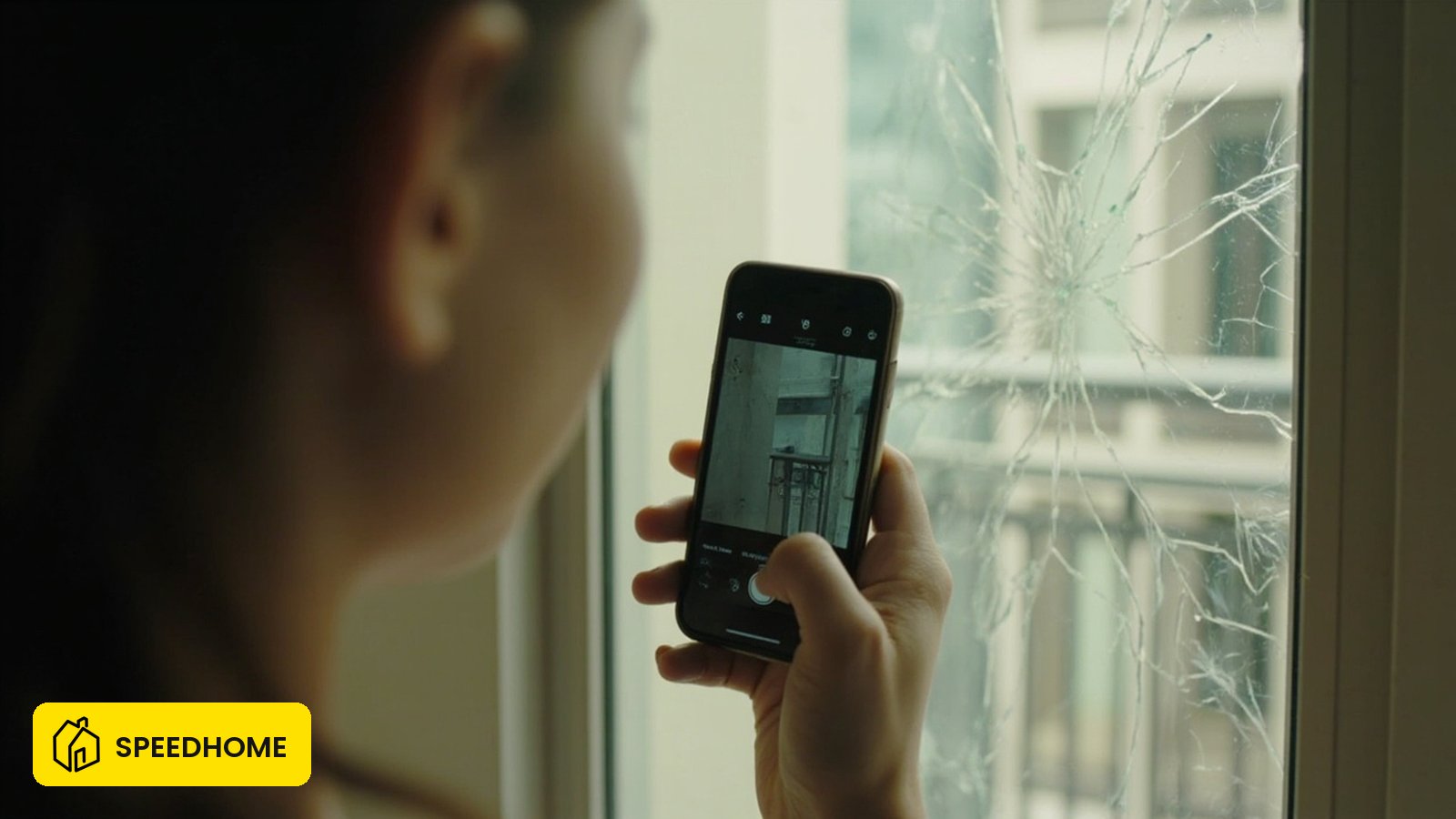
Who is responsible for a broken glass window?
It depends on cause, not just location. If the tenant broke the glass — through accident, misuse, or negligence — the tenant pays. If the glass failed due to a manufacturing defect, building movement, or a structural fault, the landlord pays. There is no Malaysian statute that makes the tenant automatically liable; the cause and the condition record decide.
Malaysia still has no Residential Tenancy Act in force as of 2026. Liability for a broken window glass falls under the tenancy agreement and general contract law. The same crack in the same pane can be the landlord's repair bill or the tenant's depending entirely on how it happened and what the move-in condition report shows.
The most important thing both parties can do before a dispute starts is document: photographs of every window pane — including corner chips and hairline cracks — at move-in, acknowledged by both sides. A dispute over a broken window that costs a few hundred ringgit can eat weeks of time and goodwill when there is no baseline record.
When is the tenant responsible?
The tenant is responsible when the damage results from their own act or omission — an accidental impact, a child throwing something, slamming the frame in a way that cracks the glass, or failure to secure a casement window during rain that causes a break.
The legal test is causation: did the tenant's conduct cause the damage? Tenancy agreements in Malaysia routinely make the tenant responsible for damage they cause, and courts apply the same standard under general contract law and the Contracts Act 1950 — a landlord can only claim proven loss, not a blanket charge.
Evidence matters. If the move-in report shows an intact pane and the move-out inspection finds it cracked or broken, and there is no other plausible cause, the tenant has weak grounds to deny responsibility. The tenant should raise any defect they notice at move-in — a chip, a stress crack, a loose putty seal — in writing and with a photo, immediately.
When is the landlord responsible?
The landlord is responsible when the glass fails from structural causes, age-related stress, building movement, or a manufacturing defect — none of which the tenant caused. A window pane that spontaneously cracks in the first week of a tenancy is almost certainly a pre-existing defect.
Glass can crack for reasons that have nothing to do with the tenant:
- Thermal stress: Tempered or non-tempered glass in direct sunlight can crack spontaneously in high heat, particularly in poorly ventilated Malaysian apartments with west-facing windows.
- Building settlement: Hairline cracks in a frame or the surrounding masonry can transfer stress to the pane.
- Manufacturing or installation defect: Poorly fitted glass with incorrect clearance between pane and frame is prone to cracking from vibration or pressure changes — a known issue in older Malaysian condo developments.
- External impact not caused by the tenant: A neighbour's object striking the window from outside, for example, is not the occupying tenant's liability.
The landlord cannot charge the tenant for damage that the tenant did not cause, regardless of which party finds it first.
Liability at a glance
Cause decides liability — the table below maps the most common broken-window scenarios in Malaysian rentals to the usual responsible party, based on general contract law principles.
| Scenario | Responsible party | Key condition | What decides it |
|---|---|---|---|
| Tenant accidentally impacts pane (drops item, slams frame) | Tenant | Damage not present at move-in; caused by tenant's act | Move-in photos showing intact glass; move-out photos showing crack/break |
| Child or guest of tenant breaks pane | Tenant | Occupant's household or visitor caused damage | Same evidence standard — tenant is responsible for their household |
| Spontaneous thermal stress crack in West-facing unit | Landlord (probable) | No impact event; temperature or sun-stress cause | Glazier's assessment confirming cause; no move-in crack present |
| Crack pre-existing at move-in, not noted | Disputed | Neither side has move-in evidence — credibility contest | Whoever has the better contemporaneous evidence wins |
| Crack present and documented at move-in | Landlord | Pre-existing defect the landlord failed to disclose | Signed move-in report with photo |
| Frame warping or building settlement causes glass to crack | Landlord | Structural defect; building age or construction quality | Glazier or structural report confirming cause |
| External object (neighbours, flying debris) shatters pane | Landlord or third party | No act by the tenant | Police or building management report; strata body involvement |
| Louver or jalousie blade cracks from ordinary operation | Landlord (probable) | Brittle from age; cracking under normal use | Glazier confirming brittleness is due to age, not force |
Allocations reflect general Malaysian tenancy practice and contract law. Actual liability depends on the specific tenancy agreement and evidence. Seek legal advice for contested cases.
What to do when a window breaks during the tenancy
Photograph it immediately — close-up and wide — then report it in writing to the landlord or property manager the same day. Do not delay or attempt a DIY repair without written approval; an unreported break that worsens can shift part of the liability to you.
The practical steps for a tenant:
- Photograph the break from multiple angles, including any surrounding frame or putty, with date and time metadata intact.
- Send the photos and a written report (WhatsApp or email) to the landlord or agent the same day. Note whether the glass appears to have been broken by impact or by stress.
- If the glass poses a safety risk (sharp fragments, open exposure), ask for an emergency repair and document that you requested it.
- Do not agree to pay or split costs before the cause is assessed.
For a landlord:
- Respond promptly in writing and arrange a glazier assessment before making any claim against the deposit.
- Get a written report from the glazier on the probable cause — this is the evidence base for any deposit deduction.
- If you are deducting from the security deposit, provide the tenant with an itemised breakdown and the glazier's quote. Under general contract law (Contracts Act 1950), a landlord's right to retain is limited to proven, evidenced loss.
What if the parties disagree?
A broken-window dispute is a private contract matter in Malaysia — there is no dedicated residential tenancy tribunal. For small amounts, the Magistrates' Court small-claims procedure under Order 93 (claims up to RM5,000) requires no lawyer.
The court ladder for tenancy disputes in Malaysia:
- Magistrates' small claims (up to RM5,000): no lawyers, low filing fee, quick process under Order 93 of the Rules of Court 2012.
- Magistrates' Court: up to RM100,000.
- Sessions Court: up to RM1,000,000, and additionally has unlimited jurisdiction for landlord-and-tenant and distress actions.
- High Court: above RM1,000,000.
In practice, broken-window disputes almost never reach court. A clear glazier's assessment of the cause, combined with a move-in condition report, resolves the vast majority before any formal process.
The broader framework for how damage liability works in Malaysian rentals is covered in the property damage — who is responsible in a Malaysia rental? guide.
For the full repair and maintenance picture — including what the landlord must fix, what the tenant is expected to maintain, and the correct notice process — see the rental property repair and maintenance Malaysia guide.
If the dispute reaches move-out and involves the security deposit, the security deposit return process Malaysia guide covers the timeline, deduction rules, and how to dispute an unfair retention.
SPEEDHOME-managed tenancies include a standardised move-in condition walkthrough, so the photo record exists from day one — remove the ambiguity that turns a RM200 glass repair into a deposit dispute. Browse rentals at /rent.
Frequently asked questions
Is the tenant automatically responsible for a broken window in a Malaysia rental?
No. The tenant is only responsible if their conduct caused the break. If the glass cracked from thermal stress, building settlement, or a pre-existing defect, the landlord bears the cost. The key is the cause — and the move-in condition record that shows what state the glass was in when the tenant took possession.
Can the landlord deduct the cost of a broken window from the security deposit without proof?
No. Under the Contracts Act 1950 (s.74), a landlord can only recover proven, evidenced loss. A blanket deduction without a glazier's assessment of the cause and a quote for the repair is challengeable. The tenant can dispute an unfair deduction in the Magistrates' Court small-claims procedure for amounts up to RM5,000.
What if the glass was already cracked when I moved in but I did not report it?
If you did not note it in the move-in condition report, your position is weaker — but not hopeless. If you have any contemporaneous evidence (a photo on your phone from move-in day, a WhatsApp message mentioning it) you can still show the crack pre-dated your tenancy. This is why photographing every window pane at move-in, even briefly, is so important.
Does Zero Deposit affect who pays for a broken window?
Zero Deposit does not change which party is responsible for damage — that is still decided by the cause and the tenancy agreement. Zero Deposit is a managed rental-risk system, not a financial guarantee product; it replaces the upfront cash deposit. In the rare case of severe end-of-tenancy damage the recoverable amount can be limited, so it does not provide a blanket guarantee. Not every unit qualifies. The financial mechanism at move-out changes; the damage liability question does not.
Who handles a broken window if it was caused by a neighbour or an external object in a strata building?
This is primarily a matter between property owners, handled through the Joint Management Body or management corporation. The occupying tenant is not liable for damage caused by a third party outside the unit. Report it in writing to both the landlord and the building management office on the same day, with photos, to protect your position.