
The short answer
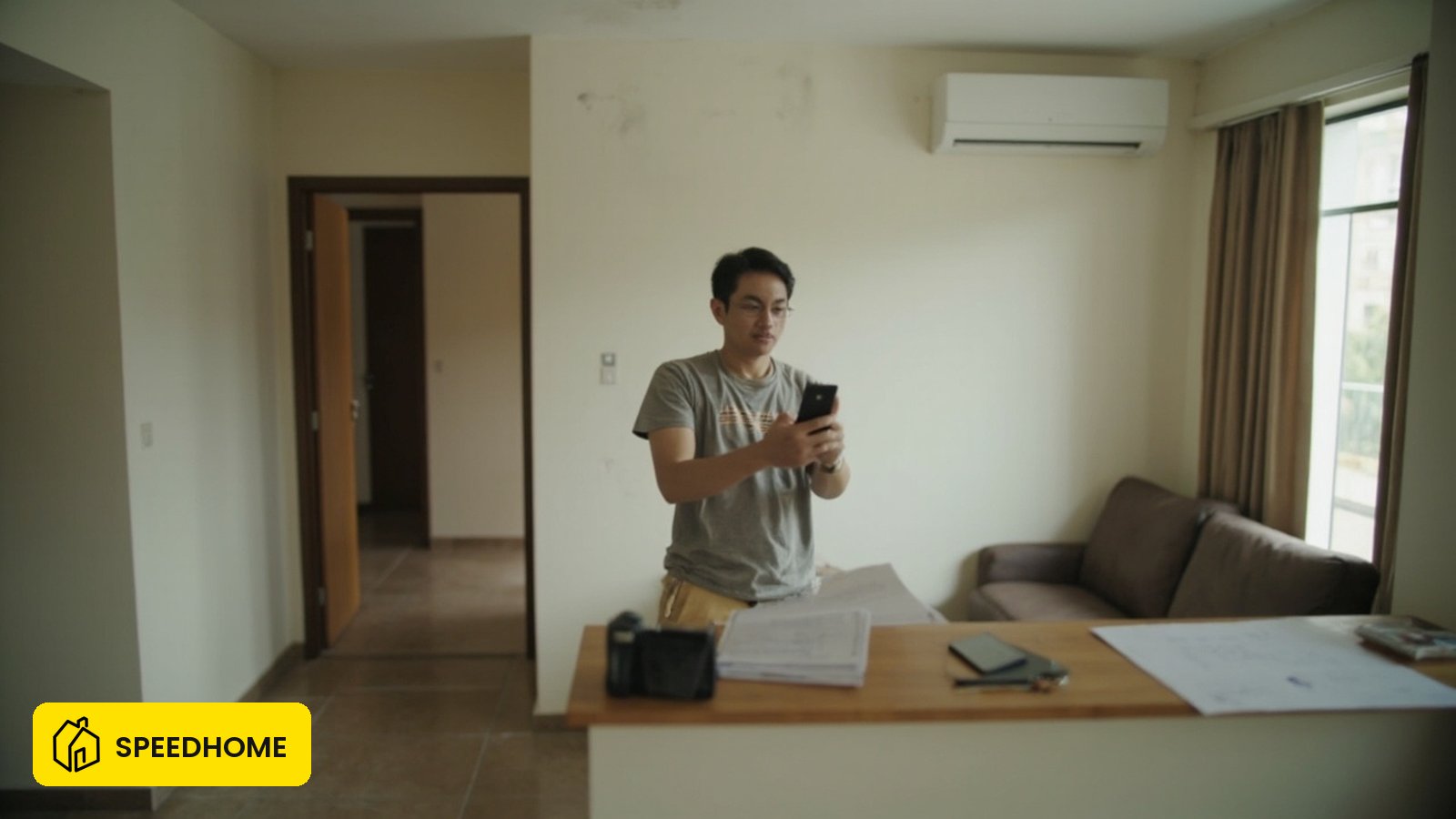
Film a continuous walk-through video on move-in day, take dated close-up photos of every pre-existing defect, record the meter readings, and share the time-stamped file with the other party the same day — then repeat the identical joint walk-through at move-out. That same-day-shared record is what a deposit claim or defence in Malaysia stands on.
Malaysia has no statutory deposit cap and no fixed refund deadline; deposits are governed by your tenancy agreement, and a landlord's right to retain any part of one is limited to proven loss under general contract law (Contracts Act 1950 s.74). Whoever shows dated evidence of the unit's condition wins the disagreement — a verbal "it was already like that" does not beat a timestamped photo.
SPEEDHOME platform data (2026): video documentation at move-in and move-out is the single step landlords most often skip — yet it is the same step that decides most deposit disputes that do end up filed. Build the record on day one, share it the same day, and the unit's condition is no longer anyone's word against yours.
Handover documentation — 2026 snapshot (status as of 2026-10):
| Item | 2026 status |
|---|---|
| Move-in record | Continuous walk-through video, dated close-up photos of every defect, meter readings — shared the same day |
| Move-out record | Repeat the identical joint walk-through and compare against the move-in file |
| Inventory | Both parties initial every page; meter readings written on the list |
| Legal footing | No statutory deposit cap — proven loss under Contracts Act 1950 s.74 decides |
What should I photograph and film at move-in?
A usable handover record has three parts: a continuous walk-through video, dated close-up photos of every existing defect, and the meter readings written on the inventory list — all shared with the other party the same day.
Aim for evidence that stands on its own. Walk room by room in a single unbroken video so the sequence cannot be edited out of context. Open every cabinet, flush every toilet, run the taps and air-conditioner, and film the result. Photograph each existing mark close enough to see it, with the room identifiable in a wider shot. Write the TNB and water meter readings and any IWK account reference on the inventory list, and have both parties initial each page.
The step most people skip is sharing the record immediately. Send the photos and video link to the other party on move-in day and keep the message — that date stamp is what turns "pre-existing" from an assertion into a fact.
What goes into the handover evidence table?
Use this as your move-in and move-out capture list. Photograph everything in the left column both times, so the two records can be compared side by side.
| Area or item | What to capture | Why it matters for a deposit dispute |
|---|---|---|
| Walls, ceilings, doors | Close-ups of cracks, paint chips, nail holes, water stains | The single most common "damage" claim; pre-existing marks are routinely re-charged |
| Floor — tiles, vinyl, parquet | Scratches, chips, lifted edges, stains, grout condition | Parquet and vinyl scratches are subjective; a dated photo removes the argument |
| Kitchen — cabinets, hob, sink | Door alignment, burn marks, stains, seals, water marks under the sink | Water damage under a sink is frequently blamed on the outgoing tenant |
| Bathroom — tiles, fittings, ceiling | Grout, silicone sealant, ceiling stains (inter-floor leak signs), tap flow | Ceiling stains signal an inter-floor leak that is not the tenant's responsibility |
| Air-conditioners and fans | Each unit running, any dripping or noise, fan blades | A non-serviced or dripping unit is a recurring deduction — show it worked on day one |
| Windows, grilles, locks | Cracks, broken latches, grille condition, keys counted | Missing keys and cracked panes are easy, provable deductions if undocumented |
| Utility meters | TNB reading, water reading, IWK account reference, all initialled | Outstanding utility debt at move-out is a top cause of deposit holds |
| Furniture and appliances (if furnished) | Each piece photographed, serial numbers for appliances | Appliance damage or disappearance is a clear-cut claim only with a baseline |
| Exterior — balcony, yard, car park | Stains, cracks, assigned lot number and condition | Balcony tile and car-park damage is often forgotten until move-out |
Do the move-out walk-through on the same basis, ideally jointly, and compare the two sets of images before either party signs anything. For the full step-by-step including the inventory list itself, use the move-in and move-out checklist for tenants in Malaysia.
Furnished vs unfurnished: what changes in the record?
If the unit is furnished, log each appliance's serial number on the inventory list alongside its photo — that single line is what turns a missing or damaged appliance from a he-said-she-said into a proven loss, and the same baseline still applies whether the unit is partly or fully furnished.
For an unfurnished unit, the focus stays on the surfaces and fittings: paint, tiles, sealant, doors, windows, grilles and meters carry most of the dispute weight. For a furnished unit, add a row per appliance (washing machine, fridge, oven, water heater, air-conditioner) with make, model and serial number captured close enough to read — and one wider shot showing it in place. Photograph the condition of any soft furnishings or mattresses; these are frequent "stained on day one" claims that are otherwise hard to disprove.
If the inventory list handed to you at signing is blank, treat that as the bug it is and fill it in during the same walk-through, then send the completed version back the same day.
How does the dated record protect my deposit in a Malaysian tenancy?
In a Malaysian tenancy, a deposit deduction has to be tied to a proven, quantified loss — not an assumption. Your dated condition record is what forces the other side to prove their loss, or proves you did not cause it — and it is the single highest-leverage step you can take.
Because there is no dedicated residential tenancy tribunal in Malaysia, a deposit dispute is a private contract matter decided in the civil courts — claims up to the small-claims threshold are typically filed through the Magistrates' Court procedure without a lawyer. In practice it rarely reaches court: the side with the cleaner evidence prevails. A landlord retaining part of a deposit must show the damage exists, goes beyond fair wear and tear, and what it cost to put right; a tenant wanting the full deposit back must show the unit was handed over in the agreed condition. The same-day-shared move-in record is the highest-leverage step you can take — without it, the landlord's statement of condition controls; with it, the agreed baseline controls.
Date-stamping the evidence so it survives a small-claims filing
A photo on its phone carries the device's EXIF date, but a screenshot or WhatsApp forward does not — and the Magistrates' procedure still takes written records seriously. Save the original photo file (not a re-saved version), email or WhatsApp it to the other party on the same day, and keep that sent-message log alongside the file. If you must use a screenshot, also keep the original source link or the chat thread that produced it, and note the date in writing on the inventory list itself. The combination — original file + same-day send log + initialled written list — is what a small-claims process can verify without a forensic examiner.
Evidence checklist by deposit path: cash vs Zero Deposit
| Step | Cash deposit tenancy | Zero Deposit tenancy |
|---|---|---|
| Same-day walk-through video and photos | Required | Required |
| Meter readings initialled on inventory list | Required | Required |
| Serial numbers logged for furnished items | Required | Required |
| Same-day share of full record with the other party | Required | Required |
| Move-out joint walk-through and side-by-side comparison | Required | Required |
For the wider picture — what a landlord may and may not lawfully take out of a deposit — read what a landlord can legally deduct from your deposit, and the broader guide to protecting your security deposit as a tenant in Malaysia. If you already did a clean check-out and a deduction was still applied, the guide on what to do if a landlord deducts from the deposit after a clean check-out walks through the next steps.
How does SPEEDHOME build the handover record into the tenancy itself?
On the platform-managed tenancies the move-in condition record is part of the tenancy workflow rather than an optional step a tenant remembers to do, so both parties start with the same agreed baseline.
A deposit dispute is almost always a documentation dispute, so the managed framework treats the condition record as a first-class part of handover. The standard tenancy agreement ties any deposit treatment to proven, quantified loss — with no statutory cap or fixed refund timeline, the agreement governs retention, and a clean baseline is what keeps it honest.
Zero Deposit is a managed rental-risk system, not a financial guarantee product. Zero Deposit replaces the cash deposit, not the evidence — severe end-of-tenancy damage can still reduce what's covered, so the same condition record matters whether you paid cash or not. A documented condition record matters just as much under Zero Deposit as under a cash deposit — it is the evidence that decides whether end-of-tenancy damage is attributable at all.
Browse Zero Deposit verified rentals on SPEEDHOME to find listings where the tenancy and handover framework is already in place.
FAQ
This article is general reference compiled from Malaysian statutes and published practice, not legal advice.
Do I need the landlord or agent present when I document the unit?
A joint walk-through is best because it produces a shared, agreed record on the spot — but it is not mandatory. If the other party cannot attend, film and photograph the unit yourself on move-in day, note the meter readings, and send the full record to them the same day. Your message log becomes the dated record.
Are photos enough, or do I need video as well?
Take both. Photos give clear close-ups of individual defects; a single continuous walk-through video shows the sequence cannot be edited out of context. Together they are far harder to challenge than either alone.
What if the landlord refuses to acknowledge the condition record I sent?
Send it in writing the same day anyway and keep the message — the date stamp is what matters. A refusal to reply does not erase the record; it means the baseline you sent stands uncontradicted. Keep every photo, video and message until the deposit is returned in full.
Does documenting the unit help if I am on a Zero Deposit tenancy?
Yes. Zero Deposit replaces the cash deposit; it does not replace the need for evidence. Any end-of-tenancy damage claim still has to be attributable and quantified, and a clean move-in baseline shows whether damage is new or pre-existing. Document the unit the same way regardless of deposit path.
Can I use this documentation in a small-claims case over my deposit?
Yes. Lower-value deposit disputes are typically filed through the Magistrates' Court small-claims procedure without a lawyer, and your dated photos, video and message log are exactly the evidence it runs on. A clean, same-day-shared move-in record usually settles the matter before any filing is needed. Threshold figures and procedural rules change — confirm the current small-claims limit with the relevant court registry before filing.