
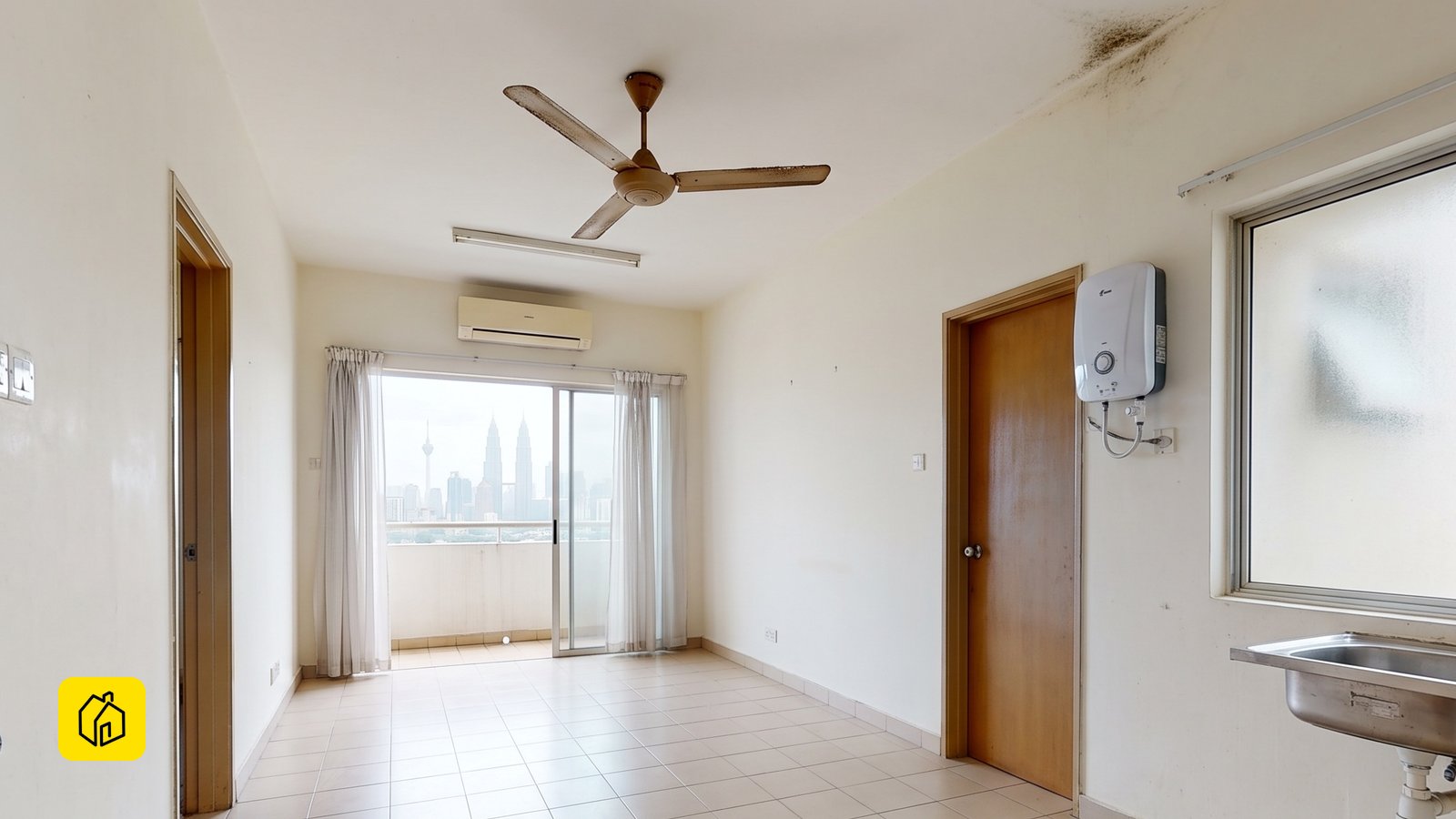
Determining who pays for repairs in a Malaysian rental hinges on the cause and Contracts Act 1950 s.74. For minor issues, the 2-metre test identifies fair wear and tear. Landlords cannot claim new replacement costs for depreciated items like an older air-conditioning compressor. Unresolved disputes up to RM5,000 must go to the small-claims court, not the TTPM.
Most things that break in a Malaysian rental follow the same test: tenant pays for ordinary use and proven misuse; landlord pays for age, pre-existing defects, and major failure. The 10 items below — from a tripping fuse to mould — each get one row, one cause-test answer, and a spoke link to the dedicated who-pays page that goes deeper. Tenancy law is federal in Malaysia; the rule is the same in KL, PJ, Penang, and JB. What changes between the four cities is the unit's rent and condition, not the legal test for who pays for a broken tap or a dead aircond.
The cause-test: what is it in one sentence?
The cause-test for who pays: did the item fail because of how the tenant used it, or did it fail because of age, a pre-existing defect, or normal wear? If it's ordinary use or proven misuse, the tenant pays. If it's age, wear, or a defect that was there at handover, the landlord pays. The test is the same one SPEEDHOME's Homerunner inspectors apply on every end-of-tenancy walkthrough.
The 2-metre test catches most of the borderline cases: if you cannot see a mark or defect from 2 metres away, it is fair wear and tear — not claimable damage. This is the practical version of the stricter legal test under Contracts Act 1950 s.74, which is the doctrinal anchor for every row below. See the Contracts Act 1950 s.74 wear-and-tear corrective for the legal version.
The 10-row table: who pays for what
Each row below states the convention, the statutory anchor, the evidence to keep, and a spoke link to the dedicated who-pays page. "Convention" is the market practice in KL, PJ, Penang, and JB; "statute" is the legal anchor (almost always Contracts Act 1950 s.74 plus the tenancy agreement). The seven un-rowed items in this list (fuse, light switch, door lock, window latch, leaking tap, blocked drain, mould) do not have their own dedicated single page; they are covered here and route to the closest existing spoke.
| # | Item that breaks | Who pays (convention) | Who pays (statute) | Evidence to keep | Spoke page |
|---|---|---|---|---|---|
| 1 | Fuse / main switch trips repeatedly | Tenant if caused by tenant appliance overload; landlord if pre-existing wiring fault | Landlord: structural; tenant: proven misuse | Photo of tripped breaker, list of appliances in use, electrician report if obtained | Who pays for repairs (hub) |
| 2 | Light switch stopped working | Tenant if physical damage (broken knob, hard knock); landlord if age / loose wiring | Tenant: misuse; landlord: wear + defect | Date, photo, short message to landlord within 7 days | Who pays for repairs (hub) |
| 3 | Door lock jammed or broken | Tenant if keys forced, lock tampered, or new keys not returned; landlord if age, rust, or break-in repair | Tenant: proven misuse; landlord: wear + defect + security | Police report if break-in; photos of damage; two keys returned | Who pays for repairs (hub) |
| 4 | Window latch loose or broken | Tenant if forced from inside; landlord if hinge/latch failed from age or weather | Tenant: misuse; landlord: wear + structural | Photo, date, WhatsApp message; weather note if storm | Broken window / glass — who pays |
| 5 | Leaking tap (kitchen or bathroom) | Tenant if caused by tenant force; landlord if worn washer, age, or pre-existing drip | Tenant: misuse; landlord: wear + defect | Video of drip with date; water-bill comparison if unusually high | Plumbing who-pays (EN deep-dive) |
| 6 | Blocked drain / floor trap | Tenant if caused by tenant's grease, hair, or foreign object; landlord if pre-existing pipe issue or shared-stack blockage | Tenant: misuse; landlord: structural | Photo of the blockage if visible; date of first slow-drain; receipt for any plumber | Plumbing who-pays (EN deep-dive) + Plumbing emergencies (trilingual) |
| 7 | Aircond not cooling / needs service | Tenant: routine filter cleaning every 1–2 months + chemical wash; landlord: gas top-up only if the unit was sealed at handover, or compressor failure from age | Tenant: routine servicing + misuse; landlord: age + pre-existing defect + major component | Service receipts, filter photos, gas-top-up date, original invoice if available | Aircond servicing — who pays |
| 8 | Water heater not heating / leaking | Tenant if damage caused by tenant (dropped item, scaled from no usage in own room); landlord if landlord-supplied unit failed from age or wear | Tenant: misuse + neglect; landlord: wear + supplied-unit defect | Photo of the heater, error code if displayed, water heater age if known, original TA clause | Water heater repair — who pays |
| 9 | Ceiling fan stopped working after 2+ years | Landlord — this is the textbook "end of useful life" case. Tenant pays only if damage is proven (e.g. yanked chain, water damage) | Landlord: age + wear; tenant: proven misuse | Date fan stopped, age of fan if known, photo of any visible damage | Ceiling fan stopped after 2 years — who pays |
| 10 | Mould on wall or ceiling | Tenant if caused by tenant behaviour (no ventilation, drying clothes indoors); landlord if from un-reported leak, structural damp, or pre-existing issue | Tenant: misuse + neglect; landlord: structural + pre-existing | Date first noticed, photos over time, any leak report to landlord in writing, ventilation evidence | Plumbing who-pays (EN deep-dive) + Aircond damp / mould from open windows |
Honest limitation on cost rows: the corpus carries cost ballparks for the aircond row (chemical wash RM99–RM180, gas top-up RM120–RM250, compressor RM800–RM2,000+ per the aircond who-pays page) but not for the other 9 items in this list. For fuses, switches, locks, latches, taps, drains, water heaters, fans, and mould, the cost depends on the specific part, the contractor, and the building. Use "no value pinned in source" for these; ask the property manager or get a written quote before agreeing to any charge.
How does the 3-bucket test decide a deposit dispute?
Every row above resolves into one of three buckets: tenant pays (ordinary use + proven misuse), landlord pays (age, wear, pre-existing defect, major component failure), or shared (betterment rule applies). This is the same 3-bucket framework the wider who-pays-for-repairs hub uses, and the doctrinal anchor for every security-deposit deduction dispute.
The "betterment" bucket deserves its own line because it is the one tenants most often lose on. If a tenant damages a 6-year-old aircond compressor that was already into year 6 of an expected 8-year life, the recoverable amount is the depreciated value, not the new-replacement price. A RM1,800 compressor at 2/8 of life remaining = RM450 recoverable, not RM1,800. The landlord cannot "upgrade at the tenant's expense" and the tenant cannot be made to pay for a brand-new unit to replace an old one. The aircond who-pays page walks this through with numbers.
Which documentation standards decide deposit disputes?
For any of the 10 items above, the dispute will turn on dated documents — not memory. Three things decide it: move-in photos, written repair requests, and dated contractor reports. A tenant who has none of these is fighting blind; a tenant who has all three is in the strongest possible position.
| Evidence type | When to capture | Why it matters |
|---|---|---|
| Move-in / move-out photos and video | Day 1 of tenancy and day of key return | Establishes baseline condition; defends against fabricated damage claims |
| Written repair request to landlord (WhatsApp / email) | As soon as the issue is noticed, with date and photo | Triggers the landlord's duty to repair; timestamps the issue |
| Dated contractor report or quote | Before authorising any repair, or before the landlord does | Provides the depreciated-value calculation; blocks inflated charges |
| Receipts for tenant-paid repairs | At the time of payment | Defends against duplicate charges at move-out |
| Two-way communication record | Throughout the tenancy | Shows pattern of cooperation; useful in any forum-tier claim |
If the issue is serious and the landlord will not act — e.g. a major water leak, no hot water for weeks, mould spreading — the tenant rights if landlord refuses repairs page walks through the formal escalation, including the small-claims court route (≤ RM5,000) and Sessions Court (≤ RM1,000,000 for other civil actions; landlord-and-tenant and distress claims unlimited, s.65(1)(a)). Malaysia has no dedicated residential tenancy tribunal; deposit and repair disputes are private contract matters decided in the ordinary civil courts. The Tribunal Tuntutan Pengguna Malaysia (TTPM) does not handle private residential tenancy disputes.
What this means in the 4 cities (KL, PJ, Penang, JB)
The 10-row table applies identically in KL, PJ, Penang, and JB. Tenancy law is federal, and the cause-test does not change by state. What changes between the four cities is the rent level, the typical age of the building, and the type of contractor available, not the rule.
- KL (incl. Mont Kiara, Bangsar, KLCC fringe) — newer condos; aircond and water-heater failures tend to be age-related (the landlord's tab); routine servicing is the tenant's tab. Many units come furnished; furniture and appliance age is shorter, so the dispute surface is wider.
- PJ (Petaling Jaya, SS2, Damansara) — mixed age; the leakage / mould row (10) is the most common because of older piping. Keep the leak-report paper trail.
- Penang (George Town, Jelutong, Batu Ferringhi) — heritage and island-mainland split; older windows and latches fail more often (row 4). Window and door hardware is the landlord's responsibility by age, but tenant if forced.
- JB (Johor Bahru, Mount Austin, Bukit Indah) — newer inventory overall; aircond and water-heater age failures are the most common cause-test. Cross-border demand (Singapore tenants) means many units are tenanted short-term; the dispute is more likely to surface at the 6-12 month mark than at year 2.
No per-city cost band is given for items 1–6, 8, 9, 10. Use the aircond row (7) as the only anchored cost reference; for the others, get a written quote from a local contractor. The corpus does not carry per-city cost data for the other 9 items.
What if your landlord refuses to repair?
Document, then escalate. Three stages: written request, formal demand, court claim if needed. A tenant who has been ignored for a serious issue (no hot water, leaking ceiling, electrical fault, mould) has a defined path. The tenant rights if landlord refuses repairs page covers the formal demand letter, the court tier (small claims ≤ RM5,000 → Magistrates' Court ≤ RM100,000 → Sessions Court ≤ RM1,000,000 for other civil actions; landlord-and-tenant and distress claims unlimited, s.65(1)(a)), and the time limits. SPEEDHOME-managed tenancies route disputes through SPEEDHOME's process; non-managed tenancies follow the civil court route directly.
Where to read each item in depth
The 10 rows above are the comparison. The 7 existing who-pays singles and the wider repair hub are the deep-dives. Each spoke is one or two clicks away.
- Who pays for repairs (the hub) — Who pays for repairs in a Malaysia rental — the 3-bucket framework this page builds on.
- Aircond service — Aircond servicing — who pays? — the 8-row cause-based split, the cost band (only item with anchored RM), the betterment rule.
- Water heater — Water heater repair — who pays? — the 3-row inventory table, the 3-row court-evidence table.
- Plumbing (EN deep-dive) — Plumbing who-pays (EN deep-dive) — the 10-row who-pays table for leaks, drains, mould.
- Plumbing emergencies (trilingual) — Plumbing emergencies in a Malaysia rental — the BM/ZH-triplicated sibling.
- Ceiling fan stopped after 2 years — Ceiling fan stopped working after 2 years — who pays? — the textbook "end of useful life" case.
- Window / glass — Who is responsible for a broken window? — the window-specific single page.
- Mould cause-specific — Aircond damp / mould from open windows — the cause-specific mould page.
- Wear and tear (the doctrine) — Wear and tear — Malaysia landlord guide — the 2-metre test.
- The s.74 corrective (the legal anchor) — Contracts Act 1950 s.74 — the wear-and-tear myth — the strict legal version of the 2-metre test.
- Tenant repair report template — Tenant repair report template (Malaysia) — the written-report format for repair requests.
- IWK sewerage — Who pays IWK sewerage in a rental? — the related utility bill dispute.
FAQ
What's the 2-metre test for wear and tear?
If you cannot see a mark or defect from 2 metres away, it is fair wear and tear — not claimable damage. This is the practical test SPEEDHOME's Homerunner inspectors apply on every end-of-tenancy walkthrough, and it mirrors the stricter legal test under Contracts Act 1950 s.74.
Who pays for a leaking tap in a Malaysian rental?
Usually the landlord, if the tap was already worn at handover or has failed from age. The tenant pays only if the damage was caused by force (over-tightening, dropped item on the spout). The test is the same: tenant pays for misuse, landlord pays for wear and pre-existing defects. For the full breakdown, see the plumbing who-pays deep-dive.
Who pays for aircond servicing — tenant or landlord?
Tenant: routine filter cleaning every 1–2 months and chemical wash. Landlord: gas top-up if the unit was sealed at handover, or compressor failure from age. The split depends on cause; the aircond who-pays page has the 8-row split and the cost ballparks (chemical wash RM99–RM180, gas top-up RM120–RM250, compressor RM800–RM2,000+).
What if my landlord refuses to fix a serious repair?
Document, then escalate. Send a written request (WhatsApp / email with date and photo). If ignored, send a formal demand letter. If still ignored, file a small-claims court claim (≤ RM5,000) or a Sessions Court claim (≤ RM1,000,000 for other civil actions; landlord-and-tenant and distress claims unlimited, s.65(1)(a)). The tenant rights if landlord refuses repairs page covers the full path. SPEEDHOME-managed tenancies route through SPEEDHOME's process.
How long does a landlord have to fix something in Malaysia?
There is no statutory deadline for non-urgent repairs. The tenancy agreement clause governs. For urgent safety issues (gas leak, electrical fault, no running water), the duty is implied by contract; for non-urgent issues, the contractual notice period applies. The legal anchor is the tenancy agreement plus general contract law; the s.74 corrective page explains the doctrinal position.
Does SPEEDHOME handle repair disputes on managed tenancies?
Yes — for SPEEDHOME-managed tenancies, repair disputes route through SPEEDHOME's process. For non-managed tenancies, the tenant follows the civil court route directly. The tenant repair report template is the same format for both, because the evidence discipline is what makes any dispute resolvable.
Accuracy and corrections. The law on this page is cited from Contracts Act 1950. Numbers are registry-bound and re-verified with each update. Found a mistake? [email protected].