
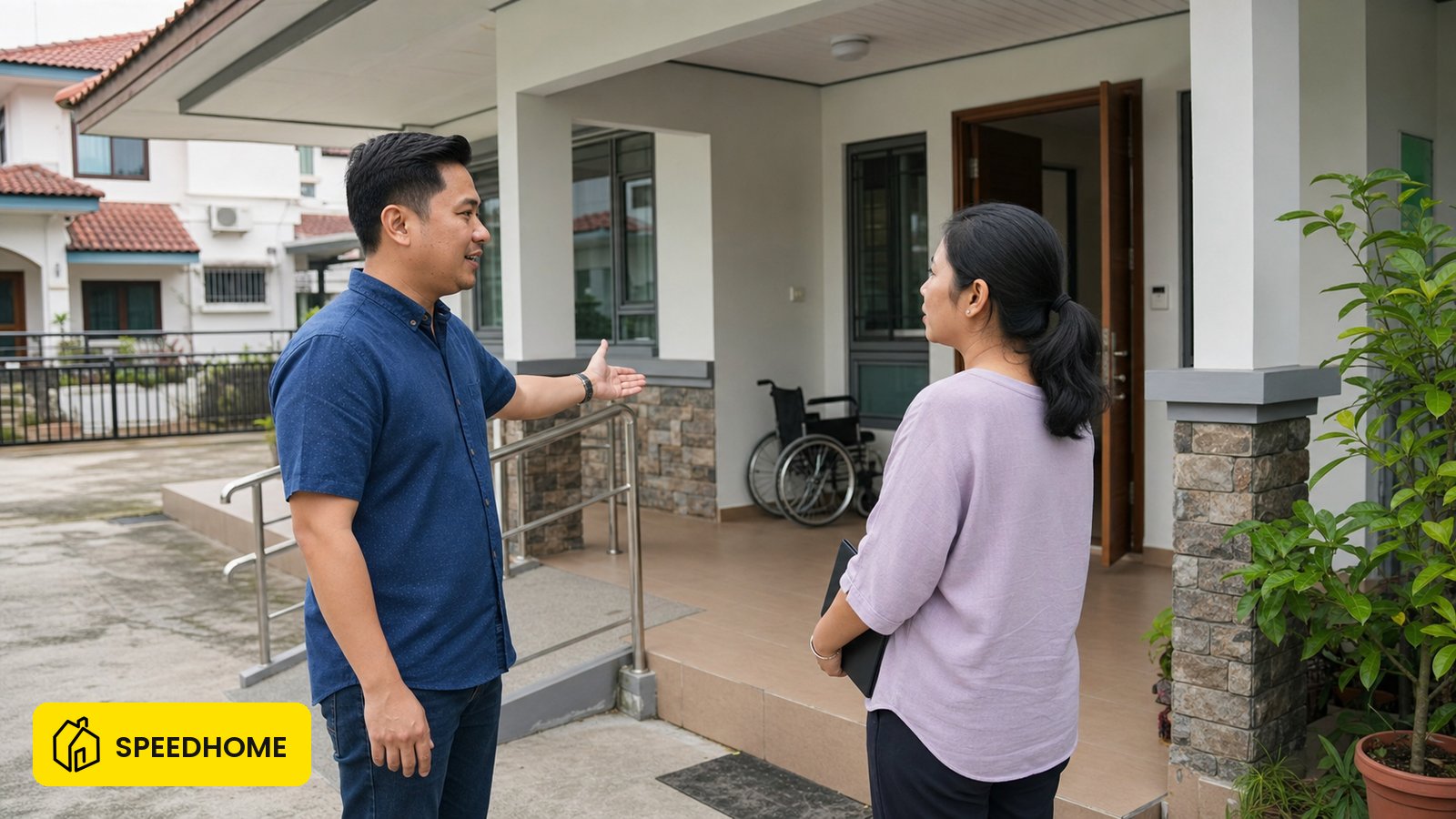
A care centre in Malaysia caring for four or more residents must register with the Social Welfare Department (JKM) under the Care Centres Act 1993 (Act 506); operating unregistered carries a fine of up to RM10,000 or up to two years' imprisonment or both. Landlords should also expect council change-of-use approval, and must disclose the change to their insurer.
Renting your house to a care centre operator in Malaysia: what landlords need to check
Before you sign, understand that a residential old-folks home is a regulated activity, not just "a tenant with more people."
SPEEDHOME's platform has managed over 30,000 tenancy agreements across Malaysia, and the screening-and-paper-trail discipline that data comes from matters double when your tenant is an operator rather than a household — every check below leaves a record you can rely on later. An operator caring for four or more residents must register with the Social Welfare Department (JKM), and running that activity in a residential house typically needs the council's change-of-use approval too. Neither is the operator's problem alone — an unregistered or unapproved centre on your property is a risk you inherit as landlord.
What does Malaysian law actually require of a care centre operator?
The Care Centres Act 1993 (Act 506) requires registration once a premises cares for four or more residents, and operating unregistered is a criminal offence — for the operator, not automatically the landlord. A "residential care centre" is a premises receiving four or more persons for care as residents; relatives of an individual operator aren't counted toward that threshold, so a small family arrangement below four may sit outside the Act. Section 5(1) prohibits operating or managing an unregistered care centre; registration is granted by the Director General of Social Welfare (JKM).
Section 5(2) makes operating unregistered punishable by a fine of up to RM10,000 or up to two years' imprisonment or both, plus up to RM1,000 per day the offence continues. That liability sits with the operator — but a landlord who knowingly hosts an unregistered operation is in a weak spot if enforcement or a safety incident brings the council or JKM to your door.
Worth clearing up: the Private Aged Healthcare Facilities and Services Act 2018 (Act 802), meant to bring private aged-care under Ministry of Health licensing, was gazetted in 2018 but has not been brought into full operation, as of the most recent public legal commentary. Residential elderly care centres still register with JKM under Act 506, not Act 802.
What does JKM registration actually check, and can I ask to see it?
JKM's registration process pulls in technical-agency sign-off before it issues a certificate, and a landlord can lawfully ask to sight that certificate before signing. Per JKM's published registration guide, an operator needs prior support from the local authority (PBT), Fire and Rescue Department (Bomba), and Health Department (plus Land and Survey in Sarawak) — the checklist includes the local-authority approval letter and a floor plan. Registration is applied for at the district social welfare office (PKMD); processing takes about 21 days once complete, and the certificate carries five-year validity for a RM50 fee.
The certificate is issued to the operator personally, is not transferable, and must be kept available for inspection at the centre. Asking to sight it — and the technical-agency approvals behind it — before signing is a licensing check, not a question about who the residents are.
| Approval | Who issues it | Landlord's practical check |
|---|---|---|
| JKM care-centre registration | Director General of Social Welfare, via district PKMD office | Ask to see the current certificate and expiry date (~5-year validity) |
| PBT / Bomba / Health support letters | Local authority, Fire & Rescue, Health Department | Ask whether obtained; JKM won't register without them |
| Change-of-use / development order | Local council (e.g. DBKL in Kuala Lumpur) | Ask for the approval letter or the operator's application status |
Running a care centre from a residential property is a commercial activity in planning terms. In Kuala Lumpur, DBKL's published guidance requires the Mayor's approval of a change of building use through a development order, naming care centres explicitly alongside kindergartens; operating without it can attract enforcement under the Federal Territory (Planning) Act 1982. Requirements outside KL vary by council, but change-of-use permission is generally part of the chain nationwide anyway, since JKM won't register a centre without local-authority support. Ask whether the operator has, or is applying for, this approval — "we'll sort that out later" is a reason to slow down.
What happens to my home insurance if the property becomes a care centre?
Standard houseowner and householder policies in Malaysia are underwritten on the basis the property is a private dwelling, and you have a legal duty to tell your insurer when that changes — not disclosing can cost you the claim, not just the premium. Policyholders carry a statutory duty of disclosure covering changes to previously-given information, and remedies for non-disclosure can include refusal or reduction of a claim, a change of terms, or termination of the policy. If your house becomes a care centre, tell your insurer and expect re-underwriting on business terms; wordings differ by insurer, so get it in writing. That's separate from whether the operator carries their own liability or medical cover for residents — the operator's responsibility to arrange, and yours to confirm.
What lease clauses actually manage this risk?
A defensible lease for a care-centre tenant makes the JKM and change-of-use approvals a condition of occupation, puts wear-and-tear obligations in writing given the higher usage intensity, and gives you a clean exit if approvals lapse. In practice:
- Conditions precedent. Make the tenancy conditional on a valid JKM certificate and evidence of change-of-use approval, or a firm application timeline, before signing.
- Ongoing compliance covenant. Require the operator to keep approvals current for the whole term and notify you if either lapses or faces enforcement.
- Wear-and-tear and reinstatement. A care centre sees more daily traffic, mobility equipment, and fixture changes (grab bars, ramps, hospital beds) than an ordinary household. Spell out what may be altered, what must be reinstated, and who pays — the discipline used on higher-intensity commercial tenancies; see the commercial shoplot and factory landlord guide.
- Liability and indemnity. The operator should carry public liability and any care-related insurance for residents; make that an express warranty and ask to see the policy.
- Termination trigger. Build in a right to terminate, or a cure period, if the JKM registration or council approval is revoked, refused, or never existed.
- Corporate and signatory checks. If the operator is a company, the same diligence used for checking a foreign company tenant's legitimacy before signing applies — confirm who can actually bind the entity to a multi-year lease.
This isn't about whether care-centre tenants are desirable — many landlords like the longer, stable terms this sector offers. It's the paperwork trail that keeps you out of the operator's regulatory exposure.
Where SPEEDHOME fits if you'd rather not manage this yourself
If drafting and enforcing these conditions is more diligence than you want to run solo, the platform's managed landlord service handles tenancy documentation, screening, and risk-management structuring (including Zero Deposit, a managed rental-risk system, not an insurance product), so a higher-intensity tenancy like this is still built on a defensible file rather than a verbal understanding. Compare what's included at Landlord services.
FAQ
Five quick answers on renting your house to a care-centre operator in Malaysia — registration, thresholds, planning approval, insurance, and liability.
How many residents trigger JKM registration for a care centre?
Four or more. A premises receiving four or more persons for care as residents falls under the Care Centres Act 1993 and must register with JKM; relatives of an individual operator are not counted toward that threshold.
Am I as the landlord liable if my tenant runs an unregistered care centre?
The criminal offence attaches to the operator, not the landlord, but that isn't the whole picture. A landlord who knowingly renewed a lease for an unregistered operation faces a weaker position if enforcement or a safety incident follows. Ask to see the JKM certificate before signing.
Does JKM registration alone mean I don't need council approval?
No. JKM requires prior local-authority (and Bomba/Health) support before it will register a centre, and in Kuala Lumpur DBKL separately requires a change-of-use development order. Treat the two as linked but distinct requirements.
Will my home insurance still cover the property once it's a care centre?
Not automatically on private-dwelling terms. Standard policies assume private residential use, and you must disclose the change of use to your insurer. Failing to disclose can lead to a claim being refused or reduced — get the re-underwritten terms in writing.
Has the newer aged-care law (Act 802) replaced JKM registration?
Not as of 2026. Act 802 was gazetted in 2018 but has not been brought into full operation, based on the most recent public legal commentary. Residential elderly care centres continue to register under the Care Centres Act 1993 with JKM.
How this page stays accurate. Statements rest on verified sources; figures are checked against a dated fact registry at every update. Report an error: [email protected].