
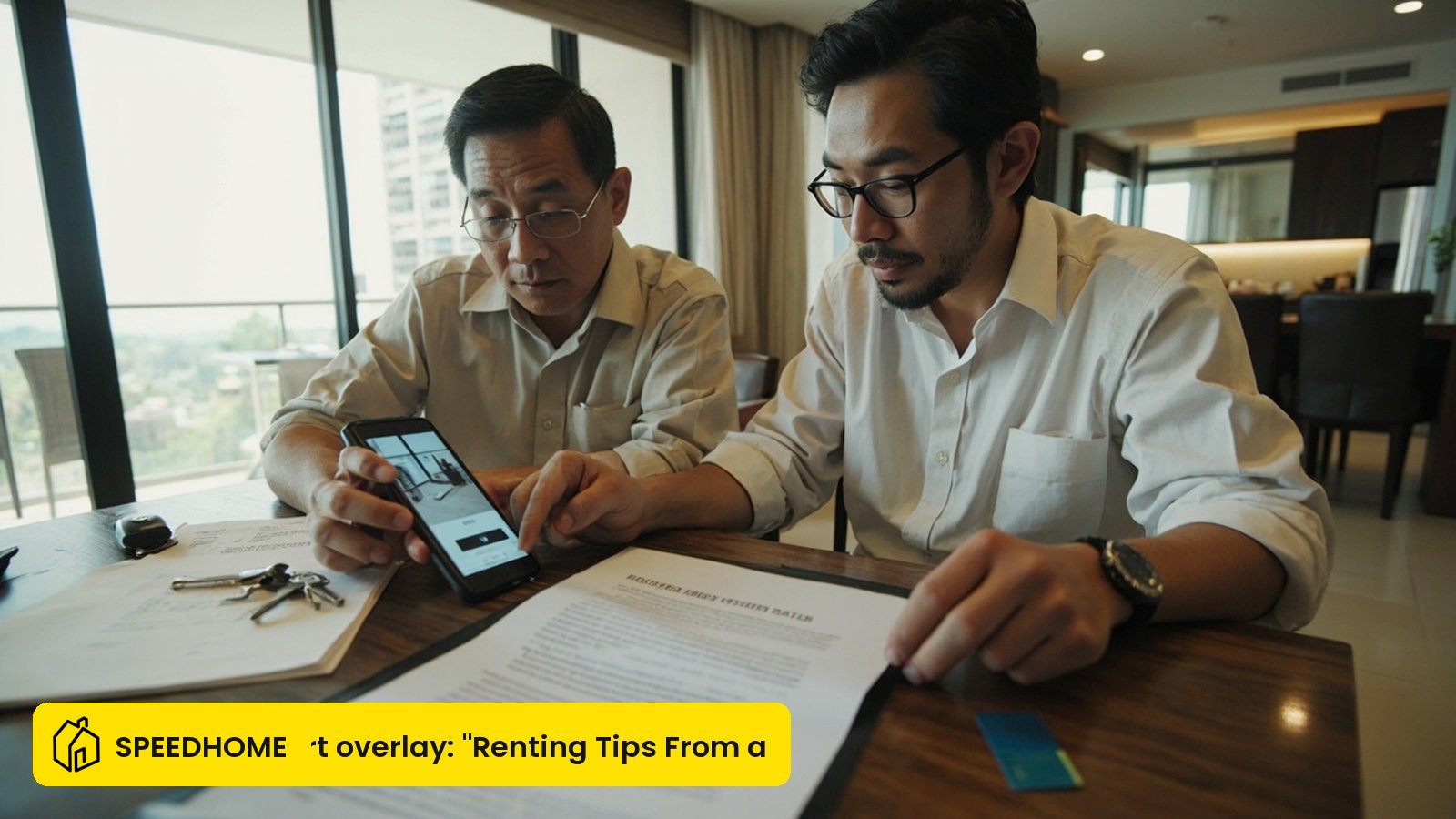
The renters who get the best deals negotiate honestly and keep every promise in writing. Committing to a longer fixed term reduces the landlord's re-listing cost and vacancy risk, often translating to an RM100-300/month discount. Proving the condition of the unit on move-in day builds trust, as condition disputes are the biggest driver of late or unpaid rent.
Renting tips from a landlord: what good tenants actually do
The renters who get the best deals in Malaysia are the ones who negotiate honestly, keep every promise in writing, and document the unit on move-in day — the same habits that protect them if a dispute ever arises. A landlord who trusts you is far more flexible on rent and repairs than one who feels at risk. The platform's landlord operations data shows that condition disputes are the single biggest driver of late or unpaid rent, so the renter who proves condition early earns the most goodwill.
This guide keeps the five field-tested tips a working landlord shared with us, then adds the lawful path for when a tenancy turns difficult — because the same evidence that wins you a discount is the evidence that protects you both ways.
What is the Tip 1 — Negotiate rent by lowering the landlord's risk?
Rent is negotiable when you reduce the landlord's headaches. Offer to pay on time through a traceable channel, hold the place to its agreed condition, and confirm your end-of-tenancy handover plan up front — these cost you nothing but materially lower the landlord's expected cost, which is what a discount is really pricing.
A working landlord we spoke to keeps a framed quote from negotiator Dr. Chester Karrass on his desk: "In business as in life, you don't get what you deserve, you get what you negotiate." The principle translates cleanly to Malaysian rentals. Anything that reduces a landlord's vacancy, repair, or collection risk is leverage you can trade for a lower monthly rent or a better furnished unit.
Practical moves that cost little but read as low-risk to a landlord:
| Negotiation lever | Why it lowers the landlord's risk | What you can ask for in return |
|---|---|---|
| Pay via bank transfer to a company account | Traceable, auditable, no "cash lost" disputes | Lower rent, or first-month rebate |
| Commit to a longer fixed term | Less re-listing cost and vacancy risk | RM100-300/month discount |
| Agree condition-photos at move-in | Removes the #1 deposit-dispute cause | Faster deposit return, flexible handover date |
| Offer to find your own replacement when leaving | Cuts agent/vacancy cost | Deposit released without re-listing friction |
| Agree minor fair-wear repair at handover | Reduces end-of-term deduction fights | Lower deposit, or unfurnished priced as furnished |
Do not promise what you cannot keep. A landlord who has been burned once checks every promise the next time, and SPEEDHOME platform records show the pattern repeats: tenants who over-promise to win the unit are the same ones whose disputes escalate fastest when rent tightens.
Tip 2 — Why never settle for a verbal agreement?
If it is not in the tenancy agreement, it did not happen. Malaysian landlords and tenants can be warm and generous verbally, but a verbal promise about repairs, deposit refund timing, or early exit has no legal weight the moment the relationship is strained — only the stamped written agreement holds.
Get every material term into the written tenancy agreement and have it stamped. The items most often left verbal — and most often disputed later — are:
- Who pays for which repairs (air-conditioner servicing, water heater, appliance replacement)
- The exact deposit refund timeline and any agreed deductions
- Whether sub-letting or adding a housemate is allowed
- The notice period for renewal or early termination
- Which utilities the tenant takes over and on what date
Pay your stamp duty and keep the stamped copy — it is the document that a court, a credit agency, or a landlord's recovery process will actually read. A friendly handshake tenancy can feel fine for years and then collapse into a he-said-she-said fight the week rent is late.
Tip 3 — How honest should you be with your landlord about your situation?
Honesty about a late payment buys you far more flexibility than hiding it. Landlords in Malaysia hear "I'll pay next week" constantly and rarely believe it the third time; a tenant who calls early, explains the real situation, and proposes a concrete repayment date keeps the relationship — and the tenancy — intact.
The landlord we interviewed described a recurring pattern: tenants promise rent "next month" while already in debt, then go quiet, then stop answering. By the time it becomes a formal problem, the landlord has already mentally written off the relationship and is thinking about how to evict a tenant lawfully in Malaysia rather than how to help. That outcome is avoidable.
If you will be late:
- Tell the landlord before the due date, not after.
- State the reason briefly and a concrete date you can pay.
- Offer partial payment now if you can — it signals good faith, not avoidance.
- Keep the conversation in writing (WhatsApp counts) so there is a record of your honesty.
SPEEDHOME platform records show that roughly seven in ten tenants pay on or before the due date, and those who communicate early when they cannot are far less likely to end up in a recovery process. The tenants who recover fastest from a bad month are the ones who treated the landlord as a partner the whole time.
Tip 4 — Why meet the existing tenants before you sign?
Talking to the current tenant is the cheapest, most reliable inspection you will ever get. They have nothing to sell you and will tell you plainly whether the landlord fixes things, whether the neighbours are loud, and whether there is anything "off" about the building — information a viewing alone almost never surfaces.
Ask the existing tenant a focused set of questions. The goal is not to interrogate; it is to learn what living there is actually like for the next twelve months:
| Question to ask | What the answer tells you |
|---|---|
| How quickly does the landlord respond to maintenance requests? | Whether repairs will drag for weeks |
| Are there recurring noise, water, or parking issues? | Day-to-day livability, not just the viewing vibe |
| Is there anything you wish you had checked before moving in? | Hidden defects the landlord will not volunteer |
| How was the deposit and handover handled for the last tenant? | Whether the landlord plays fair at move-out |
| Are utilities and maintenance fees billed fairly and on time? | Recurring cost surprises to budget for |
If the landlord resists you speaking to the existing tenant, treat that as a signal worth weighing. The honest ones introduce you themselves.
Tip 5 — How do you document the unit in photos on move-in day?
Move-in photos are your single strongest piece of evidence in any future deposit or repair dispute. Photograph every room, every existing scratch, crack, water stain, and faulty fitting before you unpack — dated, with the lights on — and share the set with the landlord the same day. This is the documentation that protects you from paying for damage that was already there.
A practical move-in photo checklist:
- All four walls and the ceiling of each room (water stains, cracks, paint)
- Floor condition, especially tiles and parquet (scratches, chips, lifting)
- Kitchen and both wet areas (sealant, taps, water heater, drainage)
- Every appliance that came with the unit, switched on where possible
- The utility meter readings (electricity, water, gas) with the date visible
- The front door, locks, and any access cards or remotes handed over
Send the full set to the landlord over WhatsApp or email the same day and ask them to acknowledge. This one habit removes the condition-dispute — the single most common cause of deposit fights in Malaysian rentals — before it can start. It also tells you immediately whether the landlord is attentive; a landlord who ignores a clear defect photo in week one is unlikely to be responsive in month ten.
What to do if the tenancy turns difficult
The fastest way to wreck your own position in a dispute is to take matters into your own hands. Self-help eviction — locking the tenant out, disconnecting water or electricity, or removing belongings — is unlawful in Malaysia (Specific Relief Act 1950 s.7(2)), and recovery of possession after a tenancy ends must follow court proceedings. A tenant reading this should know the same boundary applies to them: withholding rent unilaterally to "force" a repair usually backfires.
The lawful path for both sides is slower but it holds up:
| Step | What it means | Why it beats the shortcut |
|---|---|---|
| Written demand / notice | A dated written notice of the issue (arrears, breach, repair) | Creates the paper trail every later step needs |
| Refer to the tenancy agreement | The stamped TA defines who is in the right | Resolves most disputes without escalation |
| Mediation or formal demand | Lawyer's letter or small-claims route for clear-cut sums | Cheaper and faster than people assume |
| Court proceedings for possession | The lawful route to recover a unit after tenancy ends | The only step that legally returns possession |
SPEEDHOME platform records show first-default-to-recovery averaging around 31 days when landlords follow the lawful process and keep clean records — far shorter than the multi-month standoffs that self-help tactics create. The full detail lives in our guide to eviction laws in Malaysia, and if you need to issue a formal demand the eviction notice template Malaysia page walks through the wording.
What condition and terms verification precedes signing?
A clear record is what separates a normal misunderstanding from a contractual problem. Before either party escalates, gather the stamped tenancy agreement, payment receipts, the move-in condition photos, utility bills, repair reports, keys and access cards, and the written messages that show what was actually agreed.
For landlords, the safest starting point is evidence, written notice, and a process that never pressures the tenant unlawfully. For tenants, the safest starting point is confirming payment status, the handover condition, and the responsibilities you already accepted in the agreement. Avoid the shortcuts — locking a tenant out, disconnecting water or electricity, discarding belongings, or relying on threats — because each one makes the dispute harder to resolve and weaker for the side that did it.
How SPEEDHOME keeps your records in one place
If your tenancy is managed through the platform, the important records already live in one timeline. Listing details, screening records, payment history, repair reports, condition photos, and handover notes sit together — not as legal advice, but as the clean evidence both sides need when discussing rent, repairs, deposits, early termination, or move-out.
This matters most when a dispute could go either way. A tenant who can point to a dated payment record and a shared move-in photo set rarely loses a deposit fight they should have won; a landlord with the same records rarely needs to escalate past a written demand. See the landlord hub on SPEEDHOME for how the records, screening, and stamped-agreement workflow fit together.
FAQ
Can I negotiate rent before signing, or only at renewal?
You can negotiate at both. Before signing you have the most leverage because the landlord still has a vacancy to fill; offer traceable payment, a longer term, or a clean move-in photo commitment in exchange for a lower rate. At renewal your track record is the leverage — a tenant who paid on time and kept the unit clean is cheaper to keep than to re-list.
Is a verbal agreement with my landlord legally binding in Malaysia?
A verbal agreement can be binding in principle, but it is nearly impossible to prove the exact terms when it matters. For anything material — rent, deposit, repairs, notice period, who pays what — get it into the written tenancy agreement and have it stamped. Only the stamped written document protects you in a real dispute.
What photos should I take on move-in day, and who do I send them to?
Photograph every room's walls and ceiling, the floor, both wet areas, every included appliance (switched on where possible), and all utility meter readings with the date visible. Send the full set to the landlord the same day over WhatsApp or email and ask them to acknowledge — that shared, dated record is what stops a condition-dispute before it starts.
What can I do if my landlord is not responding to repair requests?
Put every request in writing with a date and a photo of the issue; keep the messages. If the landlord still does not respond, refer to the repair clause in your stamped tenancy agreement, which usually sets out who pays and how urgent repairs are handled. For serious defects affecting safety or habitability, a lawyer's letter or a small-claims filing is the next formal step — withholding rent unilaterally is risky and usually works against you.
Can a landlord lock me out or cut my utilities for unpaid rent?
No. Self-help measures such as locking the tenant out, disconnecting water or electricity, or removing belongings are unlawful in Malaysia, and recovery of possession must go through court proceedings. The lawful route is written demand, reference to the tenancy agreement, then formal demand or court proceedings — it is slower, but it is the only path that holds up. Our page on eviction laws in Malaysia sets out the full process.
Does being honest about a late payment actually help?
Yes, if you do it early and with a concrete plan. Landlords hear late-payment excuses constantly and stop believing the third vague one; a tenant who calls before the due date, explains the real reason, names a payment date, and sends partial payment keeps the relationship intact. The tenants who recover fastest from a bad month are the ones who communicated honestly the whole time.
Accuracy note. Grounded in Specific Relief Act 1950. Every figure is bound to a dated fact registry and re-verified on each update. Spotted an error? Email [email protected] with this page's link.