
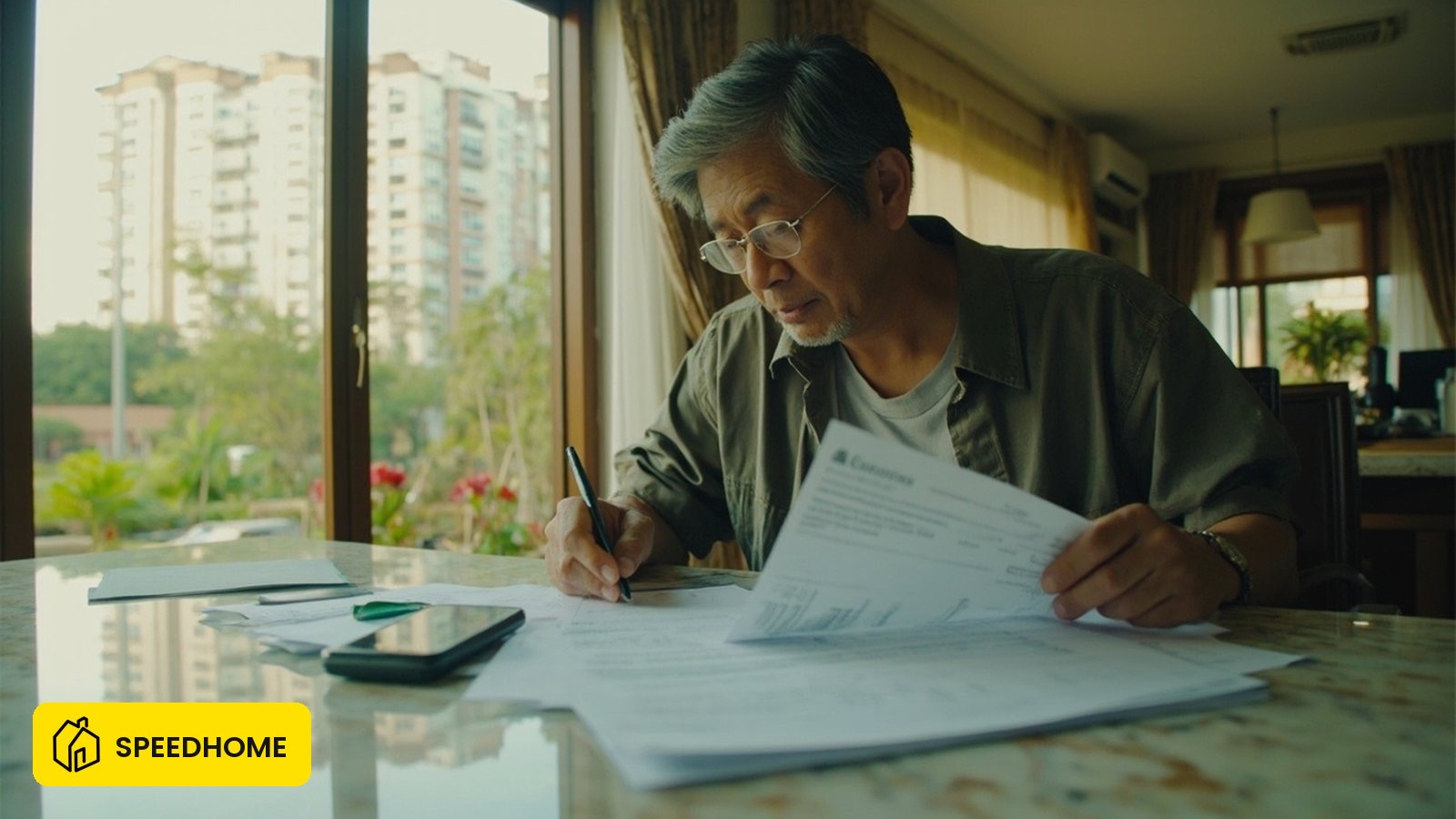
How landlords can avoid terrible tenants before signing
The most reliable way to avoid a terrible tenant is to screen before handing over keys — verify identity, income, payment ability, and rental history, then lock clear terms into a written, stamped tenancy agreement. Once keys change hands, recovery in Malaysia is slow: there is no Residential Tenancy Act in force and no dedicated tenancy tribunal, so a wrong tenant can cost months of arrears and a civil-court recovery. The platform's landlord operations show that most avoidable tenancy failures are preventable with a structured pre-signing check, not caught after the first missed rent.
A bad tenant is rarely a surprise in hindsight. The warning signs — vague income, missing documents, pressure to skip the agreement, urgency to move "today" — are visible before signing if a landlord knows where to look. For the specific behavioural signals to watch for, see the companion guide on 5 red flags to identify and avoid bad tenants; the tips below move from the cheapest, highest-leverage checks (advertising and pre-screening) through to the structural ones (a written agreement and verified information), then to the last resort if a tenancy still turns sour.
Tip 1: How does your rental advertisement do the screening?
A clear, professional advertisement filters out unserious applicants before they ever message you. Use real photos, state the rent and terms plainly, and signal that you follow a documented process. Vague or under-priced ads attract the tenants who exploit vagueness.
Weak copy invites problems. List the property honestly with quality photos, the actual monthly rent, the deposit terms, furnishing level, and house rules. Mention that a tenancy agreement applies and that screening is part of the process. Responsible tenants read this as a sign of a serious landlord; problem tenants read it as friction and move on.
| Ad element | What a serious landlord includes | What it signals |
|---|---|---|
| Photos | Real interior shots, not stretched thumbnails | The unit matches the description |
| Rent | Actual monthly rent, not a "from" teaser | No bait-and-switch on viewing |
| Terms | Deposit amount, lease length, house rules | The landlord runs a documented process |
| Furnishing | Clearly "fully furnished", "partially furnished", or "unfurnished" | Tenants know what they are paying for |
| Contact | Landlord or licensed property manager details | A traceable party, not an anonymous number |
Tip 2: How do you pre-screen every applicant?
Pre-screening catches red flags before a viewing. Ask why the applicant is moving, how urgently, and verify employment, income, and previous-landlord references. The goal is to read intent and payment ability, not to judge character.
Conduct structured early background checks to read legitimacy and intention. Useful pre-qualification steps:
- Ask the reason for moving, urgency, and whether they are breaking an existing contract. Evasive or contradictory answers are a red flag.
- Hold a face-to-face meeting or video call to observe communication style and how they respond to direct questions about rent and house rules.
- Where a meeting is not possible, follow up by phone and email so there is a written record of what was agreed.
- Check employment status and income stability, request a previous-landlord reference, and where available review a credit and rental-risk assessment.
SPEEDHOME runs an automated credit and rental-risk check on every applicant through its screening partner, so this step is built into the listing process rather than left to the landlord's instinct.
Tenant screening at the platform step — 2026 snapshot (figures current as of 2026-10):
| Item | 2026 figure / status |
|---|---|
| Screening rejection rate (platform data, 2026) | Roughly 30% of tenancy applicants are rejected at the screening step before any agreement is signed |
| Screening basis | Credit and rental-risk assessment plus documents — not race, religion or nationality |
Tip 3: Why does renting at the right price screen tenants?
Under-pricing a unit attracts problem tenants who cannot qualify at market rent. Set rent at the realistic market level for the area and furnishing, not below it to fill a vacancy fast. A rent that looks "too cheap" signals desperation to the wrong applicants.
Confidently renting at the right price filters the applicant pool. A practical way to find that level is to compare recent asking rents for similar units in the same building or neighbourhood, then price at or just above the median for comparable condition. SPEEDHOME's rental valuation tool helps landlords land on a defensible monthly figure rather than guessing. Low rent does not fill a vacancy faster in a way that helps you — it tends to fill it with the wrong tenant.
Tip 4: How is the first showing a behaviour test?
The first viewing tells you as much as any document. A tenant who arrives on time, asks sensible questions, and respects the unit is signalling seriousness; one who is late, evasive, or careless with your property is signalling the opposite. First impressions are data, not noise.
Watch how the prospective tenant behaves when discussing lease details. Do they read the terms, ask about responsibilities, and treat the unit with care? Do they try to negotiate the deposit down or push to skip the agreement? These reactions predict how they will behave once they hold the keys.
Tip 5: How does a rental application protect you?
A signed rental application creates a paper trail of who the tenant is and what they claim. Collect identity, income proof, current address, and references up front — the applicants who refuse to fill one in are the ones you most need it from.
A rental application form is an in-depth information source on a prospective tenant's background, rental history, qualifications, and likely payment behaviour. A practical form collects:
| Field | Why it matters |
|---|---|
| Full name and IC number | Identity verification, traceable record |
| Current address with proof | Confirms stability, not a "sofa-surfing" applicant |
| Employer and monthly income | Predicts ability to pay and keep paying rent |
| Previous landlord reference | Reveals how the last tenancy actually ended |
| Reason for moving | Flags applicants fleeing arrears or disputes |
| Number of occupants and pets | Sets expectations for wear, noise, and house rules |
This information separates genuinely good tenants from terrible ones and gives you a defensible record if anything goes wrong later.
Tip 6: Why present a well-maintained, clearly furnished unit?
A clean, well-kept unit tells a serious tenant that the landlord pays attention — and tells a problem tenant that damage will be noticed and documented. Curb appeal is a screening signal, not just marketing.
A well-maintained property saves you from troublesome tenants because it signals that the landlord watches the unit closely. A tidy, fully furnished or partially furnished rental shows how much the owner values the property and acts as a quiet warning that condition will be checked at handover. State the furnishing level honestly so the tenant knows exactly what they are responsible for.
Tip 7: What makes a tenancy agreement clear and enforceable?
A written tenancy agreement is the single most important protection against a terrible tenant. It sets the rent, deposit, obligations, and consequences in writing, and a stamped agreement is the document a court or demand process relies on. Verbal understandings are close to worthless once a dispute starts.
A contract — also called a tenancy agreement — lets tenants understand the terms before renting. Have strict, clearly written policies and consequences, and apply them equally to every tenant regardless of circumstance. Make explicit what happens on late rent, damage beyond fair wear and tear, or breach of house rules. Stamp the agreement; an unstamped agreement is harder to enforce and carries its own penalty.
A lawful agreement can include a default-reporting clause: a verified rental default may be reported to a licensed credit reporting agency only where the tenant has given consent in the tenancy agreement. Publishing a tenant's details or otherwise retaliating is not lawful. The practical move is to use a report-ready tenancy agreement that carries the consent and default terms from day one; SPEEDHOME provides that agreement plus demand-letter support and a team to assist where an eviction becomes necessary.
An individual landlord cannot furnish a rental default to a credit reporting agency directly; SPEEDHOME can, as the landlord's appointed agent, but only where the tenant gave written consent in the tenancy agreement.
Get SPEEDHOME's free report-ready tenancy agreement. A standard TA won't help you recover from a tenant who defaults — a report-ready one can. It includes the written consent/default clause that lets SPEEDHOME, acting as the landlord's appointed agent, report a verified rental default to a licensed credit reporting agency with the tenant's written consent — something an individual landlord cannot do alone. A documented, lawful report is a far stronger motivator to settle than an informal threat. Contact us →
Tip 8: Which tenant information should you verify?
Tenants can exaggerate or misstate income, employment, and references. Verify every material claim — call the employer, confirm the previous landlord, and cross-check documents — before you sign. Trust, then verify.
It is crucial to confirm the information candidates provide. Practical verification steps:
- Call the employer on a number you find independently, not the one the applicant wrote down.
- Speak to the previous landlord and ask whether rent was paid on time and how the unit was returned.
- Cross-check the IC against the person who views the unit.
- Where you use a platform, lean on its screening — SPEEDHOME screens applicants and verifies information as part of the listing process, which removes much of the manual detective work.
Tip 9: Why maintain a professional relationship from day one?
A calm, consistent, professional landlord who is strict on policy but responsive on queries sets the tone for the whole tenancy. How a tenant responds to clear, fair communication early on tells you whether they will be reasonable when something goes wrong.
Keep accurate records of every communication, resolve maintenance issues promptly, and answer questions directly. This builds trust with good tenants and, just as importantly, exposes bad ones — a tenant who reacts to a polite rent reminder with aggression or silence is showing you who they are before the stakes get higher.
Tip 10: Use a property management service when you cannot do it yourself
If you cannot screen, verify, and manage the tenancy yourself, use a structured platform or property management service rather than an informal agent. A managed process applies the same checks to every tenant and leaves a record you can rely on. Handing the job to whoever shows up is how landlords end up with terrible tenants.
The SPEEDHOME landlord service offers a rental protection plan for eligible transactions and a screening process built into the listing flow, so landlords can rent securely without independently vetting every applicant or depending on agents who do not follow through. For a landlord who finds screening, stamping, and recovery overwhelming, that structure is the practical answer.
What to do if a tenant has already turned terrible
If a tenant has stopped paying or breached the agreement, the lawful path is notice, a written demand, then court recovery if needed. Locking the tenant out or disconnecting water or electricity is unlawful regardless of what the tenant has done. The shortcut backfires and can leave the landlord liable.
A landlord cannot lawfully recover possession by self-help. The tenancy agreement, a written demand letter, and the civil-court route are the enforceable tools. Where the agreement carries a valid consent clause, a verified default may be reported to a licensed credit reporting agency — but only through that lawful channel, never by publishing the tenant's name.
How do you avoid bad tenants, honestly?
Screening reduces risk sharply, but no process makes a tenancy risk-free. The honest framing: a structured pre-signing check filters out most avoidable failures, a clear stamped agreement gives you enforceable terms, and a managed platform removes the parts landlords most often skip. What screening cannot do is guarantee a perfect tenant — so build the agreement and the record as if the screening might still miss something, because sometimes it does.
SPEEDHOME is one option worth comparing alongside the routes above.
FAQ
What is the fastest way to screen out a bad tenant?
Ask for the IC, proof of income, and a previous-landlord reference before the first viewing. An applicant who delays or refuses any of these is the one you most need to screen — move on. A credit and rental-risk check through a platform like SPEEDHOME adds an objective layer on top.
Can I avoid a bad tenant by charging a higher deposit?
A higher deposit does not screen for character; it only increases the cash you must later account for and refund. Screening income, references, and behaviour, plus a clear stamped agreement, protects you far more than deposit size. Malaysia has no statutory deposit cap, but a deposit retention is limited to proven loss under general contract law.
How do I price rent so it does not attract problem tenants?
Price at the realistic market level for the area and furnishing, not below it to fill the vacancy. Compare recent asking rents for similar units and use a valuation tool to land on a defensible figure. Under-pricing tends to attract applicants who cannot qualify at market rent.
Is a verbal agreement enough to avoid problems?
No. A written, stamped tenancy agreement is the enforceable record a court or demand process relies on. Verbal understandings are close to impossible to prove once a dispute starts, and an unstamped agreement carries its own penalty and is harder to enforce.
What can I legally do if a tenant turns out to be terrible?
Issue a written notice and demand letter, then pursue court recovery if the tenant does not leave. You cannot lawfully lock the tenant out or disconnect water or electricity. Where the tenancy agreement carries valid consent, a verified default may be reported to a licensed credit reporting agency — never by publishing the tenant's details.
Does using a property management platform replace my own screening?
It complements but does not fully replace your own judgement. A platform like SPEEDHOME runs credit and rental-risk screening and verifies information as part of the listing process, which removes most of the manual work. You should still meet the tenant and read how they communicate before signing.
For the complete guide, see 5 Red Flags to Identify and Avoid Bad Tenants in Malaysia.