
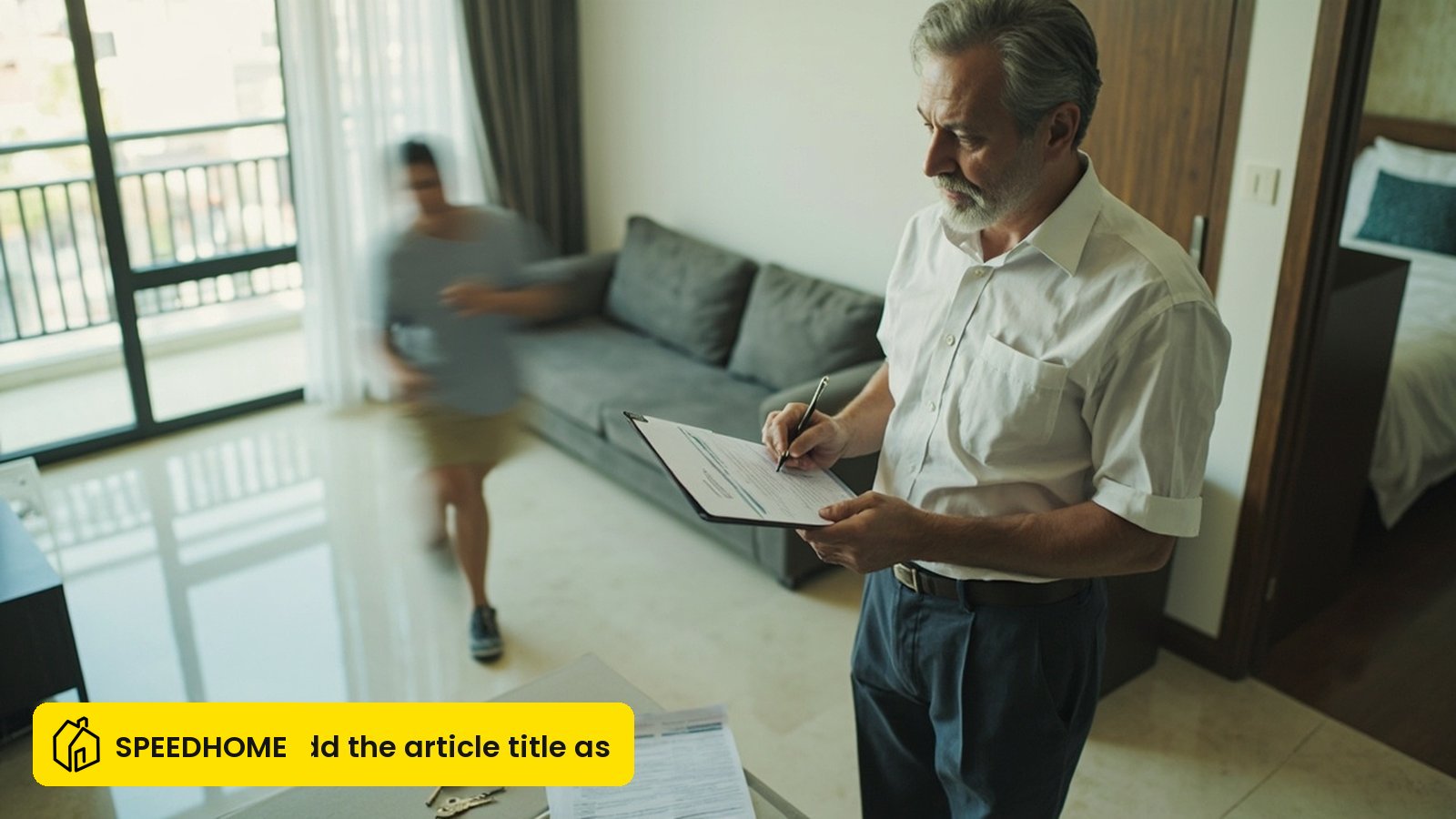
Opener: how do I make sure my tenant takes care of my unit?
The four levers that actually protect your unit are screening the tenant before signing, locking every care rule into a stamped tenancy agreement, running noticed periodic inspections, and being a responsive landlord — not surveillance, and never self-help enforcement. Nothing else holds up in a Malaysian dispute.
A unit gets damaged for two reasons: the wrong tenant was let in, or the rules were never put in writing. Both are landlord decisions, not tenant luck. SPEEDHOME's landlord operations data shows that condition disputes at move-out are the single most common end-of-tenancy conflict — which is why the screening, tenancy agreement, and inspection process matters more than any deposit amount. This guide covers the decisions a Malaysian landlord makes before and during a tenancy to keep the unit in good hands, and what is lawful when things still go wrong. For the broader picture before you decide, start with the comprehensive guide for Malaysian landlords.
Self-screening or automated bureau checks — which protects the unit better?
Self-managed screening means you collect documents and judgement calls yourself; platform-managed screening runs consented credit and rental-history checks and gives you a pass or fail on each applicant. The platform route is faster and more consistent, but it only works if you accept that some applicants will be declined.
| Check | DIY self-managed | SPEEDHOME platform-managed |
|---|---|---|
| Identity verification | You collect and inspect a copy of the IC | Verified during onboarding |
| Rental history | You call previous landlords (unverifiable) | Consent-based rental-history check |
| Financial reliability | You request payslips and guess | Consent-based credit assessment; applicants with a bad financial history cannot rent on the platform |
| Time cost to you | Hours per applicant, per unit | Largely automated |
| Decline risk | You carry the awkward conversation | The platform screens out the applicant |
| Documentation trail | Your own notes | Held in SPEEDHOME platform records |
The trade-off is control versus consistency. DIY lets you keep full judgement and avoid any platform fee, but every check is only as good as the documents a stranger hands you — and payslips and reference letters can be fabricated. Platform screening is more reliable because the financial data comes from a consented credit source, not the applicant. Read the full comparison in the how to screen tenants in Malaysia guide.
When each screening approach wins
Use DIY screening when you personally know the tenant or are renting to a family member, and use platform-managed screening for any stranger applicant, especially in a high-demand area where you receive multiple enquiries per listing.
| Situation | Best route | Why |
|---|---|---|
| Renting to someone you already trust | DIY, with a stamped TA | Trust removes the screening need; the TA still matters |
| Listing in KL, PJ, or another high-demand area | Platform-managed | You receive many applicants; consistency beats judgement per stranger |
| First-time landlord | Platform-managed | You have no baseline for what a good Malaysian tenant looks like |
| You live overseas | Platform-managed | You cannot meet or inspect in person |
| Niche unit where you vet character yourself | DIY + platform as a second check | Combines personal read with a financial fail-safe |
How do you set the care standard before keys change hands?
First impressions set the expectation. Hand over a clean, repaired, well-furnished unit, and the tenant understands the standard they must return it in. Hand over a worn unit and you have already told them the standard is low.
Before the tenant moves in, repaint tired walls, repair doors or fittings that have worn out, service the air-conditioning, replace burnt-out bulbs, and confirm all appliances (washing machine, refrigerator, water heater) work. A unit that is up to date and well maintained signals to the renter that the property is valued — and gives you a clean baseline for any end-of-tenancy deduction.
Then put the standard in the tenancy agreement, not in a WhatsApp message. The TA should state:
- Permitted wear versus damage, and the reinstatement standard at move-out
- Who pays for routine servicing (air-conditioning, water heater) versus tenant-caused damage
- Pet, smoking, alteration, and short-term-letting rules, mirroring your building's by-laws where relevant
- The inspection schedule and required notice
For the detailed room-by-room baseline, use a move-in and move-out checklist signed by both parties on the day of key handover — it becomes the reference document for any later deduction dispute.
How do you run noticed periodic inspections?
Periodic inspections are how you confirm the unit is being maintained — but they are only lawful and only build trust if you give written notice (at least 12 to 24 hours) and keep them non-intrusive.
Inspections serve two jobs: they catch small maintenance issues before they become major damage, and they document the unit's condition over time so that any end-of-tenancy claim is backed by evidence rather than memory.
| Inspection type | Frequency | Notice | What to check |
|---|---|---|---|
| Move-in inventory | Once, at handover | Agreed date | Full room-by-room condition, signed by both parties |
| Routine inspection | Every 3 to 6 months | 12 to 24 hours written | Leaks, mould, appliance condition, occupancy matches TA |
| Maintenance visit | As needed | 12 to 24 hours written | Specific repair you or the tenant has raised |
| Move-out inspection | Once, at end of tenancy | Agreed date | Compare against the move-in inventory, itemise any deduction |
Each visit should also build the relationship: a tenant who sees you respond to a reported leak within days is far more likely to report the next problem early instead of hiding it. Slow repairs push tenants to leave, and turnover cost is almost always higher than the repair bill.
How does responsive maintenance keep a tenant taking care of the unit?
Tenants take care of units run by landlords who are responsive, clear, and fair. The strongest retention lever you own is how quickly you reply when something breaks.
Keep one clear line of communication, acknowledge every request the same day, and be honest about timelines. Avoid discrimination in who you rent to — Malaysian law and basic fairness both require it — and treat routine maintenance as your responsibility unless the TA clearly assigns it to the tenant. The landlords who keep good long-term tenants are the ones who were good to them first.
What are the cost, risk, and the lawful enforcement path?
The cost of unit damage is rarely the deposit; it is the lost rent during a dispute, the legal fees if it escalates, and the void period while you find a better tenant. The lawful path is a written TA, noticed inspections, a demand letter, then the civil courts — never self-help.
| Risk to the landlord | What causes it | Lawful response |
|---|---|---|
| Damage above fair wear | No baseline inventory or vague TA | Signed move-in inventory + specific TA deduction clause |
| Unpaid rent | Weak screening | Demand letter; Writ of Distress (Distress Act 1951) via court bailiff |
| Tenant refuses to leave at end of tenancy | No renewal clause | Writ of Possession through the civil courts (Specific Relief Act 1950 s.7(2)) |
| Severe default | Tenant abandons or stops paying | Report to a licensed credit agency with the tenant's consent, where the TA has a default-reporting clause; never informal retaliation |
Three acts a Malaysian landlord must not commit, even when the tenant is clearly in the wrong: do not lock the tenant out, do not disconnect water or electricity, and do not seize the tenant's belongings. These are self-help acts, and the Specific Relief Act 1950 makes self-help eviction unlawful — recovery of possession must go through the courts. A TA that includes a consented default-reporting clause is the lawful tool when a tenant defaults severely; it must be used through the proper credit-agency pathway, not as a threat. See when a landlord may legally keep the deposit for how deposit deductions must tie to proven loss under the Contracts Act 1950.
What does the SPEEDHOME path cover for landlords?
The platform landlords get consent-based tenant screening before signing, a standardised stamped tenancy agreement with the care and inspection clauses built in, and a managed tenancy — so the four levers in this guide run for you instead of on you.
Applicants with a bad financial history cannot rent your unit on the platform, which removes the most common source of unpaid rent and abandoned units. The SPEEDHOME landlord plan pairs screening with a digital move-in inventory that becomes your evidence if an end-of-tenancy dispute ever reaches the civil courts.
Zero Deposit is a managed rental-risk system, not a financial guarantee product and not a financial guarantee product. It replaces the upfront cash deposit on qualifying units; in the rare case of severe end-of-tenancy damage the recoverable amount can be limited and does not cover every possible loss. Not every unit qualifies — confirm Zero Deposit eligibility on the live listing before you advertise it. For another option in the same area, see the tenant credit check and screening guide.
Frequently asked questions
How do I screen a tenant before handing over my unit?
Run an identity check (IC copy), a consent-based credit and rental-history assessment, and verify employment or income. If you self-manage, collect the documents yourself and weight rental history heaviest; if you list on SPEEDHOME, the platform runs the consent-based checks and declines applicants with a bad financial history. Either way, never skip screening because the applicant seems nice — condition disputes are the most common move-out conflict.
How often can I inspect my rental unit in Malaysia?
There is no statutory cap on inspection frequency, but each visit requires written notice of at least 12 to 24 hours and must be non-intrusive. A practical cadence is every 3 to 6 months for a routine check, plus a move-in and move-out inventory. Entering without notice erodes trust and weakens your position if a dispute later goes to court.
What house rules should I put in the tenancy agreement to protect my unit?
Cover wear versus damage, who pays for servicing (air-conditioning, water heater), pets, smoking, alterations and fixtures, short-term letting, and the move-out reinstatement standard. Any rule not in the stamped TA is effectively unenforceable. Mirror your condo building's by-laws where relevant so a management fine has a clear route back to the tenant.
Can I keep the deposit if the tenant damages the unit?
Yes, but only to the extent of proven loss. Malaysia has no statutory deposit cap, yet a landlord's retention right is limited to demonstrable damage above fair wear and tear under the Contracts Act 1950. A signed move-in inventory and specific TA clause turn an arbitrary-looking deduction into a documented one — without them, the deduction is challengeable.
What can I legally do if a tenant stops paying rent or damages the unit?
Send a written demand letter citing the breached TA clause with a reasonable cure period. If unpaid, you can apply for a Writ of Distress (Distress Act 1951) to recover arrears through the court bailiff, and for a Writ of Possession to recover the unit. You cannot lawfully lock the tenant out, disconnect water or electricity, or seize belongings — those are self-help acts barred by the Specific Relief Act 1950.
Does Zero Deposit mean my unit is fully covered against tenant damage?
No. Zero Deposit is a managed rental-risk system, not a financial guarantee product and not a financial guarantee product. It replaces the upfront deposit on qualifying units; in the rare case of severe end-of-tenancy damage the recoverable amount can be limited and does not cover every possible loss. Not every unit qualifies — confirm eligibility on the live listing.
Accuracy note. This page is built on verified primary sources and a dated fact registry; figures are re-verified on each update. Spotted an error? Email [email protected] with this page's link.