
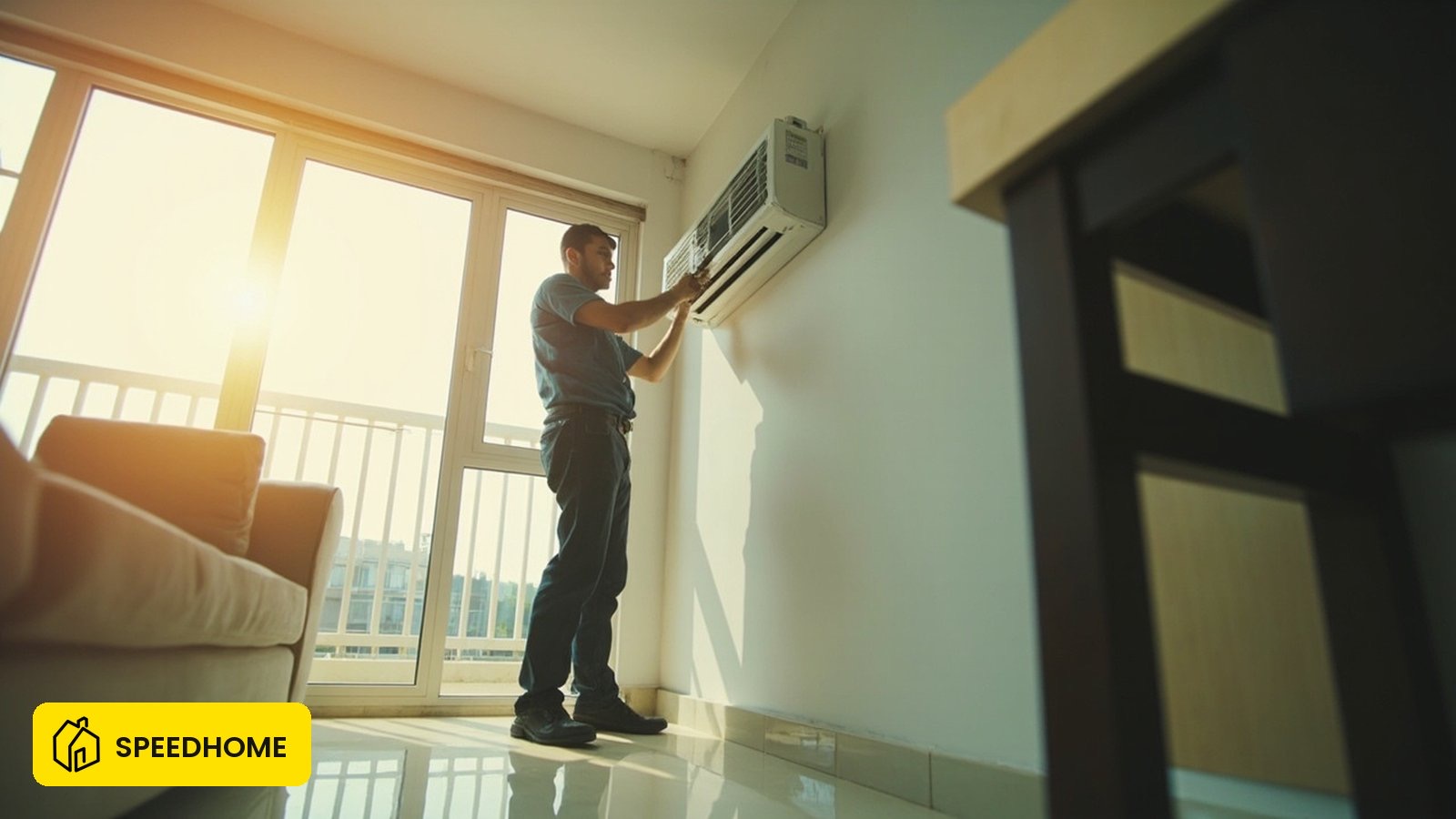
Who pays to fix the aircond if it breaks down?
It depends on why it broke. If the aircon fails through normal ageing — compressor wear, corroded pipes, refrigerant leak from old pipework — the landlord is responsible. If the unit stopped working because it was never serviced, was misused, or was physically damaged by the tenant, the cost falls on the tenant. The split is not a statutory rule; it comes from your tenancy agreement and the cause of the fault.
Malaysia has no Residential Tenancy Act in force as of 2026. Residential tenancies are governed by the contract you sign and general contract principles — the Contracts Act 1950 and Civil Law Act 1956 — not by a dedicated tenancy statute. That means who pays for any repair, including aircon, is decided first by your tenancy agreement wording, and second by the evidence of what caused the fault.
The landlord vs tenant split for aircon — by fault type
Landlord pays when the unit fails through age, wear, or an infrastructure defect outside the tenant's control. Tenant pays when the failure traces to neglect, misuse, or physical damage caused by the occupant.
| Fault type | Who pays | Why | Evidence that matters |
|---|---|---|---|
| Compressor failure (age or normal wear) | Landlord | Major component; fails over time regardless of use | Technician report confirming age-related wear, not neglect |
| Refrigerant (gas) leak from corroded pipes | Landlord | Natural pipe corrosion is infrastructure wear | Technician report on pipe condition and cause |
| Refrigerant leak from pipe physically damaged by tenant | Tenant | Caused by tenant conduct | Photos of damage, technician confirmation |
| PCB (circuit board) failure — no external cause | Landlord | Electronic component life-span | Technician report; unit age |
| Filter blocked — tenant never cleaned or serviced | Tenant | Servicing is the occupant's routine maintenance obligation | Technician note on filter condition; absence of service records |
| Ice build-up from blocked filter leading to compressor damage | Tenant | Neglect of routine servicing caused the fault | Chain-of-cause technician report |
| Fan motor failure — age-related | Landlord | Mechanical wear, not misuse | Age of unit, technician report |
| Remote control lost or broken | Tenant | Tenant's possession and care | N/A — tenant replaces |
| Physical damage to casing or indoor unit | Tenant | Caused by tenant conduct or accident | Before/after condition photos |
| Gas top-up (routine maintenance, not a leak) | Convention: tenant | Top-ups are part of normal servicing in many tenancy agreements; check your TA | TA clause, service record |
Allocation is convention-based and TA-dependent, not statutory. Get a written technician report for any disputed fault.
Routine servicing vs breakdown repair — the line that matters most
Routine servicing (filter cleaning, coil rinse, basic check) is almost always the tenant's obligation in Malaysian tenancy agreements. A breakdown caused by skipping that servicing is also the tenant's cost. A breakdown caused by component failure unrelated to servicing is the landlord's cost.
Most tenancy agreements in Malaysia include a clause along these lines: "The Tenant shall be responsible for keeping the air-conditioning unit in clean and serviceable condition, including regular servicing." If yours does, the tenant owes the filter clean — typically every three to six months. Failing to service and then claiming the landlord must cover the resulting compressor failure is the most common aircon dispute SPEEDHOME sees across managed tenancies.
The key question when the aircon breaks is always: what caused it? A qualified technician's written report answering that single question resolves most disputes before they become arguments.
What your tenancy agreement should say — and what to do if it says nothing
If the tenancy agreement is silent on aircon, apply the general principle: landlord maintains major equipment, tenant maintains day-to-day usability. Neither party can unilaterally declare the other liable without evidence of cause.
A well-drafted tenancy agreement for a unit with aircon should specify:
- Who is responsible for routine servicing (frequency, cost)
- Who is responsible for major repairs (compressor, refrigerant system, PCB)
- What happens if the tenant fails to service and damage results
- The process for reporting a breakdown (written notice, technician visit, quote approval)
If your agreement says nothing about aircon, use the cause-of-fault framework above and insist on a written technician report before agreeing to pay anything. Both parties should see the report.
For context on what counts as wear and tear vs tenant damage across other repair categories, see who pays for repairs in a rental property in Malaysia.
What to do when the aircond breaks — a practical sequence
Report in writing, get a technician report confirming the cause, then agree on cost allocation based on the TA and that report. Verbal agreements about repair costs lead to disputes at checkout.
- Tenant reports in writing — WhatsApp or email with date-stamped photos of the unit and what is happening (not cooling, ice on pipes, strange noise). Written notice creates the paper trail.
- Landlord arranges a qualified technician — the landlord (or SPEEDHOME's maintenance coordination for managed units) should arrange access and the diagnostic visit.
- Technician produces a written report — stating the cause of failure, the parts required, and the estimated cost. Both parties see the report.
- Allocate cost based on TA and cause — if the report says age-related compressor failure, landlord pays. If the report says the filter was never cleaned and caused ice-over, tenant pays.
- Get written sign-off — tenant and landlord confirm the cost allocation in writing before any repair proceeds.
If the landlord delays beyond a reasonable time and the unit is the only aircon in the unit (making it uninhabitable in Malaysian heat), the tenant may have grounds to arrange the repair and deduct the cost from rent — but this is a legal step that carries risk; see a lawyer or raise it through SPEEDHOME's managed repair coordination first.
For broader repair categories, the same evidence-first discipline applies — see rental property repair and maintenance Malaysia.
Disputes about aircon repair — how they are resolved
Malaysia has no dedicated residential tenancy tribunal. A dispute over who pays for an aircon repair is a private contract matter decided in the civil courts — Magistrates' small-claims procedure for amounts up to RM5,000 (no lawyer needed), or the Magistrates' or Sessions Court for larger claims.
The Tribunal for Consumer Claims does not hear a private residential tenancy repair dispute, because a tenancy is an interest in land and a repair cost claim under the tenancy agreement is not a consumer service claim that falls within its jurisdiction.
In practice, most aircon disputes are resolved before court because a written technician report removes the ambiguity. The dispute almost always traces back to the absence of documentation — no service records, no condition report, no written notice of the fault.
SPEEDHOME's managed tenancies include coordinated maintenance logging, which means the service record exists even when the parties forget to keep one themselves. If you are renting through SPEEDHOME, raise the repair via the platform so the record is automatically created.
FAQ
Who is responsible for aircon servicing in a rental — landlord or tenant? Routine servicing (filter cleaning, basic coil wash) is the tenant's obligation in most Malaysian tenancy agreements. Check your tenancy agreement clause. Major repairs — compressor, refrigerant system, PCB failure — are typically the landlord's responsibility unless caused by the tenant's failure to service.
What if the aircon breaks because the tenant never serviced it? If a qualified technician confirms the breakdown was caused by accumulated filter blockage or neglect of routine maintenance, the repair cost falls on the tenant. The technician's written report is the evidence that establishes this. Without a report, neither side can credibly pin the cause on the other.
Can the landlord deduct aircond repair costs from the security deposit? Yes, if the damage or breakdown is established as tenant-caused (by a technician report and evidence trail), the landlord may deduct the repair cost from the security deposit, limited to the actual loss proven — not a new-for-old replacement cost. A landlord can only recover the depreciated value of a failed component, not the cost of upgrading to a new unit.
How often should aircon be serviced in a Malaysian rental? Most technicians recommend servicing every three to six months in Malaysian conditions — more frequently if the unit runs continuously. The tenancy agreement should specify the required frequency. If it does not, every four months is a reasonable convention for a unit in regular daily use.
What if the landlord refuses to repair a broken aircon? Report in writing and give the landlord a reasonable opportunity to arrange the repair. If the landlord delays unreasonably and the aircon failure makes the unit uninhabitable, the tenant may have legal options — but taking unilateral action (such as arranging repairs and deducting costs without landlord agreement) carries risk. Get advice before acting. Small claims (up to RM5,000, no lawyer needed) is the low-cost court route if the amount is in range.
Does SPEEDHOME's Zero Deposit affect who pays for aircon repairs? No. Zero Deposit is a managed rental-risk system — not a financial guarantee product — that replaces the upfront cash deposit. It does not change who is liable for a repair under the tenancy agreement. What it does change is how end-of-tenancy disputes are handled: SPEEDHOME validates the claim and the evidence, rather than leaving the landlord and tenant to argue unilaterally about the deduction. Not every unit on SPEEDHOME qualifies for Zero Deposit.