
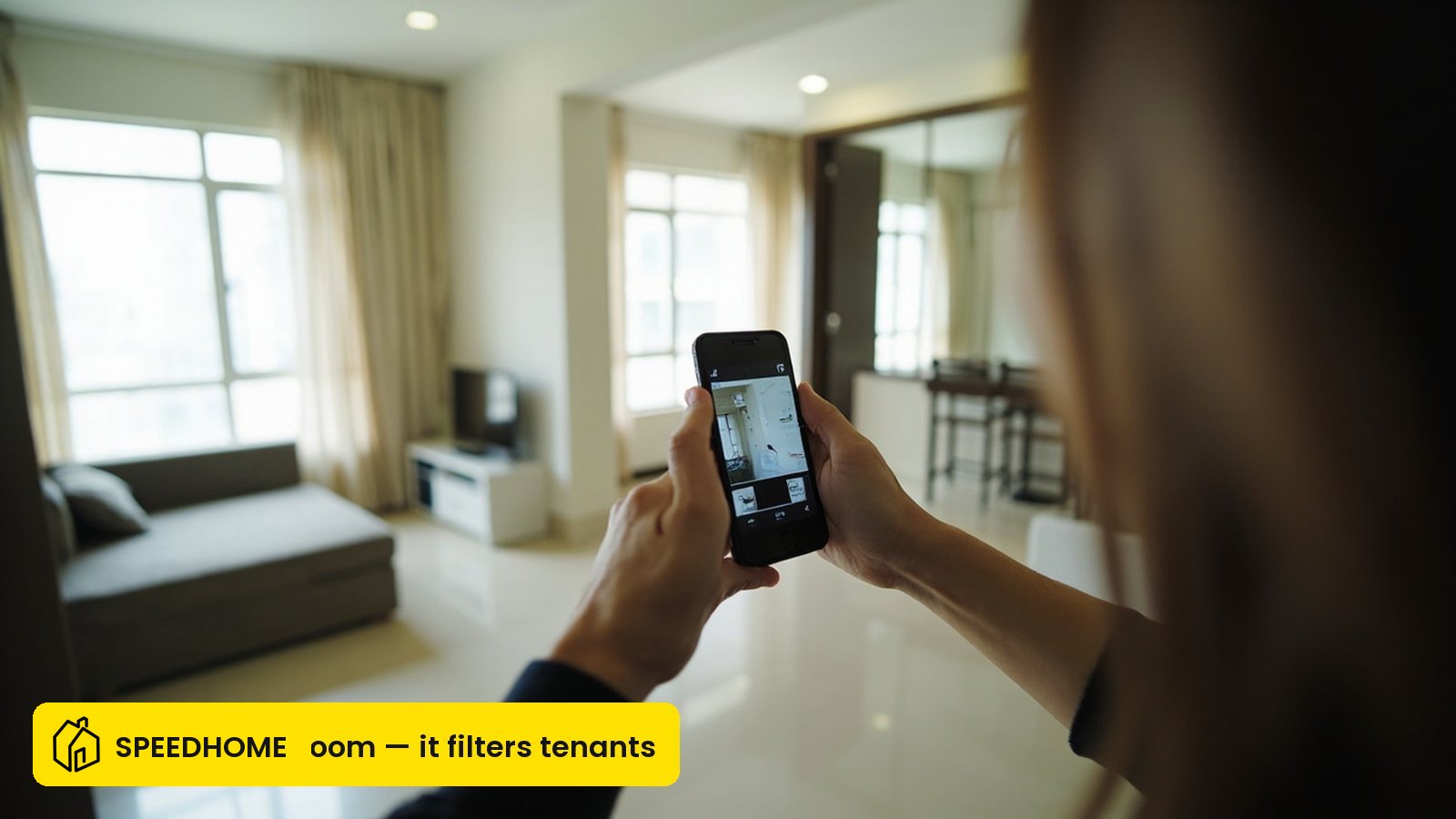
What photos does a rental listing need first?
Start with the rooms that decide whether a tenant will enquire: living area, bedrooms, kitchen, bathrooms, balcony or yard, parking, and the building exterior. A complete visual walkthrough answers the questions tenants ask before they ever send a message.
A landlord does not need a professional studio shoot to make a listing work. You need every important room covered from an honest angle. Tenants want to know the layout, light, storage, cleanliness, and whether the unit matches the rent being asked.
SPEEDHOME listing data shows the same problem repeatedly: unclear or incomplete photos create low-quality enquiries. A tenant asks basic questions that the listing should have answered, then drops out when the physical viewing reveals something missing. Good photos do not just look nicer — they filter demand earlier, and the enquiries that do come through are more likely to convert.
Take the first shot from the doorway of each room so the viewer can understand the size. Then take one supporting shot for the main feature: wardrobe, work desk corner, kitchen cabinet, bathroom fittings, balcony view, or appliance set. For more on this, the what landlords look for in quality tenants is the next page to read.
2026 snapshot — record current as of 2026-10:
| Photo type | Why it matters | Minimum shot |
|---|---|---|
| Living room | Shows usable common space | Wide horizontal photo from entrance |
| Bedroom | Confirms bed, wardrobe and window position | One wide photo plus storage detail |
| Kitchen | Signals cleanliness and appliance condition | Counter, sink, hob and cabinets |
| Bathroom | High trust area for tenants | Full view plus fittings if new |
| Exterior or facility | Confirms building and access | Lobby, parking, pool or guardhouse where relevant |
How should you use natural light?
Shoot in daylight, open curtains, and avoid pointing directly into a bright window unless the room is still visible. Natural light is the cheapest upgrade for rental photos.
It makes walls look cleaner, shows true colour, and reduces the yellow cast that makes a unit feel older than it is. For most Malaysian condos, late morning or early afternoon works best because the light is bright but not harsh.
Do not mix too many light temperatures. If the room is bright enough, turn off warm ceiling lights. If the room is dark, turn on all lights and keep the camera steady. The goal is accurate brightness, not a fake showroom glow.
Avoid using heavy filters. A tenant who arrives and finds the unit darker, smaller, or more worn than the photos will lose trust immediately. That wasted viewing costs time for both sides and can create a complaint risk if the tenant later claims the listing was misleading.
What should be cleaned or removed before shooting?
Remove personal clutter, rubbish, exposed wires, laundry, toiletries, and anything that makes the tenant imagine someone else is still living there.
A rental photo is not an interior design contest. It is a trust signal. Tenants read clutter as poor management, even when the unit itself is fine. Clear tables, make beds, close cupboards, wipe mirrors, remove bins, and hide loose cables before taking the final set.
If the unit is occupied, ask the current tenant for one clean window of time. A half-clean photo set is worse than waiting a day because it follows the listing around. Tenants often decide within seconds whether a property is worth opening.
Do not hide genuine defects that the tenant must know before signing. If there is water staining, cracked tile, or worn flooring that will not be repaired before handover, show it honestly and explain the repair plan in the listing caption or description. Honest photos bring fewer enquiries, but the enquiries are better matched.
Which angles make the unit feel clear?
Use wide horizontal shots from chest height, keep vertical lines straight, and take each room from two corners where possible.
Do not shoot from too high because the room becomes distorted. Do not shoot from too low because furniture looks oversized. Chest height is usually the most natural perspective for a phone camera.
Stand in a corner or doorway so the photo captures two walls. This helps the tenant understand room depth. For small bedrooms, step outside the door and shoot inward instead of forcing an ultra-wide angle that bends the room.
Use vertical photos only for narrow details such as a shower area or built-in cabinet. Listing galleries usually work better with horizontal photos because they show layout and make thumbnails easier to scan.
| Mistake | Effect on tenant | Fix |
|---|---|---|
| Extreme wide angle | Room looks bigger than reality | Use normal wide mode, not panorama |
| Dark corner shot | Tenant cannot judge condition | Reshoot in daylight |
| Only detail shots | No sense of layout | Add one doorway-wide image |
| Tilted camera | Looks careless | Turn on grid and level lines |
How many photos are enough?
Most rental listings need 12 to 20 useful photos, not 50 repeated shots of the same room.
The right number depends on the property. A studio may need 10 to 12 photos. A three-bedroom condo may need 18 to 25. The test is simple: can a tenant understand the home, building, access, and condition without asking for basic missing photos?
Lead with the strongest honest image. Usually that is the living room or a bright bedroom, not the building facade. Then order the gallery like a walkthrough: entrance, living, kitchen, rooms, bathrooms, balcony, facilities, exterior.
If the unit has a weakness, do not bury it at the end. Put the context in the caption or listing description. Better to handle the objection before the viewing than after the tenant has already spent travel time.
Should landlords add video or virtual viewing?
Yes, use a short steady walkthrough when the unit has enough demand or when tenants often ask the same layout questions.
A video answers movement questions that photos cannot: corridor width, how rooms connect, whether a balcony is usable, and what the view really looks like. Keep it slow. Walk from the entrance through each room once, then stop. A shaky two-minute clip is less useful than a clean 45-second walkthrough.
Virtual viewing is especially useful for outstation tenants, working tenants, or popular areas where viewing slots disappear quickly. It should not replace accurate photos; it should support them. See 5 virtual viewing tips for SPEEDHOME landlords for the room-by-room walkthrough format.
If you are using SPEEDHOME, keep the video practical. Show the actual unit, not a generic building montage. Tenants need to decide whether to view or apply, not watch a property advertisement. For more on this, the taking a house condition video is the next page to read.
How do photos support tenant screening?
Photos should attract the right tenant, not every tenant. Accurate visuals help tenants reject unsuitable homes before they waste the landlord's time.
A landlord may feel tempted to show only the best corner of the unit. That creates more enquiries, but not necessarily better enquiries. If the second bedroom is small, show it clearly. If parking is limited, explain it. If the unit is older but clean, let the photos say that honestly.
This matters because the physical viewing is already a filtering stage. By the time a tenant books a slot, they should already know the layout, furnishing level, condition, transport fit, and rough lifestyle match from the photos alone.
Better photos also support document screening. A serious tenant who understands the unit from photos can move faster to affordability checks, application, and tenancy agreement review. A casual tenant who only clicked because the photos looked unrealistic will usually disappear when asked for documents. See how to screen tenants in Malaysia for the qualification checklist.
| Photo decision | Screening effect | Best practice |
|---|---|---|
| Show actual room size | Filters tenants with unsuitable furniture | Use doorway-wide photos |
| Show building access | Filters commute and parking mismatch | Add lobby, lift or parking context |
| Show known defects | Prevents complaint after viewing | Explain repair status in caption |
| Show included items | Reduces repeated questions | Photograph appliances and furniture |
What photo order should the listing use?
Use the gallery like a walkthrough: strongest room first, then entrance, living area, kitchen, bedrooms, bathrooms, balcony, facilities, and exterior.
The first photo wins the click, but the rest win trust. If the first photo is a pool or skyline, tenants may click and then leave because the actual unit appears weak. A strong room photo is usually more honest and more commercially useful.
After the first image, order matters. Tenants should not need to guess how the unit fits together. A logical sequence makes a small unit easier to understand and a large unit less confusing.
If the unit has a special advantage such as a study corner, large balcony, renovated kitchen, or direct LRT access, place that image early. If the advantage is not visual, mention it in the listing copy instead of forcing a vague image.
What should captions explain?
Captions should explain practical details the photo cannot show: repair status, included items, parking, view direction, utility setup, or furniture ownership.
A caption does not need marketing language. "Second bedroom, single bed fits, wardrobe included" is stronger than "cosy lifestyle space". Tenants want to decide quickly.
Use captions to reduce repeated questions. If the washing machine is included, say it. If the mattress will be removed, say it. If a wall stain will be repainted before handover, say it clearly.
This is especially important for occupied units. Tenants can tolerate imperfect photos if they understand what will change before move-in. They lose trust when the listing leaves them guessing. A well-captioned listing also supports a faster handover because agreed details are documented from the start — something that matters if a condition dispute arises later. See how to document a rental unit before handover for what to record at check-in.
List your rental with SPEEDHOME
List your rental on SPEEDHOME with a complete photo set so serious tenants can qualify themselves before booking a viewing. SPEEDHOME pre-screens tenants for identity and affordability, which means a well-photographed listing converts faster from enquiry to application. For a closer look at that part of the decision, see the complete guide for future landlords.
FAQ
Can I use edited photos for a rental listing?
Basic brightness adjustment and straightening are fine. Do not remove defects, change wall colour, stretch room size, or make the unit look materially different from reality. A tenant who discovers the unit is darker or smaller than shown will lose trust before the viewing ends, and the listing gains a reputation for misleading photos.
Do I need professional photography for a rental listing?
Not always. A clean phone camera, natural daylight, and complete room coverage are enough for most mid-market Malaysian rentals. Professional photography is worth considering for premium units where the listing competes at RM4,000 or above, or where the unit's layout or view is difficult to capture with a phone.
Should I photograph defects in my rental unit?
Yes if the defect will still exist at the physical viewing or at handover. Honest disclosure prevents wasted viewings and protects trust. If the defect will be repaired before move-in, show it and state the repair plan in the caption — tenants respond well to transparency and it reduces complaints after signing.
What is the best first photo for a rental listing?
Use the strongest honest room photo, usually the living room or master bedroom, because tenants judge the listing from thumbnails first. A pool or exterior shot may win the click but loses trust if the rooms disappoint. Lead with the room that best shows the unit's main appeal.
How does a good photo set reduce bad tenants?
An accurate and complete set filters tenants at the listing stage. Tenants with unsuitable furniture, wrong commute expectations, or lifestyle mismatch opt out before they book a viewing. The tenants who do enquire have already accepted the layout, condition, and furnishing level — which means fewer wasted viewings and faster conversion to a signed tenancy agreement.