
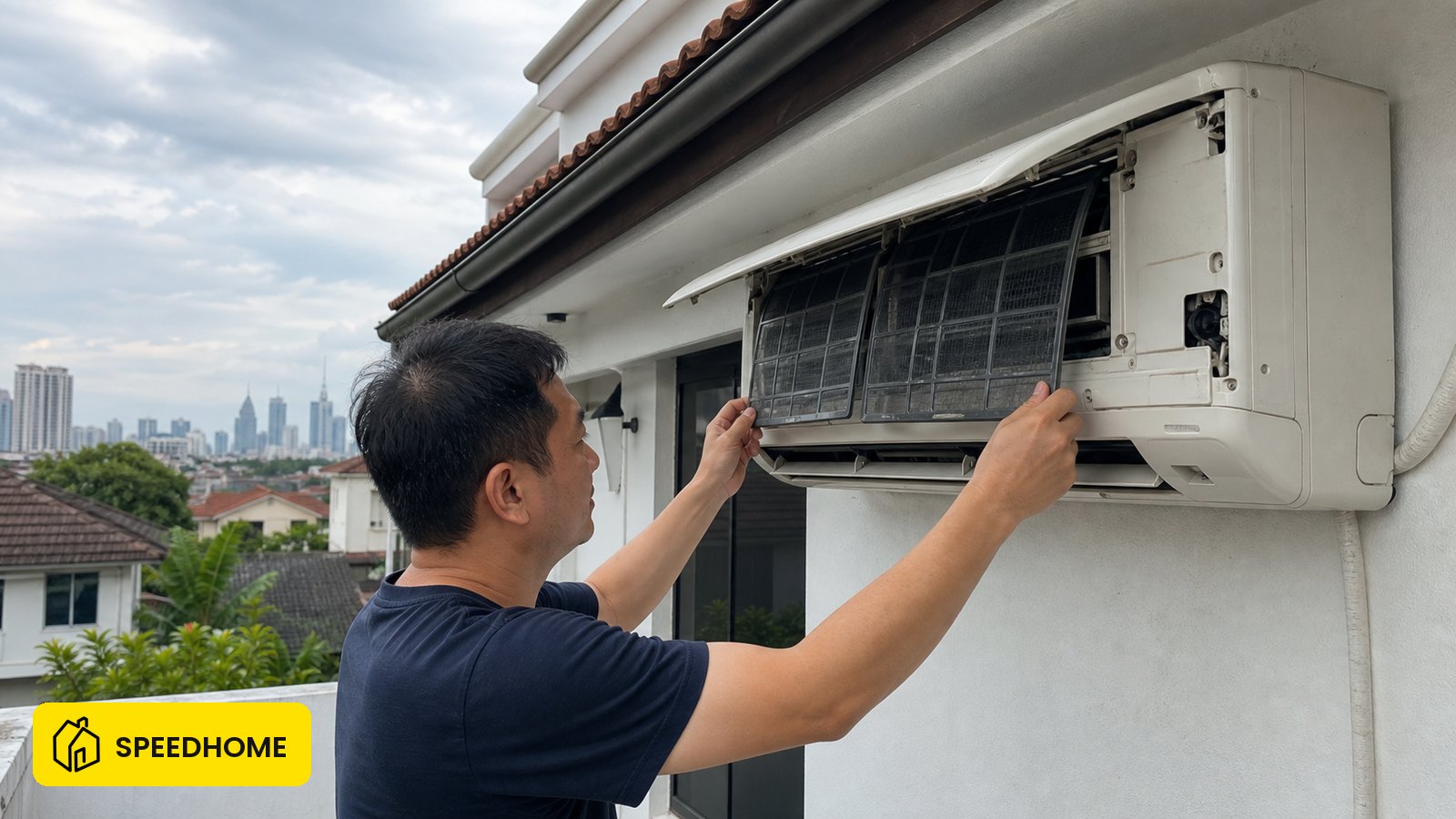
Why seasonal maintenance matters for Malaysian rental properties
SPEEDHOME operator experience (2024-2026 managed portfolio) shows landlord-managed units with a logged quarterly inspection and a written service history at handover resolve the typical end-of-tenancy maintenance dispute in days rather than months; units without a logged history default to a deposit-deduction argument.
SPEEDHOME has managed 30,000+ tenancy agreements across Malaysia, and operator data shows the same property held to a quarterly checklist produces a smoother checkout than the same property held without one. Malaysia's climate — per MET Malaysia, two main monsoon windows (Southwest Monsoon generally May to September; Northeast Monsoon generally November to March, the heavier one on the east coast) and sustained heat and humidity year-round — drives specific maintenance needs that a standard year-round checklist misses.
The three areas that matter most in any Malaysian rental unit: the air-conditioning system (constant use drives fast filter and coil fouling), drainage and waterproofing (two monsoon windows per year), and pest control (humidity accelerates insect and rodent cycles). Get those three right and most other maintenance follows logically.
Who is responsible for maintenance in a Malaysian rental?
In a Malaysian tenancy, landlords cover structural elements and major installed appliances. Tenants cover minor wear and items they damaged. For strata properties, the maintenance fee is always the parcel owner's (landlord's) obligation under the Strata Management Act 2013 (Act 757), regardless of what the tenancy agreement says.
| Item | Landlord responsibility | Tenant responsibility |
|---|---|---|
| Roof, structure, external walls | Yes | No |
| Air-conditioning units (built-in) | Servicing and major repair | Filter cleaning between services |
| Water heater | Replacement if end-of-life or faulty | No |
| Plumbing leaks (pipes, in-wall) | Yes | No |
| Tap washers, toilet seats, minor fixtures | No | Yes (fair use) |
| Strata / JMB maintenance fee | Always landlord | Cannot be passed to tenant |
| Appliances provided in the TA inventory | Major repair and replacement | No damage beyond normal use |
| Window seals, door hinges (routine wear) | Landlord — fair wear and tear | Tenant — only if the damage is beyond fair wear (e.g. broken hinge from force) |
| Pest control (routine) | Landlord — preventive | Tenant — if infestation is due to their hygiene |
A clause in the tenancy agreement that shifts the strata maintenance fee to the tenant is unenforceable against a JMB or management corporation claim. The parcel owner remains liable. For the full repair liability framework, read the rental property repair and maintenance guide.
The quarterly maintenance checklist
Every Malaysian rental property needs a quarterly check of at least five systems: air-conditioning, plumbing and drainage, electrical, structural integrity, and pest activity. Before each monsoon season, add a roof and external-drain inspection.
Air-conditioning (every 3–4 months)
AC is the most common appliance complaint and a frequent cause of deposit disputes. In Malaysia's climate, units run almost continuously, which means filters clog and coils foul faster than the manufacturer's label suggests.
- Filter cleaning: every 1–2 months for high-use units; every 3 months minimum.
- Chemical wash (coil clean): every 6 months or when airflow drops noticeably.
- Drain-pipe flush: check that the condensate pipe is clear and not dripping into the unit below.
- If the unit is not cooling despite servicing, have the refrigerant level checked by a qualified technician.
Keep the service record — date, technician name, and work done. A maintained, documented AC history reduces deposit disputes at checkout.
Plumbing and water systems (quarterly)
- Check all taps and shower fittings for drips and pressure drops.
- Inspect under-sink pipework for slow leaks and damp patches.
- Test the water heater at handover and at every quarterly check: a slow drop in hot-water pressure, brown water on first flush, or a tripping ELCB is the typical early warning. Lifespan varies widely by brand, water hardness, and usage — replace proactively based on age and service history rather than waiting for a mid-tenancy breakdown. For a heater older than the manufacturer's warranty window, get a licensed plumber's written assessment before each renewal.
- For strata units: check the service yard, balcony, and AC ledge drains. Blocked secondary drains are a common source of ceiling leaks to the unit below.
Electrical (quarterly)
- Test all power points with a simple plug-in tester — dead sockets are a common tenant complaint.
- Check circuit breaker labels match the unit plan. Unlabelled or mislabelled boards create response delays during faults.
- For split-unit air-conditioners: confirm the isolator switch is in good condition and the wiring is not heat-discoloured.
- Keep a moving average of the last six TNB bills for the unit. A bill that rises sharply without a corresponding change in occupancy (more people, more AC hours, a new appliance) is often the first cheap signal of a failing water-heater element, a refrigerator compressor, or an AC that is short-cycling. Flag the spike, identify the appliance, then send the technician.
Structural and exterior (twice yearly — before each monsoon)
- Roof inspection: check for cracked, displaced, or missing tiles. Pay particular attention to valley gutters and box-gutter joints where blockages build fastest.
- Clean external gutters and downpipes. A blocked gutter in a Malaysian downpour can overflow into the ceiling void within minutes.
- Window and door seals: re-caulk any gap large enough to admit driving rain.
- External paint and siding: flaking paint on external-facing walls allows moisture penetration that accelerates spalling and mould.
Pest control (annually minimum, quarterly inspection)
- Schedule a full pest treatment at least once per year for the entire unit: anti-termite, general insect, and rodent bait where applicable.
- During quarterly checks, look for active termite mud tubes on skirting boards, door frames, and utility ducts.
- Heavy monsoon rains push rodents upward into roof voids. Check roof insulation and utility access panels for gnaw marks.
When should you schedule the two heavy maintenance checks in Malaysia?
Schedule the two heaviest annual maintenance checks in the four to six weeks immediately before the Northeast Monsoon (generally starting November) and before the Southwest Monsoon's peak rain (generally August to September), because drainage failure and roof leaks are most damaging during those windows.
| Timing | Priority checks | Why |
|---|---|---|
| Pre-monsoon (Sep & Feb) | Roof tiles, box gutters, external drains, window seals, external caulking | Heavy rains can turn a small gap into a major ceiling or wall leak within one season |
| Post-monsoon (Dec & May) | Inspect for new damp marks, mould patches, AC drain condition | Damage that appeared during the monsoon is cheaper to fix before it compounds |
| Mid-year dry spell (Jun–Aug) | AC servicing, pest treatment, fresh paint touch-up on exterior | Easier to work on the exterior without rain interference |
| Year-round quarterly | AC filter, plumbing pressure, electrical sockets, appliance function test | Consistent baseline prevents the backlog that shows up at checkout |
Per MET Malaysia, the exact onset and withdrawal of each monsoon phase varies year to year; confirm the current MET Malaysia seasonal forecast before scheduling the pre-monsoon round. The four to six weeks ahead of the typical heavy-rain window is the safe band, not a fixed calendar date.
Preparing the unit before a new tenant moves in
A pre-tenancy inspection is your best defence against deposit disputes. Do not skip it even on a furnished unit that "looks fine."
- Full deep clean of all surfaces, appliances, and cabinet interiors.
- AC service and chemical wash if not done within the past 3 months.
- Water pressure test at every tap and shower.
- Pest inspection — especially for termites in timber framework or door jambs.
- Full video walkthrough of the unit, room by room, narrating condition out loud. This video is your primary evidence at checkout.
- Photograph and log all existing scratches, stains, and defects in a written inventory. Both landlord and tenant should sign the inventory.
How should a Malaysian landlord budget for annual maintenance?
Treat maintenance as a predictable operating expense, not a surprise. A starting point some Malaysian landlords use is to set aside roughly one to two months of annual rent for routine maintenance (AC servicing, pest treatment, gutter cleaning as fixed line items) and a separate emergency reserve for structural or major-appliance failures — the exact split depends on the age of the unit, the type (condo vs landed), and how many appliances are bundled into the tenancy.
What consistently undercuts a maintenance budget is treating every reactive repair as a tenant problem and arguing it at checkout without a logged history. The practical alternative is to keep a short list of scheduled recurring costs (AC service, pest treatment, gutter clean) and a separate reserve for reactive repairs. When a tenant's report arrives quickly and the landlord responds within a reasonable time, the tenant stays longer. Every additional month of tenancy offsets several months of maintenance spend. SPEEDHOME platform data shows roughly 70% of managed tenants pay rent on or before the due date; SPEEDHOME operator observation (2024-2026 managed portfolio) is that tenants who feel maintenance requests are ignored show up more often in the late-paying group.
For planning purposes, expect AC servicing to be a low-hundreds-per-unit job, a full pest treatment to be in the low-hundreds-per-visit band, and a landed-property gutter clean to be a small afternoon job in the low-hundreds — get two or three current quotes from local contractors before committing. Exact prices vary by unit, by access (e.g. landed vs high-floor condo), and by the current market; verify against current contractor quotes rather than relying on a one-time price list. Water-heater, air-conditioner, and roof-repair replacement costs are best set into a dedicated reserve because they fail on their own schedule, not yours.
For repair jobs that need proper coordination — photos, access, quote, approval, and a record that follows the tenancy file — SPEEDHOME's 5-day repair SLA and tenant retention guide explains why speed matters as much as cost.
Working with your tenant on maintenance
A short set of house rules handed over at the start of tenancy reduces grey-area disputes and means the tenant knows what to report and what to handle themselves.
Tell new tenants: - Report water leaks, electrical faults, or pest sightings within 24 hours of noticing them. - Do not attempt repairs on plumbing, electrical, or AC themselves — it voids service records and may invalidate the landlord's building insurance. - Minor consumables (light bulbs, tap washers) are typically the tenant's responsibility under Malaysian convention — clarify this in writing if the tenancy agreement does not address it. - Provide the landlord's preferred contact number and a named backup contact in case the landlord is unreachable.
A tenant who knows the process is less likely to let a small problem become a big one. SPEEDHOME operator experience (2024-2026 managed portfolio) is that tenants who report faults within 24 hours of noticing them show a noticeably lower escalation rate at checkout than tenants who wait — a fast first report is the single biggest predictor that a small fix stays small. For the question of who pays which maintenance fee category, see the guide on who pays the maintenance fee.
Keep the property tenant-ready with SPEEDHOME
Preventive maintenance only pays off if it is logged, scheduled, and tied to the tenancy file. SPEEDHOME's landlord tooling keeps the repair record, condition photos, and tenancy history in one place so a small fix never turns into a checkout dispute or an avoidable vacancy.
Under the Strata Management Act 2013 (Act 757), the landlord remains legally responsible for structural maintenance, major appliances, and strata fees regardless of any platform. SPEEDHOME's role is the coordination and evidence layer: the part that usually breaks down between "tenant reports a drip" and "the leak is fixed and recorded." The seasonal checklist above is the working template — the on-platform artifact is the repair job record that follows the tenancy file. For the landlord service detail, see the SPEEDHOME landlord service page. When a unit is between tenants and needs a refresh before re-listing, browse rentals to benchmark how comparable units are presented, then bring yours back to show-ready using the same seasonal checklist above.
Frequently Asked Questions
Who is responsible for AC servicing in a Malaysian rental — landlord or tenant?
The landlord is responsible for scheduled AC servicing (chemical wash and major repairs) because the unit is part of the tenancy. Tenants handle routine filter cleaning between service visits. If the landlord does not maintain the AC and it fails, the tenant has grounds to ask for a repair or a rent reduction for loss of use.
In practice, most tenancy agreements leave the servicing schedule vague. The safest approach is to specify in writing: landlord arranges full chemical wash every 6 months; tenant cleans filters monthly. Put both in the TA inventory and keep service receipts.
Can a landlord deduct AC repair costs from the tenant's deposit?
Only if the damage was caused by the tenant and you have evidence. Normal ageing, coil fouling from extended use, or a mechanical failure unrelated to misuse is a landlord cost. If the tenant broke the unit physically or left it in substantially worse condition than the move-in record shows, a deduction with evidence may be supportable.
The key is the move-in condition record. Without dated photos or a signed inventory, deposit deductions are hard to defend. Take detailed photos and video before every tenancy.
How often should a landlord inspect a Malaysian rental property?
There is no fixed statutory inspection interval in Malaysia. Under most standard tenancy agreements and the Distress Act 1951, the landlord must give at least 24 hours' written notice before entering the tenanted property; check your TA for the exact wording. Practically, an inspection at the 3-month and 9-month marks of a 12-month tenancy lets you catch developing issues before they compound without creating friction with a good tenant. Do not enter a unit without prior notice or tenant agreement — access without notice damages the tenancy relationship and may expose the landlord to a harassment claim.
What should a landlord do before handing over a unit to a new tenant?
Complete five checks before handover: full deep clean, AC service, water pressure test, pest inspection, and a signed video walkthrough. The video walkthrough is the single most important step — it is your primary evidence if there is a deposit dispute at the end of the tenancy.
Log all existing defects in a signed inventory. Even a minor scratch should be noted so it cannot be attributed to the incoming tenant at checkout.
What maintenance fees are landlords legally required to pay in strata properties?
All of them. Under the Strata Management Act 2013 (Act 757), strata charges (maintenance and sinking fund) are the parcel owner's legal obligation. A tenancy agreement clause that shifts this to the tenant is not enforceable against a JMB or management corporation claim. The landlord remains liable for any unpaid strata fees regardless of what the TA says. Some landlords set the rent to recover the maintenance fee implicitly; that is commercially fine. What is not fine is failing to pay the JMB and assuming the tenant's verbal agreement covers it.
How much should a Malaysian landlord budget for annual maintenance?
A common planning heuristic is to set aside roughly one to two months of annual rent for routine maintenance (AC servicing, pest treatment, gutter cleaning as fixed line items) plus a separate reserve for structural or major-appliance failures. The reserve matters because water heaters, compressors, and roof repairs fail on their own schedule, not yours — and the typical reactive repair is more expensive than the scheduled one because the technician is rushing, parts are bought at retail, and the work is done under tenancy pressure.