Rental Lifecycle in Malaysia: Move-In to Move-Out Guide (2026)
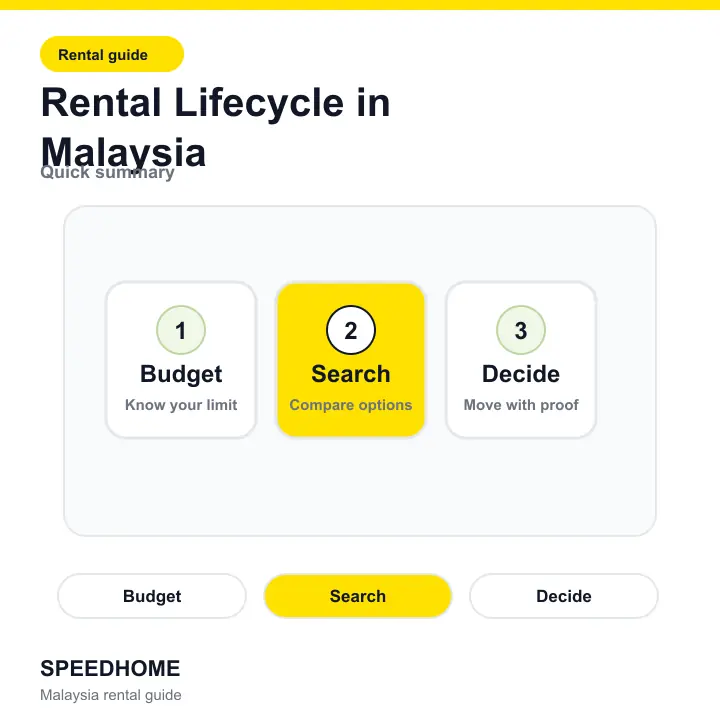
Renting in Malaysia involves six stages: pre-move-in inspection, move-in handover, tenancy period obligations, renewal or termination decision, move-out inspection, and deposit settlement. Most disputes — and most lost deposits — happen because either party skips a step in this sequence. This guide walks through the complete rental lifecycle so both landlords and tenants know exactly what’s expected at each stage.
| Stage | Who Acts | Key Deadline | What Goes Wrong |
|---|---|---|---|
| 1. Pre-move-in inspection | Both | Before keys handed over | No photos = no evidence at move-out |
| 2. Move-in handover | Both | Move-in day | No receipt for deposit payment |
| 3. During tenancy | Both | Ongoing | Verbal maintenance requests not documented |
| 4. Renewal / termination | Both | 2–3 months before expiry | Missing notice deadline triggers penalty |
| 5. Move-out inspection | Both | Last day of tenancy | No joint sign-off = disputed deductions |
| 6. Deposit settlement | Landlord | 14–30 days post move-out | No itemised receipts for deductions |
Stage 1: Before You Move In — The Pre-Tenancy Checklist
Before handing over keys or signing anything, both parties must document the property’s existing condition. This single step is what separates a smooth tenancy from a deposit dispute six months later.
- Property inspection: Walk through every room. Test every tap, switch, air-cond, and appliance. Note cracks, stains, and damage on a signed inventory list.
- Photo/video evidence: Take timestamped photos of all existing damage. Both parties keep a copy.
- Inventory list: For furnished units — document every item, its condition, and serial numbers for appliances.
- Utility readings: Record TNB, Syabas/Air Selangor, and gas meter readings on move-in day. Both parties sign off.
- Tenancy agreement: Must be signed before keys are exchanged. Stamp within 30 days of signing (Finance Act 2024 rates apply).
Skip the photo documentation and you have zero evidence if a dispute arises. Malaysian courts and the Tribunal Tuntutan Pengguna have no statutory obligation to side with either party without proof.
→ Full checklist: Things to Look Out for Before Moving In
Stage 2: Move-In Day — Handover and Documentation
Move-in day is not just about getting the keys — it’s the formal handover that sets the legal baseline for the entire tenancy. What’s documented on this day is what the landlord can legitimately deduct from the deposit at the end.
- Landlord hands over all keys (main door, gate, mailbox, car park access card)
- Both parties sign the inventory list and condition report
- Tenant pays first month’s rent + security deposit + utility deposit (if applicable)
- Landlord issues receipt for all payments
- Utility accounts transferred to tenant’s name (or arrangement confirmed in writing)
- TNB meter reading recorded and signed
If the landlord refuses to issue a receipt for the deposit, that’s a red flag. Always get written proof of payment.
→ See: 5 Essential Checks for New Tenants on Move-In Day
Stage 3: During the Tenancy — Rights, Repairs, and Obligations
Once the tenancy starts, both parties have ongoing obligations set out in the tenancy agreement and — where applicable — common law under the Contracts Act 1950. Malaysia has no Residential Tenancy Act yet (as of 2026), so your tenancy agreement is your primary legal document.
- Pay rent on time (check your TA for the late payment clause — typically 1–2% per month penalty)
- Keep the unit in reasonable condition — normal wear and tear is expected, damage is not
- Report maintenance issues in writing (WhatsApp counts — keep the chat history)
- Do not sublet without written landlord consent
- Comply with house rules (noise, pets, visitors) as stated in the TA
- Respond to maintenance requests within a reasonable time (no statutory timeline in Malaysia — but document all requests and responses)
- Not enter the property without 24–48 hours’ notice (check your TA for the exact clause)
- Maintain structural elements — roof, pipes, wiring — unless damage was caused by tenant negligence
- Not cut utilities as an eviction tactic (self-help eviction is illegal under Section 7(2) Specific Relief Act 1950)
If a tenant abandons the property mid-tenancy, the landlord cannot simply seize belongings. → See: What To Do If a Tenant Abandons the Property
Stage 4: Renewal or Termination — Making the Decision Early
Most tenancy agreements require either party to give 1–3 months’ notice before the end of the term. Miss this window and you may be locked into a holdover tenancy on the same terms — or face a penalty clause.
Renewing the tenancy
Renewal is not automatic. The landlord can renegotiate rent at renewal. Tenants have no statutory right to renew unless the TA says so. Standard practice in Malaysia: both parties discuss renewal 2–3 months before expiry, sign a renewal letter or a new TA, re-stamp if a new TA is issued.
→ Full renewal guide: Renewing Your Lease Agreement in Malaysia (2026)
Early termination
Breaking a tenancy before the end date triggers the early termination clause — typically 2 months’ rent penalty plus forfeiture of the security deposit. In some agreements, the tenant must also pay rent until a replacement tenant is found.
→ Full breakdown: Early Termination of Tenancy in Malaysia: Costs, Clauses & Process (2026)
Stage 5: Move-Out — Inspection, Cleaning, and Handover
The move-out inspection is the mirror of the move-in inspection — it determines what, if anything, gets deducted from the deposit. Without a signed move-in condition report, the landlord has nothing to compare against.
- Give formal written notice by the deadline in your TA (usually 1–3 months)
- Deep clean the unit — professional cleaning services cost RM200–500 for a standard apartment
- Return all keys, access cards, and remotes
- Conduct the joint inspection with the landlord present — both sign off
- Record TNB and water meter readings on handover day
- Transfer utilities back to landlord or disconnect
- Get a written receipt for returned keys
What landlords can deduct: damage beyond normal wear and tear, unpaid rent, outstanding utilities, cleaning costs if unit left filthy. What landlords cannot deduct: normal wear (faded paint, minor scuffs), pre-existing damage documented at move-in.
→ See: Move-Out Inspection Checklist Malaysia (2026) and The 5 Stages of the Tenant Move-Out Process
Stage 6: Deposit Settlement — Timeline and Disputes
Malaysian law has no statutory deadline for returning the security deposit. Most tenancy agreements specify 14–30 days after move-out. If the landlord makes deductions, they must provide itemised receipts.
- Negotiate first: Most disputes settle once both parties review the move-in vs move-out photos side by side
- Small Claims Tribunal: For claims ≤RM5,000 if landlord is an individual
- Consumer Claims Tribunal: For claims ≤RM25,000 if landlord is a corporate entity
- Magistrate’s Court: For larger amounts — slower and more expensive
SPEEDHOME’s Zero Deposit scheme removes deposit risk entirely — tenants don’t pay a lump-sum deposit, and landlords are covered for damage and non-payment under SPEEDHOME’s R2R model. Browse zero-deposit rentals on SPEEDHOME.
End-of-Tenancy: What Both Parties Must Do
- Deposit refunded (or deductions itemised and agreed)
- Final utility bills settled
- All keys returned and acknowledged
- No outstanding rent or charges
→ See: 6 Things Tenants and Landlords Must Do at End of Tenancy
Next step: TNB change of tenancy guide.
Frequently Asked Questions
How much notice do I need to give before moving out in Malaysia?
Most tenancy agreements in Malaysia require 1–3 months’ written notice before vacating. If your agreement is silent on notice period, 1 month is the common practice — but this is not legally mandated since Malaysia has no Residential Tenancy Act.
When must the landlord return the deposit after I move out?
There is no statutory deadline in Malaysia. Most tenancy agreements specify 14–30 days after move-out and joint inspection. If the landlord makes deductions, they must provide itemised receipts and photos to justify each deduction.
Can a landlord deduct from the deposit for normal wear and tear?
No. Normal wear and tear — faded paint, minor scuffs, worn carpet — is the landlord’s cost of ownership. Deductions are only valid for damage beyond normal use, cleaning if the unit was left filthy, unpaid rent, or outstanding utilities.
What happens if I need to terminate my tenancy early?
Early termination typically triggers a penalty — usually 2 months’ rent plus forfeiture of the security deposit. Some agreements require paying rent until a replacement tenant is found. Always negotiate in writing and get any agreed settlement documented.
Is self-help eviction legal in Malaysia?
No. Changing locks, cutting utilities, or removing belongings without a court order violates Section 7(2) of the Specific Relief Act 1950. Legal eviction takes 4–12 months and costs RM8,000–25,000.
Do I need to re-stamp the tenancy agreement when renewing?
If you sign a new TA, yes — stamp within 30 days via e-Duti Setem at mytax.hasil.gov.my. Finance Act 2024 rates: RM1 per RM250 annual rent (up to 1 year), RM3 for 1–3 years. A renewal letter may not require stamping — confirm with LHDN.
What documents should I keep throughout my tenancy in Malaysia?
Keep: signed and stamped tenancy agreement, move-in inventory list with timestamped photos, all payment receipts, utility meter readings from move-in, maintenance request messages (WhatsApp/email), and all written correspondence with your landlord.
Looking for a place to rent?
SPEEDHOME lists verified rentals across Malaysia with zero deposit options, transparent pricing, and tenant protection built in. Browse available SPEEDHOME listings or read our tenant rights guide to understand deposit rules, pet clauses, and what to do if your landlord disputes wear and tear.