
Make your rental listing stand out
A rental listing stands out in Malaysia when the rent matches nearby units, photos show the real space clearly, defects are fixed, the furnishing fits the tenant type, and the description answers questions before the viewing. SPEEDHOME platform records (Q1 2026) show a 16-day median fill for presentation-ready units, drawn from 30,000+ tenancy agreements managed across Malaysia. The gap between "listed" and "tenanted" is usually a presentation gap, not a market gap.
A unit sitting empty for two months is two months of mortgage the landlord still pays. Landlords often blame the market when the issue is presentation: if tenants cannot understand the unit, compare its value, or trust the process within a few seconds, they move to the next listing. The best upgrade is rarely renovation — a cleaner photo set, a realistic price, or a repaired defect removes more hesitation than a new fit-out ever does.
Set a rent that matches current competition
Check live rental listings in the same building or nearby area first. Compare size, furnishing, floor level, parking, facilities, and transport access before setting the asking rent. SPEEDHOME platform records show landlords who price within the local ±5% band fill in around 16 days median. Units priced 10%+ above the comparable set sit empty longer, and lose more in vacancy than they gain in headline rent.
Useful sources for a rent check: live SPEEDHOME listings at /rent, portals showing same-building units, or recent signed agreements in your building if accessible through the management office.
Use photos that show the real living experience
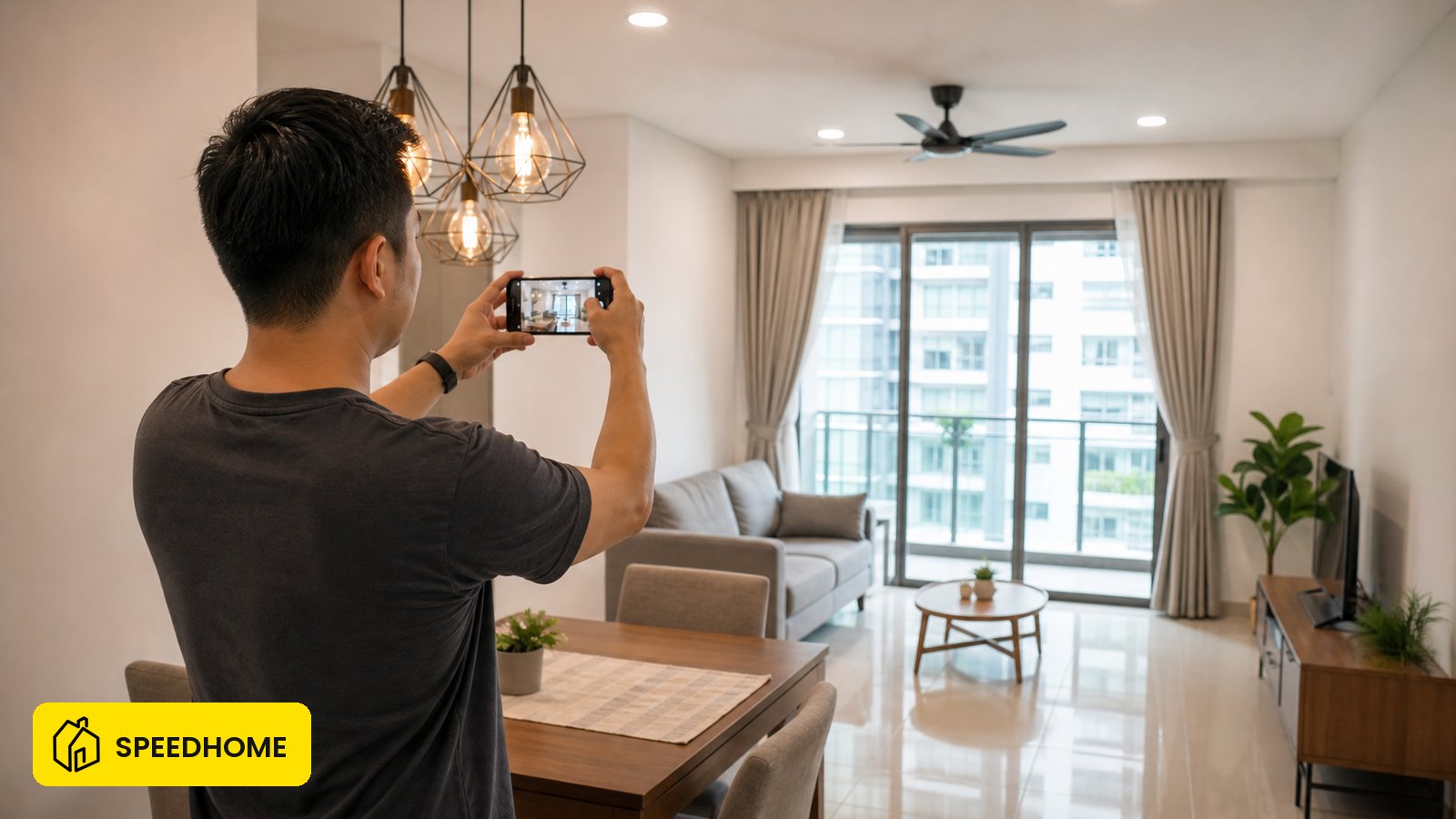
The first photo does most of the work. Use a bright, wide room shot that shows real light and layout — not a dark corner, a logo, or a cropped detail. The cover image decides whether tenants click the listing at all.
Show the living room, bedroom, bathroom, kitchen, parking bay, balcony or yard, building entrance, and key facilities. If the unit has a good view, show it. If the unit is compact, show it honestly — trying to hide the size creates disappointment at the viewing and wastes both sides' time.
Real-environment photos with short useful captions outperform synthetic icons or Canva-style graphics because tenants need to see light, layout, condition, and move-in readiness at a glance. SPEEDHOME platform records show listings with 6 or more photos, a parking field filled in, and a furnishing level on the cover card get more enquiries than single-image listings — the cover card is what tenants scan in the results list, so the fields on the card do the qualifying work before they click.
Clean and repair before relisting
Small defects create large doubts. A peeling wall, leaking tap, broken cabinet hinge, dirty air-conditioner, mould smell, or stained bathroom signals to tenants that the landlord will be unresponsive after move-in. Fix visible issues before spending on promotion.
| Issue | Tenant reaction | Landlord fix |
|---|---|---|
| Dark or blurry photos | Unit feels old or unsafe | Retake in daylight with all lights on |
| Visible leaks or stains | Tenant expects future disputes | Repair the source, repaint, document work |
| Messy or cluttered furnishing | Unit feels smaller and less valuable | Remove clutter, show only what stays |
| Unclear parking situation | Tenant hesitates before booking a viewing | State parking availability and cost in the listing |
| Dirty air-conditioner or bathroom | Signals poor maintenance | Service and clean before any viewing |
If the unit is mid-repair when it is listed, explain clearly what will be completed and by when. Tenants can accept a pending repair if the timeline is specific. What kills confidence is silence or vague answers during the viewing.
Furnish for the tenant type
Do not furnish randomly. Match the furnishing to the tenant the unit is most likely to attract — the same budget can work harder when it targets the right need.
- Students: practical beds, study space, internet readiness, easy transport access, and storage.
- Working adults: air-conditioning, washing machine, reliable parking, and a clean functional kitchen.
- Families: storage, safety fittings, full appliance set, and access to schools or daily groceries.
In the mass-market segment (≤RM6k/mo, the core of Malaysian rentals), SPEEDHOME operations data shows durable and neutral furnishing holds its value longer than premium finishes that look dated in two to three tenancy cycles — and those cycles decide whether your renovation pays back at all.
Write the listing like a tenant checklist
A strong listing description answers the questions tenants ask before they decide to view: rent, deposit or payment route, furnishing included, parking, appliances, move-in date, nearest transport, building facilities, house rules, and pet policy.
Avoid vague claims like "very nice unit" or "best location" without supporting detail. Specific copy reduces weak enquiries and improves the quality of viewings:
- "8-minute walk to LRT Ara Damansara"
- "One covered parking bay included"
- "Washing machine and fridge provided, sofa and beds stay"
- "Available from 1 August, 1-month deposit"
- "Pets considered with RM200/month pet deposit"
Listings on platforms like SPEEDHOME display furnishing level, parking status, and Zero Deposit eligibility clearly — the eligibility badge in particular gives tenants a single-glance signal on move-in cost, which trims back-and-forth before the viewing is even booked. See how Zero Deposit works for landlords for the eligibility mechanics.
Make viewing and response fast
A good listing loses tenants if the landlord responds slowly. Prepare viewing slots in advance, keep a reply template ready, and confirm key details as soon as a suitable tenant messages.
For busy or overseas landlords, the bottleneck is often the viewing itself. If attending in person is difficult, use a reliable showing process so the unit is accessible without delays. Reply within 4 working hours during office hours, and aim for under 1 hour on the day an enquiry lands — the first reply sets the cadence for the rest of the conversation.
Slow response has a real cost beyond the lost enquiry: SPEEDHOME platform records show that across MY rental cases, the average first-default-to-recovery cycle runs around 31 days — meaning every week a vacant unit sits waiting on a slow reply is one fewer week of rent collected before the next tenant even moves in. SPEEDHOME operations data also shows 70% of tenants pay rent on or before the due date, so a faster sign-to-move-in cycle compounds across the tenancy.
What to improve first
Find the bottleneck that matches your situation, then fix that one first: no enquiries means rent plus first photo; enquiries but no viewings means copy plus reply speed; viewings but no sign means price or condition; weak applicants means channel plus screening.
Use this triage table to find the smallest change that closes the gap between listed and tenanted. Start at the top row that matches your current situation.
| Landlord situation | Most useful first fix | Why |
|---|---|---|
| No enquiries at all | Rent check and first photo | The listing is losing at the search-result stage before tenants click through |
| Enquiries but no viewings | Clearer description and faster replies | Tenants are not confident enough to book a viewing slot |
| Viewings but no bookings | Unit condition or price expectation gap | The real unit does not match the value the listing promises |
| Weak or unsuitable applicants | Listing channel and screening process | The listing is reaching the wrong audience or skipping vetting |
SPEEDHOME platform records: 79% of MY landlords say they want proper screening before sign-up — so the last row is where most landlords tell us the work piles up, not at the photo or price step.
Think like the tenant scanning the results page
Tenants do not study every listing carefully at first. They scan title, first image, rent, location, and a few key details. If the listing makes them work too hard to understand the value, they move on.
The first photo should show the strongest real space. The first paragraph should state practical benefits — transport access, furnishing level, parking, move-in date, and building facilities. Every element of the listing should reduce uncertainty before the tenant asks a question.
Treat the listing as a fixed-form A/B test: cover photo = widest room shot with real light, first sentence = nearest transit + furnishing level + move-in date, top bullets = parking + deposit route, last line = house rules and pet policy. If a tenant cannot tell what they are getting in five seconds, the listing has not done its job.
Build trust before the viewing
A property stands out when the rental process itself feels trustworthy. Tenants are cautious because misleading photos, unclear payment terms, and scam listings are common worries in the Malaysian market.
Trust is built by what tenants can verify before they message: the deposit route is named (and not just "1-month deposit"), the tenancy agreement process is referenced, the tenancy stamp filing window is acknowledged, and the screening step is mentioned. Vague listings read as risky listings, regardless of how clean the unit is in person. SPEEDHOME has managed 30,000+ tenancy agreements across Malaysia — that process footprint is what tenants are quietly checking for when they weigh whether to enquire on your listing versus the next one.
The Malaysian process anchor most landlords underweight is stamping the tenancy agreement within 30 days of signing via e-Duti Setem on the LHDN MyTax portal, using the stamp scale set under the Finance Act 2024. If your listing does not state that stamp duty will be handled correctly, tenants read silence as risk. The same applies to renovations inside a stratified building: confirm JMB or management office consent before any fitting work, because unconsented changes can stall handover. Pair that with a proper landlord guide to screening tenants in Malaysia so the screening step is named in the listing copy, not hidden.
Rent-ready handover impression
The viewing should feel like the home is ready for a tenant, not a storage space still being sorted. Remove old items, check that all lights work, test taps, air the unit, clean bathrooms, and prepare keys, access cards, parking details, and appliance notes before anyone arrives.
| Before the viewing | Why it matters | Proof to keep |
|---|---|---|
| Clean and declutter | Shows usable space clearly | Fresh photo set |
| Repair visible defects | Reduces negotiation and hesitation | Before-and-after photos and receipts |
| Prepare access details | Makes move-in feel organised | Key and access-card checklist |
| Confirm included items | Avoids later disputes | Handover inventory list |
A clean handover day is also your dispute-prevention day. The same photos you shot before the viewing become the condition record at move-out — keeping them lossless offline and shipping optimised copies with the handover file means a damaged-aircon argument six months later has evidence, not vibes. Match each inventory item to a photograph so the tenant signs against an image, not a memory.
Small upgrades that improve tenant confidence
Before spending on renovation, fix the trust signals tenants notice immediately: working lights, clean bathrooms, clear access details, repaired leaks, accurate photos, and a listing that states what is included.
These small upgrades make the home feel managed and ready — not abandoned and waiting. In the ≤RM6k/mo mass-market band (the SPEEDRENO reference threshold for most Malaysian rentals), the durable-vs-pretty inversion is decisive: durable fittings and a clean, neutral finish hold across two to three tenancy cycles, while trendy fit-outs date out before the renovation pays back. For units above that band or in premium KL condos, the same logic applies but with longer payback horizons — run the yield test before any spend.
Once the unit is presentation-ready, listing on SPEEDHOME gives landlords a structured process from enquiry through screening, agreement, and handover — the platform fee is 2.19% of monthly rent, well below the 10–15% agent norm, and the screening step routes pre-vetted enquiries to your dashboard. Check what is available to rent now to see how competing listings present their units.
Frequently asked questions
What is the fastest way to make a rental listing stand out?
Retake the first photo in good daylight with all lights on, check the rent against current nearby listings, and rewrite the description to answer the questions tenants ask before they decide to view. These three changes cost nothing and address the most common reasons a listing is ignored.
Should I renovate before renting out the property?
Not always. Fix visible defects, clean thoroughly, repair leaks, and service the air-conditioner first — that covers most of the gain on a mass-market unit. Only renovate when the likely rent uplift, net of renovation and furnishing cost in the denominator, genuinely justifies the spend. Run the math as a true yield test: (annual rent − annual operating cost) ÷ (purchase price + renovation + furnishing). Most premium fit-outs on a standard KL condo pay back only after 8+ years, well past the realistic holding horizon of most landlords.
Do professional photos make a difference?
Clear, honest photos matter. Professional photography can help, but a clean, bright, well-framed phone photo set often performs better than polished photos that hide important details. What tenants need is an accurate representation of the real space, not a marketing shoot.
How do I know if my rent is too high?
Search live listings on SPEEDHOME or other portals for units in the same building or street with similar size, furnishing level, and floor position. If your rent is higher and your listing gets enquiries but no viewings, the price gap is the likely reason. If it gets no enquiries at all, check the first photo and rent at the same time.
What makes tenants choose one listing over another?
Tenants shortlist based on first photo, rent, location, and listed furnishing. They commit after a viewing where the real unit matches expectations. The listings that convert fastest are specific, honest about trade-offs, and respond quickly to messages.