
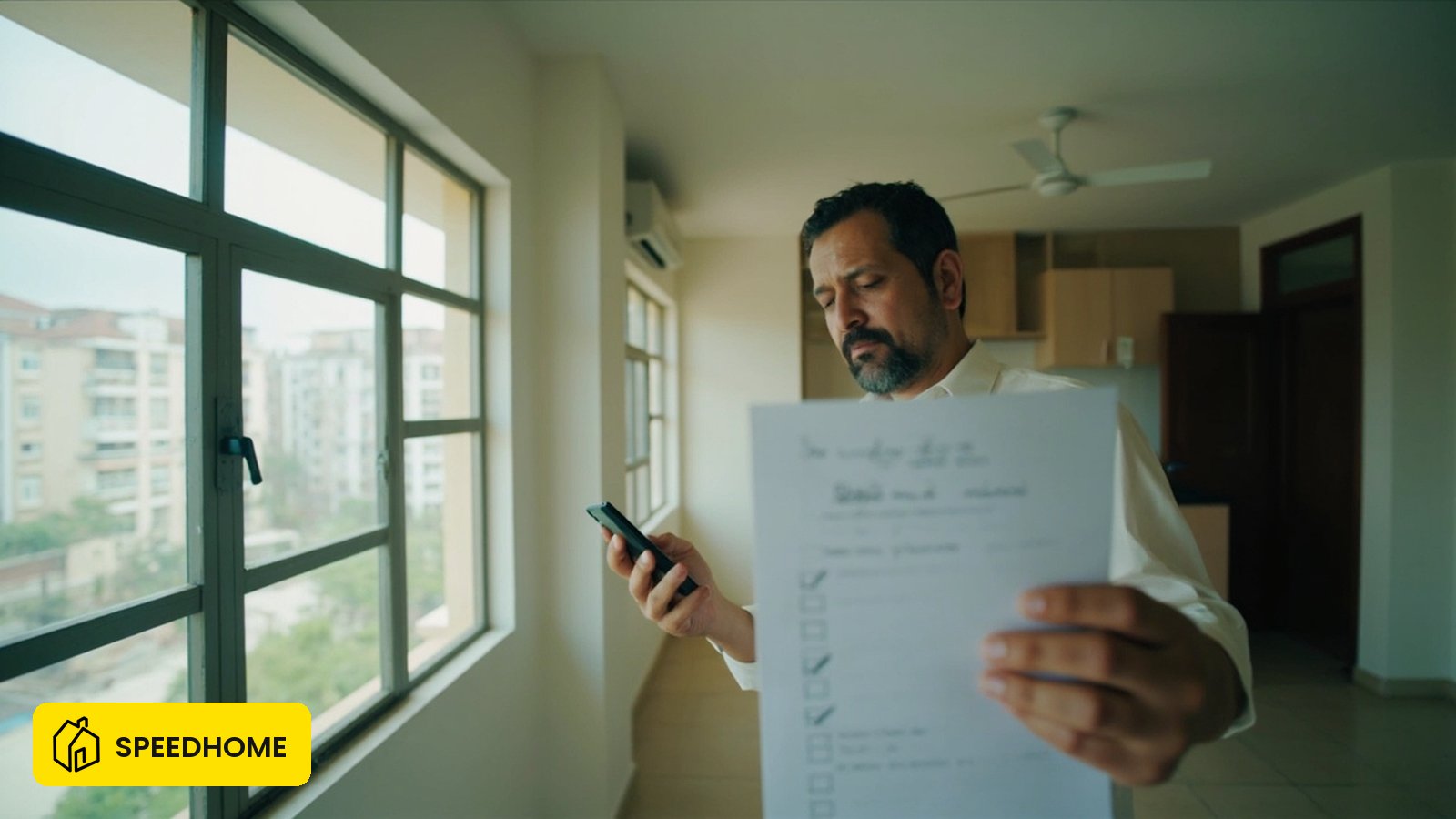
To make your rental property stand out in Malaysian listings, fix visible defects before listing, price against real competing units, respond to enquiries fast, screen on objective financial criteria, sign a complete tenancy agreement, and have a recovery plan if a tenant stops paying. Landlords who control these steps cut vacancy time and protect income — without relying on luck or informal promises.
SPEEDHOME has managed 30,000+ tenancy agreements across Malaysia, and platform records show 70% of tenants pay on or before the due date. On the same managed portfolio the average time from a tenant's first rental default to recovery action is about 31 days. That operating baseline — not luck, not fancy photography — is what makes a listing convert and stay tenanted.
How do you prepare the unit before listing?
Fix visible defects, clean the unit thoroughly, document condition with dated photos, and make the listing accurate before viewings start. A tenant does not expect perfection, but they do expect the unit to match what was advertised.
Walk through the unit before every listing cycle. Check:
- Plumbing: taps, showerheads, cisterns, and any sign of seepage or staining
- Electrical: light fittings, sockets, aircon remotes, and appliance functionality
- Doors, windows, and locks: smooth operation, no rusted hinges
- Paintwork: patch small scuffs; a full repaint is not always necessary unless wear is heavy
- Common access: parking bay allocation confirmed in writing, mailbox key available, access card working
Take dated photos of the full unit — walls, floors, ceilings, fittings, meters, and any existing defects — before any tenant moves in. This record protects both parties and makes a move-out check straightforward.
Declare known defects in the listing. A tenant who discovers a small crack or a worn kitchen cabinet after moving in will remember it. A tenant who saw it in the listing photo before agreeing terms will not.
How do you avoid slow vacancy?
Price against real competing units on the same platform or portal, respond to enquiries within hours, and remove friction from the viewing and agreement steps. One empty month can wipe out months of incremental rent gains from holding out for a higher price.
Use the live listing market — not last year's rent — as your pricing anchor. Filter by your area, unit size, and furnishing level to see what is moving now. If your unit sits for more than two to three weeks with no serious enquiry, adjust before the listing goes stale. SPEEDHOME platform data (2026) shows listings with verified condition, accurate photos, and a clear furnished status fill materially faster than near-identical units with vague descriptions.
Speed beats polish. Tenants typically sign with the first landlord who replies clearly and books a viewing fast. A delayed reply effectively moves you to the back of the queue — by the time you follow up, the tenant has often signed elsewhere.
Reduce viewing friction:
- Keep the unit accessible for viewings with reasonable notice
- Have the tenancy terms and deposit structure clear before the viewing, not after
- Confirm whether Zero Deposit is available on the unit — tenants choosing SPEEDHOME listings often filter for this option
What is the difference between DIY listing and platform-assisted listing?
DIY listing gives you full control but requires you to handle enquiry filtering, verification, and agreement yourself. A platform-assisted listing handles tenant screening, digital signing, and rental-risk management in one flow. The right choice depends on your time, risk appetite, and how many units you manage.
| Factor | DIY listing | Platform-assisted (e.g. SPEEDHOME) |
|---|---|---|
| Listing exposure | Portal or social-media channels you manage | Platform search + verified listing badge |
| Tenant filtering | You vet enquiries manually | Pre-screened, verified applicants |
| Credit / background check | Manual document collection only | Consented credit check via a registered credit reporting agency |
| Tenancy agreement | You source or draft | Digital agreement with standard and custom terms |
| Rental-risk protection | Deposit only | Zero Deposit managed rental-risk system (not every unit qualifies) |
| Speed to qualified tenant | Depends on your response time and channel | Faster average time-to-qualified where demand is active |
| Landlord effort | High — every step manual | Lower — platform handles verification and documentation steps |
| Cost | Listing fees vary by channel | Platform commission structure applies |
The trade-off is real: a platform-assisted listing gives you less flexibility to set non-standard screening criteria or pricing, and not every unit qualifies for Zero Deposit. For landlords who need unusual terms — a home-based business clause, a pet-heavy fit-out, a niche property type — a DIY or hybrid flow may suit better.
What objective screening criteria should a landlord use?
Screen on identity, employment, income, and a consented credit check — not on nationality, race, gender, or appearance. Objective financial criteria protect you under Malaysian discrimination law and give you a defensible decision trail if a dispute ever lands in court.
A complete screening pass on a Malaysian applicant covers four checks:
| Criterion | What to verify | Source |
|---|---|---|
| Identity | MyKad or passport copy; original seen at signing | Government-issued ID |
| Employment | Confirmation letter from HR, plus last 2-3 months' payslips | Direct from employer |
| Income | Net monthly pay ≥ 3× monthly rent is the standard market rule | Payslips + EPF statement if needed |
| Credit standing | Experian or CCRIS record (with the tenant's written consent); CTOS as your own background check | Registered credit reporting agency |
Use the same four-point stack for every applicant — write the criteria on paper before you start, then apply them in the same order to every enquiry. Race, religion, gender, nationality, marital status, and disability are not lawful screening criteria in Malaysia and will not protect you if a rejected applicant complains to the Tribunal for Homebuyer Claims or a court.
For the credit check, the tenant's written consent is required under the Credit Reporting Agencies Act 2010 — make consent a clause in the tenancy agreement you intend to sign, not a separate side letter that disappears after signing. Blacklisting, publishing the tenant's details, or direct reporting to a CRA without consent is not lawful. If a default does occur later, the recovery path is the court-and-consent route, not a public naming.
For a full walk-through on the screening stack, see how to screen tenants in Malaysia and the deeper note on background checking with CCRIS and CTOS.
What makes a complete tenancy agreement in Malaysia?
A complete Malaysian tenancy agreement names the parties, the unit, the term, the rent and deposit, the stamp duty clause, a defect schedule, a holdover clause, and a credit-reporting consent clause — then is stamped via e-Duti Setem within 30 days. A thin or generic agreement is the single most common cause of disputes that turn into eviction.
The non-negotiable components:
| Component | Why it matters | Anchored to |
|---|---|---|
| Parties + unit description (with parcel/lot if known) | Removes the "wrong tenant / wrong unit" defence | Standard |
| Term, rent, and payment date | Sets the default clock for the whole tenancy | Standard |
| Deposit amount + refund conditions | No statutory deposit cap in Malaysia; the agreement governs | Contracts Act 1950 |
| Stamp duty clause + e-Duti Setem payment within 30 days | Finance Act 2024 rates; stamping is the agreement's proof of admissibility in court | LHDN e-Duti Setem |
| Defect / inventory schedule signed by both parties at handover | Protects the deposit at move-out; settles most disputes | Standard |
| Holdover / double-rent clause | Allows the landlord to claim double rent during overstay under Civil Law Act 1956 s.28(4)(a) | Statute |
| Credit-reporting consent clause | Required under the Credit Reporting Agencies Act 2010 if you intend to report a default | Statute |
| Maintenance, access, and utility responsibility split | Defines who fixes what and how access is arranged | Standard |
For the report-ready template and stamp duty calculation, see the Tenant check & report-ready TA tool. Stamping is done on MyTax via e-Duti Setem — since January 2026 it replaced the old STAMPS portal.
What should you document before and after move-in?
Document the money trail, the unit condition, the agreed terms, and the people involved — in writing, with dates. Malaysia rental disputes most often become costly because the first agreement was too casual.
For the money trail: keep payment receipts, bank transfer references, SPEEDHOME platform records, and the name of the account receiving each payment. Do not accept cash-only payments without a signed receipt.
For unit condition: take dated photos or short video of every room, fitting, appliance, meter reading, keys, access cards, and any defects at handover. Do this at move-in and at move-out with the tenant present if possible.
For the agreement: keep the signed tenancy agreement and any written change made after signing. Written changes made via WhatsApp or email are still useful records — screenshot and date them.
A clear record does not make the tenancy hostile. It makes both sides calmer: small problems can be resolved without re-litigating the full tenancy.
What mistakes create the biggest risk?
The costly mistakes are usually early shortcuts — weak pricing, skipped screening, vague agreement terms, and no move-in evidence. Each one is easy to avoid; each one compounds quickly when ignored.
| Shortcut | Risk | Better action |
|---|---|---|
| Overpricing against the live market | Extended vacancy; listing goes stale | Price to compete; adjust after two weeks of silence |
| Skipping income / identity verification | Tenant cannot support rent; wrong person | Verify payslips, identity document, and employer contact before approving |
| Verbal promises instead of written terms | Dispute about what was agreed | Write every agreed term into the tenancy agreement before signing |
| No move-in photo evidence | Deposit dispute at move-out | Dated photo record with both parties before keys change hands |
| Ignoring early payment irregularity | Arrears compound before landlord acts | Respond formally in writing to any late payment from the first month |
| Approving based on impression alone | Payment risk not matched to objective evidence | Use the four-criterion screening stack, not gut feel |
When should you pause before acting?
Pause when the facts are incomplete, the money at risk is significant, or the next step could affect someone's legal position. Incomplete facts create expensive mistakes in Malaysian rental.
Stop and collect evidence before continuing if:
- The unit ownership is unclear or the landlord identity cannot be verified
- The payment route is unusual (cash only, third-party account, no receipt offered)
- The agreement is unsigned or the other party pushes back on standard terms
- The tenant is already in the unit and the situation is escalating
For legal, tax, eviction, discrimination, deposit, credit-reporting, or product-specific questions, use a formal support or advisory channel before taking irreversible action.
What if screening fails? The recovery path
If a tenant stops paying, send a written demand first, then escalate through the court process — never by self-help. Self-help eviction (changing the locks, cutting utilities, removing the tenant's belongings) is unlawful under the Specific Relief Act 1950 s.7(2), and the lawful route runs through the courts.
The recovery sequence a Malaysian landlord should follow:
- Written demand — a clear letter or platform message identifying the arrears, the amount, and a short deadline (commonly 7-14 days) to settle or vacate.
- Letter of demand via lawyer — if the first demand is ignored, a lawyer's letter carries more weight and starts the court-clock properly.
- Court filing — a Writ of Possession to recover the unit, and/or a Writ of Distress to recover arrears, enforced by the court bailiff under the Distress Act 1951.
- Default reporting — only after a court order or settlement, a verified default may be reported to a licensed credit reporting agency where the tenant gave written consent in the tenancy agreement. Blacklisting, publishing the tenant's details, or doxxing is not lawful.
On SPEEDHOME's managed portfolio, the average time from a tenant's first rental default to recovery action is about 31 days — that includes the demand and the escalation, not the court bailiff's physical recovery of the unit, which depends on court scheduling.
For a step-by-step walk-through of the timeline, see how long eviction takes in Malaysia. For the underlying legal anchors, the report-ready TA bundle keeps the demand-letter and consent clauses in one place.
Want a more controlled landlord process?
SPEEDHOME helps Malaysian landlords reduce vacancy and tenant risk by combining listing exposure, consented tenant screening, digital agreements, and a managed rental-risk system in one operating flow. If you are preparing a unit for rent or want to screen tenants in Malaysia before signing, start at SPEEDHOME for landlords.
FAQ
How long does eviction take in Malaysia?
Most lawful evictions take between one and four months from the first missed payment, depending on how quickly the tenant engages and on the court's scheduling. On SPEEDHOME's managed portfolio the average time from a tenant's first rental default to recovery action is about 31 days; the court-bailiff step itself depends on the court diary. Self-help eviction (lockout, utility cut) is not lawful.
What is Zero Deposit and is it available on every listing?
Zero Deposit is SPEEDHOME's managed rental-risk system that replaces the upfront cash deposit with a rental protection plan — it is not an insurance product. Not every unit qualifies; eligibility depends on the unit, the tenancy terms, and the platform's standard checks. Check the individual listing page to confirm whether a specific unit is Zero-Deposit eligible before advertising it as such.
Can I report a defaulting tenant to a credit agency in Malaysia?
Yes, but only after the tenant has given written consent in the tenancy agreement and the default has been verified. A verified rental default can be reported to a licensed credit reporting agency under the Credit Reporting Agencies Act 2010. Blacklisting, publishing the tenant's details, or doxxing on social media is not lawful and exposes you to a defamation claim.
What is the safest first step when a tenant falls behind on rent?
Send a written demand immediately — WhatsApp message, letter, or platform message — at the first missed payment. Document the date, the amount, and the response. Do not wait for arrears to compound before raising the issue. If arrears continue past your deadline, get legal advice before escalating to a letter of demand, court filing, or CRA reporting.
What makes a tenancy agreement complete in Malaysia?
A complete agreement names the parties and the unit, sets the term and rent, includes a stamp duty clause with e-Duti Setem payment within 30 days, attaches a defect schedule signed at handover, carries a holdover / double-rent clause, and contains the credit-reporting consent clause. Stamp the agreement on MyTax via e-Duti Setem as soon as it is signed — unstamped agreements are harder to enforce in a Malaysian court.
Should I rely on WhatsApp to agree terms?
No. WhatsApp is useful as a supporting record but the signed tenancy agreement, payment receipts, and official platform records carry more legal weight. Any change to agreed terms after signing should be confirmed in writing and referenced against the original agreement.
How do I make my listing photos stand out?
Use natural daylight, shoot from corners to show room depth, and include every room — including bathrooms and storage. Declare existing defects in a caption rather than hiding them. Accurate photos attract tenants who are already comfortable with the unit's condition, reducing drop-outs after viewing.