
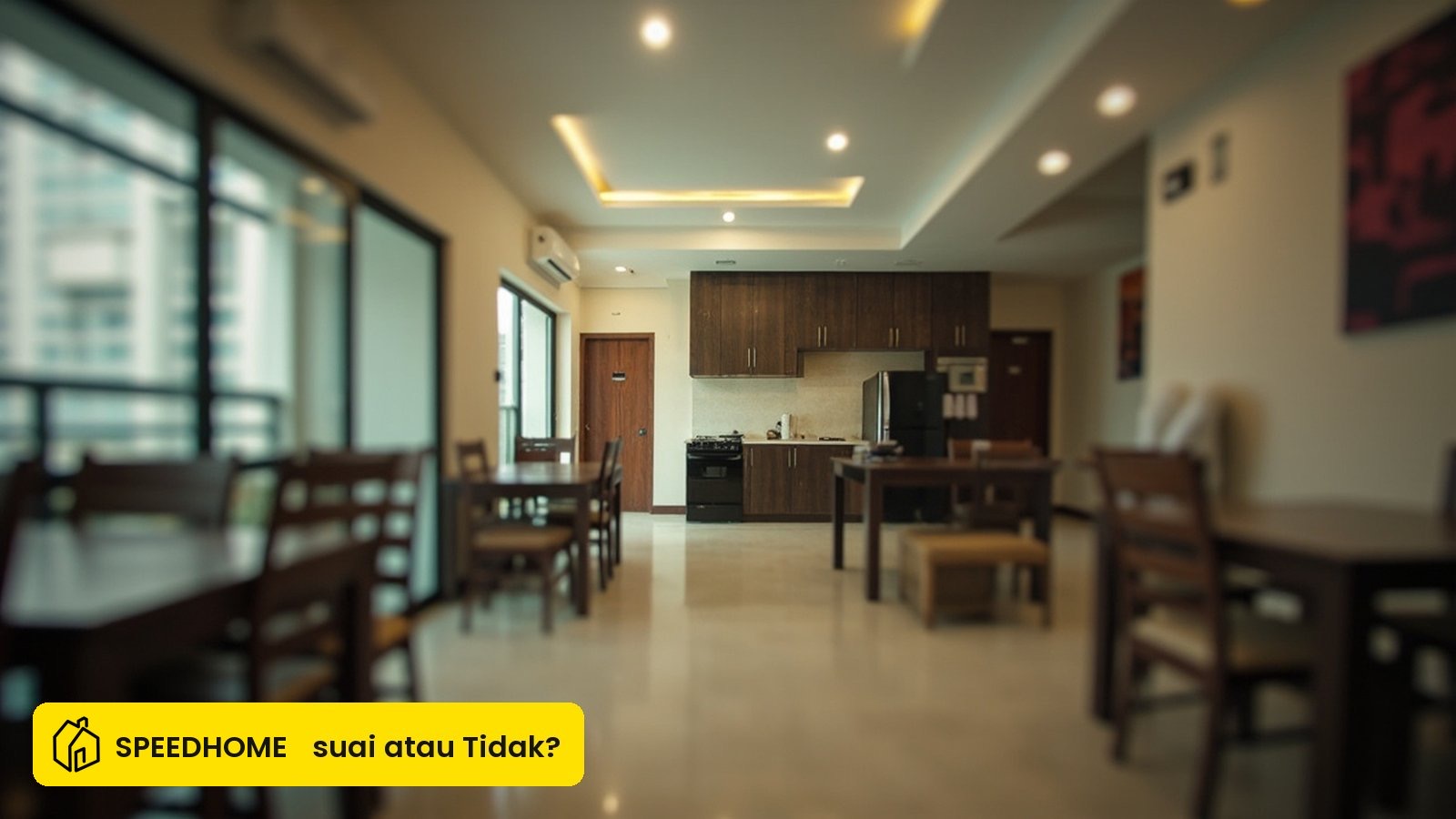
Is co-living ideal for you and your family?
Co-living is ideal for students, young professionals and short-term movers who want a lower move-in cost and a furnished setup, but it is usually a weak fit for families with children who need privacy, storage, quiet routines and predictable rules. Operator-reported co-living stays in Klang Valley typically run 3–6 months, while whole-unit tenancies usually stretch past the first year — which is why most family tenants settle on a whole unit within roughly twelve months.
Do not choose co-living only because the first payment looks lower. Choose it when the trade-offs — shared kitchen, shared laundry, written house rules, visitor limits and split utilities — are visible and acceptable to everyone in your household. Use this guide as a decision checklist before you commit.
Co-living vs a whole unit for your household
The core trade-off is flexibility and lower setup cost against privacy and control. A co-living room gives you a private bedroom plus shared common areas for a lower move-in cost; a whole unit gives one household full control of the kitchen, bathroom and noise.
| Factor | Co-living room | Whole-unit rental |
|---|---|---|
| Private space | One bedroom; shared kitchen, bath, living area | The entire unit is yours |
| Move-in cost | Lower; often furnished, utilities sometimes bundled | Higher; deposit plus your own setup |
| Privacy | Low — housemates share common areas | High — one household controls the unit |
| Rule clarity | Depends on written house rules and the operator | You set the household rules |
| Best for | Students, young professionals, short-term movers | Families, couples, remote workers, pet owners |
| Risk to watch | Unclear rules, housemate friction, shared-bill disputes | Higher fixed cost, full furnishing responsibility |
When each option wins
Co-living wins when you value location, a furnished room and a fast move-in over full privacy. A whole unit wins when routines, storage, children or pets make sharing common areas stressful on most days.
Co-living is a strong fit when you can accept shared kitchen and laundry routines, do not need much storage, are comfortable with housemate and visitor rules, want location flexibility more than total privacy, and can document room condition at handover. It suits students, interns, early-career workers and short-term city movers who do not own much furniture and do not want to commit to a full unit immediately. For how room rentals fit next to co-living on SPEEDHOME, see the room rental and co-living in Malaysia comparison.
Co-living is a poor fit when privacy and control matter more than flexibility. Families with children, pet owners, tenants with many belongings, shift workers and people who host visitors often may find the arrangement stressful. It is also a weak fit for someone who cooks heavily, works from home with calls, or needs a predictable quiet environment — in those cases a studio or whole unit may cost more but reduce daily conflict.
Where co-living is concentrated in Malaysia
Most co-living supply sits in central KL, Mont Kiara, Bangsar, Petaling Jaya and parts of Penang and Johor Bahru, run by a mix of dedicated operators and managed buildings. For a primer on what co-living actually means in Malaysia and how operators differ, see the dedicated guide. Named examples readers will recognise include dedicated co-living operators with Klang Valley buildings such as Co-Up, Common Ground and Coliv, alongside operator-branded floors attached to serviced residences in Bukit Bintang, room-share inventory in older walk-ups around Taman Desa and PJ Section 17, and university-adjacent operators in Penang such as U Commune. Johor Bahru supply is thinner but growing around the city centre and Tebrau. Density is highest within walking distance of MRT and LRT stations, which is also where the trade-off is sharpest — you pay a city-centre premium for a shared room rather than a private unit.
A practical check: search the area you want to live in, then count how many listings are co-living versus whole-unit rentals. If co-living dominates, expect more competition for rooms and stricter operator house rules; if whole units dominate, the area is generally more family-oriented.
Questions to ask before you view
Ask the questions that reveal daily friction before you pay anything. Who lives there now? How are utilities divided? Are guests allowed and until what hour? Who cleans the common areas and how often? Can you lock your own room? Is parking included? What happens if a shared appliance breaks?
Shared living requires written expectations because different people define cleanliness, noise and privacy differently. Use the same checklist for the co-living vs renting a room comparison.
Cost and risk to compare
Compare total monthly cost, not the headline figure. A co-living room may bundle utilities, internet, furniture and sometimes cleaning; a studio or whole unit usually leaves those bills separate. Include utilities, internet, parking, furniture, commute cost and the value of privacy in the comparison.
Across SPEEDHOME's active Klang Valley co-living listings sampled 2026, the typical all-in monthly cost for a private room — utilities and Wi-Fi included — runs in the RM950-1,400 range, with the headline figure masking which services are actually bundled. A slightly higher-cost studio can be better value if you need quiet and storage; a lower-cost co-living room can be better if it gives you the right location without locking you into a full-unit tenancy.
Malaysia has no statutory residential rent-deposit cap, so the deposit you pay is governed by your tenancy agreement — which is exactly why clear written terms matter more in shared living, where small misunderstandings about bills or damage become daily arguments. An operator's house rules sit alongside, not above, your signed tenancy agreement under the Contracts Act 1950: where a house rule conflicts with the TA, the TA wins for what it covers, and everything else falls to the rules — so read both before move-in.
Family and privacy considerations
Families should treat co-living as a temporary bridge, not a long-term home. Children, elderly parents and household routines need predictability around noise, visitors, storage and bathroom timing — all of which are shared in co-living.
If you are considering co-living as a family, check whether the operator or landlord actually allows it and whether other occupants understand the arrangement. Do not assume a flexible listing means every household type fits. A parent of two needs the kitchen at 7am for breakfast, 6pm for dinner, and the bathroom twice during school prep — share that schedule with three to five other households and friction starts fast. If those routines clash with shared spaces or house rules, the arrangement will feel restrictive very quickly — and the stress is harder to change after move-in when school schedules, meals and sleep times are involved.
The SPEEDHOME path
Once you've decided co-living fits, SPEEDHOME's Zero Deposit replaces the upfront cash deposit so you can move in without tying up savings. It is a managed rental-risk system available on qualifying listings, including some co-living rooms. The trade-off is that not every unit qualifies, so confirm eligibility on the specific listing before you plan your move-in budget.
The same decision discipline — clear rules, documented handover condition, agreed responsibilities — is what makes a co-living arrangement work, and it is what a managed rental-risk system is built around. Before you commit, write down the three reasons this option still makes sense; if the only reason is "it is cheaper", keep comparing on SPEEDHOME rentals.
How co-living actually runs on SPEEDHOME
On SPEEDHOME, co-living listings behave differently from whole-unit rentals: shorter average stays, faster matches, and a Zero Deposit path on qualifying rooms. Verify eligibility on the listing before budgeting. The platform separates co-living rooms by operator type and building, so the same written-rules checklist applies — but the questions tilt toward operator policies rather than landlord preferences, and the listing handler is the one who can confirm ZD eligibility, written guest policy and how utility overages are split for that specific room.
FAQ
Is co-living good for families?
Usually no, and not because of cost — privacy, storage and predictable routines around children, meals and sleep break down fast in shared common areas. A whole unit is normally the easier choice; co-living can work only as a short-term bridge of 3–6 months while you find a longer-term fit. Start with whole-unit family-friendly listings in Klang Valley on SPEEDHOME rentals before considering any co-living room.
Is co-living cheaper than renting a studio?
It can be cheaper upfront because it is often furnished and may bundle utilities. But compare total cost — utilities, parking, commute and the value of privacy — because the lower headline figure is not always the best value.
What is the biggest co-living risk?
Unclear rules — guests, cleaning, noise, shared bills and damage responsibility should be written down before move-in, and rules that exist only on paper do not help if nobody enforces them. The operator's house rules also sit below your signed tenancy agreement under the Contracts Act 1950, so where the two conflict on what the TA covers, the TA wins — which is why you want both sets of rules documented and dated at handover.
Can I lock my own room in a co-living unit?
You should be able to — confirm the lock type and who holds the spare key in writing before paying any deposit. A lockable private room with a key or fob only you control is the baseline; if the operator is vague about locks, treats your room as accessible to staff, or holds a master key without notice, treat it as a warning sign about the rest of the arrangement.
How do I compare co-living against alternatives after viewing?
Do not rely on memory. Score each option on route, condition, cost clarity, rules, the handover record and whether the person handling the viewing answered questions directly. A polished first impression should not override practical concerns.
Does Zero Deposit apply to co-living rooms?
Only on listings tagged Zero Deposit — most co-living rooms are not, because operators typically require a small cash deposit against shared-bill damage and unpaid utilities. Filter for Zero Deposit on SPEEDHOME rentals and confirm with the operator before budgeting; assume a deposit is required until the listing states otherwise.